Lever Pronated Grip Seated Row Plate Loaded
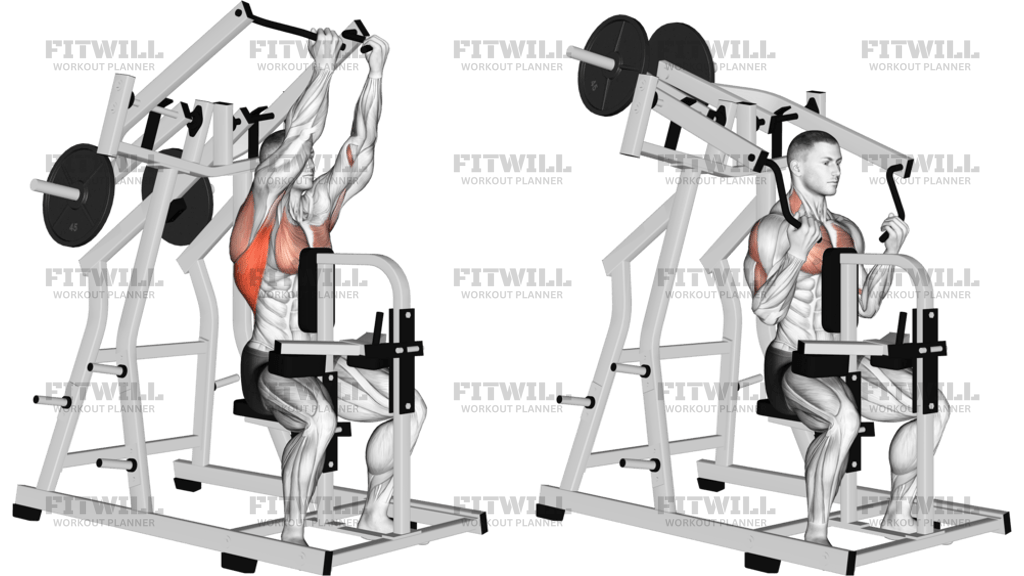
Lever Pronated Grip Seated Row (Plate Loaded) is a guided horizontal pulling exercise performed on a plate-loaded lever row machine with an overhand grip. The pronated hand position and seated torso angle make it useful for building back thickness, especially the lats, rhomboids, mid traps, rear delts, and the forearms that hold the handle steady through the pull.
The fixed machine path is part of the value of this movement. Because the lever arm travels on an arc, you can focus on pulling the handles toward your lower ribs or upper waist without having to stabilize a free barbell. That makes setup quality important: sit square on the pad, place your feet firmly on the supports, and start with the shoulders set down rather than shrugged up around the ears.
A clean repetition begins with the arms long, the chest tall, and the spine neutral. From there, drive the elbows back and slightly out while keeping the wrists lined up with the forearms. The handles should travel smoothly toward the torso instead of being yanked with body sway. At the top, squeeze the shoulder blades back only as far as you can control without overextending the lower back.
On the way down, resist the weight as the lever returns to the start so the back stays loaded instead of letting the stack or plates drop the handles forward. Breathe out on the pull and inhale as the arms extend. If the machine forces you to reach or lean excessively, reduce the load or adjust the seat before the set continues.
This exercise fits well in back-focused strength work, hypertrophy sessions, or upper-body routines where you want strict rowing without the balance demands of a free-weight row. Beginners can learn it well because the machine guides the path, but the best results still come from controlled range, steady tension, and a torso that stays still from the first rep to the last.
Fitwill
Log Workouts, Track Progress & Build Strength.
Achieve more with Fitwill: explore over 9600 exercises with images and videos, access built-in and custom workouts, perfect for both gym and home sessions, and see real results.
Start your journey. Download today!




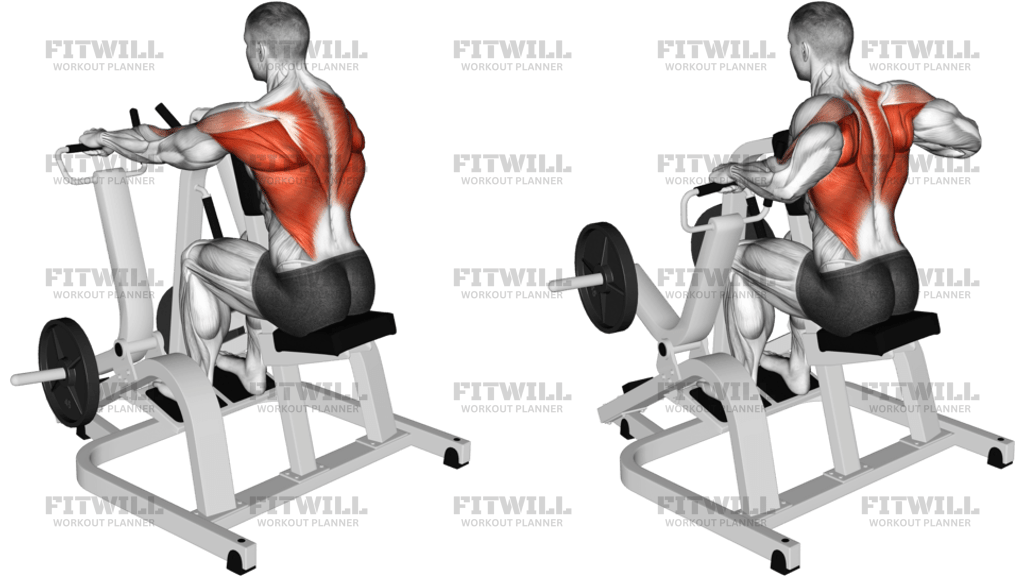
Instructions
- Sit on the machine seat and plant both feet on the foot supports so your hips stay anchored and your torso can remain tall.
- Grip the handles with an overhand, pronated grip and keep your wrists straight from the start.
- Set your shoulders down away from your ears before you move the lever.
- Start with your arms almost fully extended and your chest lifted without arching your lower back.
- Pull the handles toward your lower ribs or upper waist by driving your elbows back and slightly out.
- Keep the seat and torso still while the lever arm moves through its arc.
- Squeeze your shoulder blades back only at the top of the rep, then do not overreach past a natural pinch point.
- Lower the handles slowly until your arms are long again and the back stays under tension.
- Exhale as you pull and inhale as the weight returns forward.
- Reset your posture before each rep if the torso starts to twist, shrug, or bounce.
Tips & Tricks
- Use a pronated grip that lets your forearms stay aligned with the handles instead of cocking the wrists backward.
- Pull to the lower ribs or upper waist, not to the chest, so the row stays on the intended horizontal path.
- Keep the chest tall without leaning far back; the machine should move, not your whole body.
- Let the elbows travel slightly out from the body if you want more upper-back involvement, but do not flare them so wide that the shoulders take over.
- Control the return for a full stretch through the lats and mid-back instead of letting the plates slam down.
- If the handles hit your torso before your shoulder blades finish moving, the load is probably too heavy or the seat is set too far back.
- Keep the neck long and neutral; craning forward usually means you are chasing the weight with your head.
- A brief squeeze at the back of the pull is enough; holding the top too long often turns into lower-back extension.
- Use a load that still lets you keep the lever path smooth on every rep, especially in the last third of the set.
- Stop the set when you have to rock the seat, kick the feet, or shrug to finish the pull.
Frequently Asked Questions
What muscles does the pronated seated row train most?
It mainly trains the lats and upper back, with the rhomboids, mid traps, rear delts, biceps, and forearms helping during the pull.
Can beginners perform this exercise?
Yes. The fixed machine path makes it easier to learn than a free row, as long as the seat is set correctly and the torso stays still.
Where should the handles travel on each rep?
Pull them toward your lower ribs or upper waist with the elbows moving back and slightly out, rather than rowing high toward the chest.
Should I lean back to finish the row?
No. A small, stable torso angle is fine, but leaning back to move the handles turns the rep into momentum instead of a back pull.
Why use a pronated grip instead of a neutral grip?
The overhand grip shifts the emphasis a bit more toward the upper back and rear shoulder area while still training the lats.
What should I do if my shoulders start shrugging?
Reduce the load and reset with the shoulders down before the first pull. Shrugging usually means the traps and momentum are taking over.
Is this a good substitute for barbell rows?
Yes, if you want a more guided row with less lower-back demand. It is especially useful when you want strict tension without balancing a free weight.
How should breathing work on this machine row?
Exhale as you pull the handles in and inhale as they return forward so your torso stays braced without holding your breath for the whole set.