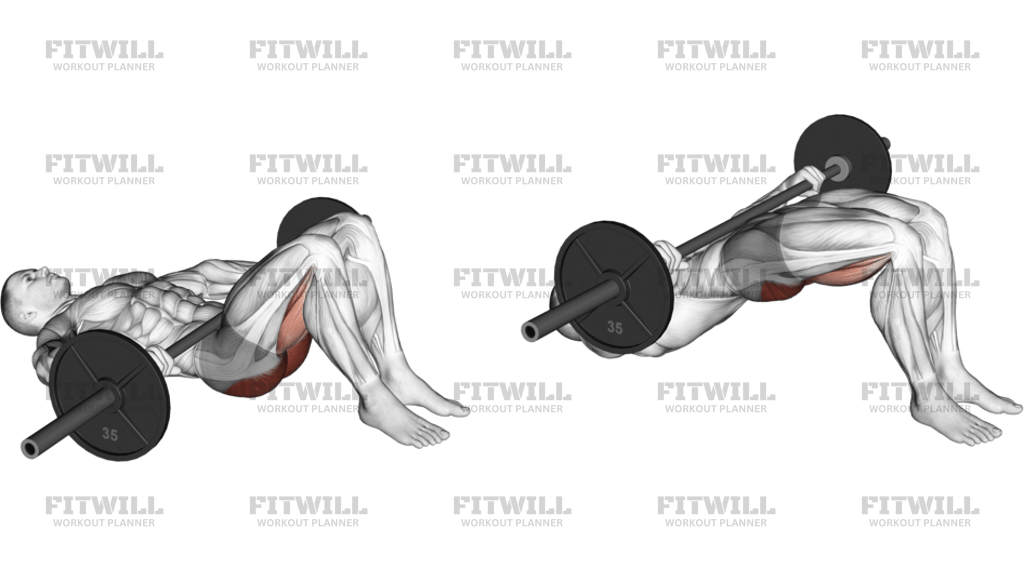
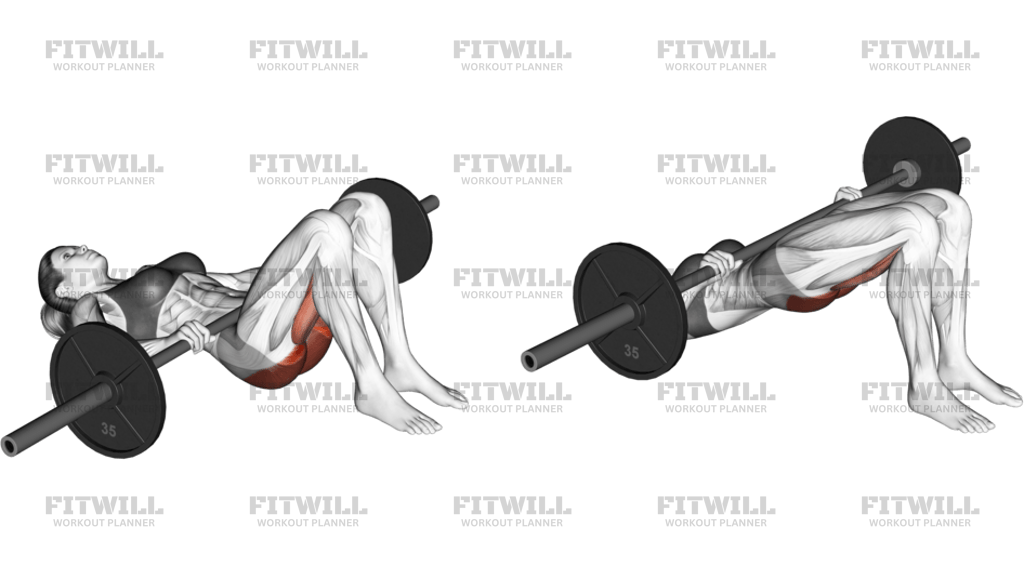
Barbell KAS Glute Bridge
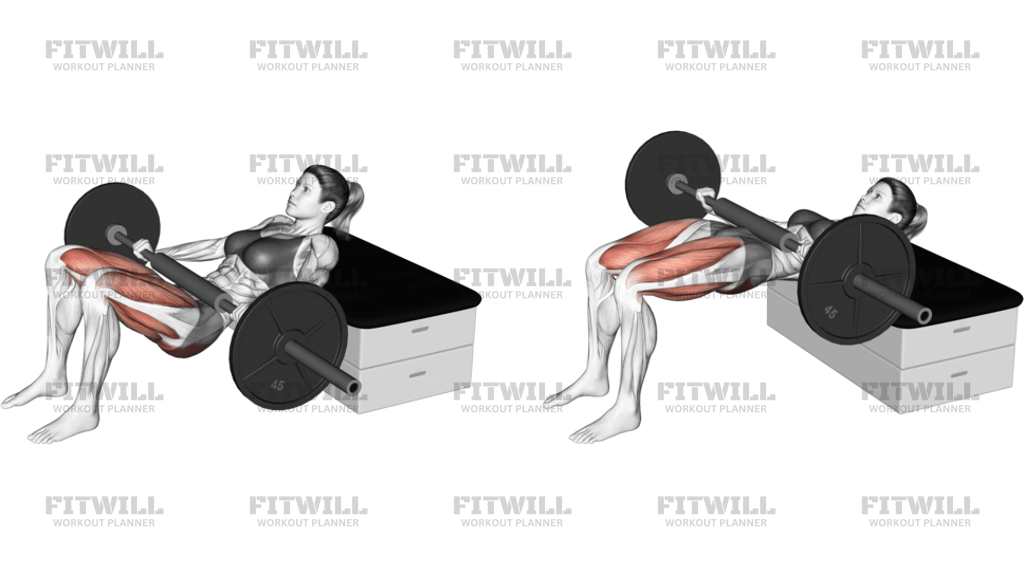
Barbell KAS Glute Bridge is a short-range glute bridge that keeps tension on the hips instead of letting the set turn into a rest between reps. With the upper back supported on a bench and a barbell loaded across the hip crease, the exercise trains hip extension in a position that is easy to load while still demanding control. It is especially useful for lifters who want more focused glute work than a floor bridge without the larger range of a full hip thrust.
The main driver is the Gluteus Maximus, with the Hamstrings, Rectus Abdominis, and Erector Spinae assisting to keep the pelvis stable and the torso organized. That support matters because a small change in rib position or foot placement can quickly move the stress away from the glutes. When the setup is right, Barbell KAS Glute Bridge should feel like the hips are doing the work while the trunk stays quiet.
Start by setting the bench so the shoulders are supported and the bar rests securely in the crease of the hips. Feet should be planted firmly enough that the shins are close to vertical near the top, which helps the force travel straight through the hips instead of sliding the body backward or forward. The bar should be padded and centered so you can brace hard without being distracted by pressure or rolling.
The rep itself is a controlled lift into a strong glute squeeze, not a big arch through the low back. Drive the hips up until the torso and thighs line up or slightly pass that point, then hold the top briefly while keeping the ribs down and the chin relaxed. Lower only far enough to keep tension on the glutes, because this movement is meant to stay loaded through the whole set rather than resting at the bottom.
Barbell KAS Glute Bridge fits well as accessory work after a squat, deadlift, or main hip thrust variation when you want extra glute volume without as much total fatigue. It can also be a useful option for lifters who need a more controlled way to practice pelvic positioning and lockout strength. Keep the load honest, stop the set if you start finishing reps with a hard lumbar arch, and use a soft pad if the bar pressure on the hips becomes the limiting factor.
[ Workout Log & Planner ]
Put your next workout in Fitwill
Keep your plan and training log ready when you are.


Instructions
- Sit on the floor in front of a flat bench, lean your upper back across the bench edge, and roll a padded barbell into the crease of your hips.
- Bend your knees and place your feet hip-width apart so your shins are close to vertical when you lift.
- Grip the bar lightly for stability, tuck your chin, and brace your ribs down before the first rep.
- Drive through your heels and midfoot to raise your hips until your torso and thighs line up or slightly pass that line.
- At the top, squeeze your glutes hard without letting your lower back take over.
- Hold the top position briefly while keeping tension on the bar and the pelvis tucked.
- Lower the hips only partway so the glutes stay loaded and the plates never fully settle.
- Repeat for the planned reps with smooth, even breathing.
- After the last rep, lower the bar to the floor carefully and sit up under control.
Tips & Tricks
- Set the bench so it lands just below your shoulder blades; if it sits too high on the back, the bridge turns into a back extension.
- Pad the bar well and center it before you start, because a rolling bar will make you lose pelvic position fast.
- Adjust foot placement until your shins are near vertical at the top; feet too far away usually shift the work into the hamstrings.
- Keep the ribs stacked over the pelvis at lockout instead of chasing height with a hard lumbar arch.
- Use a short pause at the top to make the glutes finish the rep instead of bouncing through the bottom.
- Lower only until tension starts to fade; this is a short-range bridge, not a full rest position.
- Keep the chin tucked and eyes neutral so you do not crank the neck as the hips rise.
- Choose a lighter load than you would for a full hip thrust, because the shorter range can make the exercise feel easier than it really is.
- If you feel the bar on the pubic bone rather than the glutes, reduce the load and recheck the pad and bench height.
Frequently Asked Questions
What Muscles Does Barbell KAS Glute Bridge Target Most?
The glutes are the main target, with the hamstrings helping drive hip extension and the core helping keep the torso and pelvis steady.
How Is Barbell KAS Glute Bridge Different From A Barbell Hip Thrust?
Barbell KAS Glute Bridge uses a shorter, more continuous range and keeps more tension on the glutes instead of spending time at a full rest position.
Where Should The Bar Sit In Barbell KAS Glute Bridge?
The bar should sit in the crease of the hips, centered and padded so it stays stable without rolling as you bridge up.
Why Do My Hamstrings Take Over During Barbell KAS Glute Bridge?
Your feet are probably too far from the bench or your pelvis is not tucked enough at the top. Move the feet slightly closer and finish with the glutes, not a low-back arch.
Should My Lower Back Arch At The Top Of Barbell KAS Glute Bridge?
No. Finish with the ribs down and the hips squeezed, because a big arch shifts the work away from the glutes and into the spine.
Can Beginners Do Barbell KAS Glute Bridge?
Yes, as long as the bar is light enough to control and the bench, pad, and foot placement are set before the first rep.
How Far Should I Lower On Barbell KAS Glute Bridge?
Lower only until the glutes start to lose tension. The point of this variation is to keep the set loaded, not to drop all the way into a relaxed bottom position.
What Is The Most Common Mistake In Barbell KAS Glute Bridge?
Rushing the rep and using momentum. If the bar bounces or the torso is swinging, the set is too heavy or the range is too big.