Cable Medius Kickback
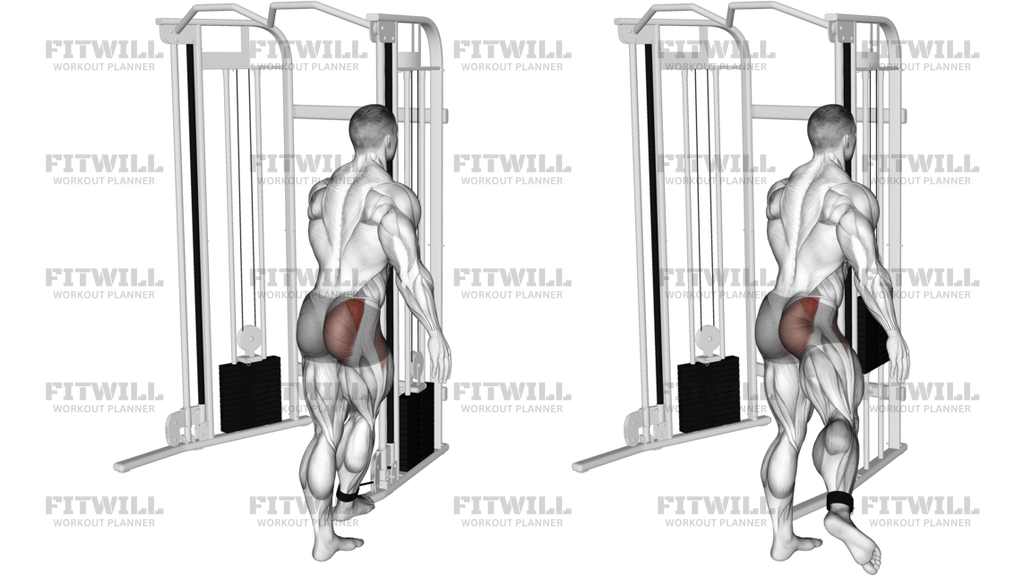
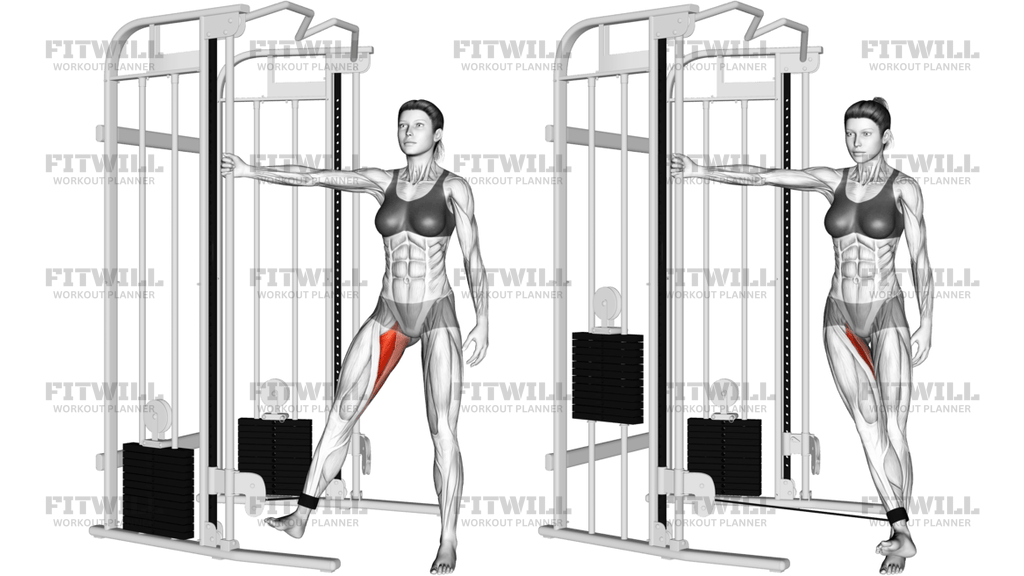
Cable Medius Kickback is a standing cable hip exercise that emphasizes the glute medius while the pelvis and trunk stay quiet. The picture shows a low cable attached to an ankle strap, with the working leg moving back and slightly out behind the body. That setup matters because the cable keeps tension on the hip through the whole rep, which makes small posture changes easy to notice and easy to correct.
This is a useful accessory movement when you want more lateral hip strength, better pelvic control on one leg, or cleaner glute work without needing heavy loading. The glute medius helps keep the pelvis level and the knee tracking well during walking, running, lunging, and single-leg work, so the value of this exercise is often in the quality of the contraction and the control of the return, not in how far the leg can swing.
The best reps start with a tall stance, a slight bend in the support knee, and the torso stacked over the standing foot. The working leg should travel from a neutral start into hip extension with a small amount of abduction, without letting the low back arch or the rib cage flare. If the cable drags the hips open, the load is too heavy or the stance is too loose.
Use a smooth push away from the machine, then resist the cable as the leg comes back in. The end position should feel like the side and upper-back portion of the glute is doing the work, while the waist stays braced and the standing foot stays planted. That makes the exercise a better fit for warm-ups, activation work, hip accessory blocks, and controlled hypertrophy sets than for maximal strength testing.
Because this is a single-leg cable pattern, the setup is part of the training. The ankle strap, cable height, and distance from the stack all change the line of pull, so a small change in stance can make the exercise either smooth or awkward. Keep the movement repeatable, stop before the pelvis starts to rotate, and use only the range that lets you keep tension on the target hip from start to finish.
[ Workout Log & Planner ]
Put your next workout in Fitwill
Keep your plan and training log ready when you are.


Instructions
- Attach an ankle strap to a low cable pulley and stand side-on to the stack with the working leg closest to the machine.
- Step far enough away that the cable is lightly tensioned before the first rep, then plant the support foot and keep a soft bend in that knee.
- Hold the machine frame or upright lightly if needed and stack your ribs over your pelvis without leaning away from the cable.
- Start with the working leg just behind the body and slightly across the midline only if that is the most stable start for your setup.
- Brace the waist, keep the pelvis level, and drive the working leg back and slightly out using the hip rather than a swing from the lower back.
- Lift until the glute medius is fully engaged and the pelvis begins to want to rotate, then stop before the torso twists.
- Pause briefly at the top, then bring the leg back to the start slowly while keeping the cable under control.
- Reset the stance if the stack pulls you off balance, then repeat for the planned reps before switching sides.
Tips & Tricks
- Choose a cable setting that lets the ankle strap pull from low shin or ankle height; if the line of pull feels awkward, adjust your distance before adding load.
- Keep the support knee soft but fixed; a locked knee usually turns the rep into a sway instead of a hip contraction.
- Do not let the pelvis hike or rotate toward the working side at the top, because that usually means the glute medius has already handed the job to the low back.
- Think about moving the heel away from the machine, not just the foot outward; that keeps the hip doing the work instead of the toes leading the rep.
- Use a short pause at peak abduction if you want more glute medius tension and less momentum.
- Lower the leg more slowly than you lift it so the cable never snaps you back into the stack.
- If you need to grip the frame hard to stay upright, the load is probably too heavy for clean pelvic control.
- Keep the standing foot tripod planted so the hip can stabilize without the ankle collapsing inward.
- A smaller, strict range is better than a big swing that pulls the torso off line.
- Breathe out as the leg travels away from the stack and reset the brace before the return.
Frequently Asked Questions
What does Cable Medius Kickback train most?
It mainly trains the glute medius, with the glute max and deep hip stabilizers helping keep the pelvis steady.
Why is the ankle strap important in this exercise?
The ankle strap gives a clean line of pull so the cable can load the hip without needing to hold a handle in the hands.
Should my torso lean forward or stay upright?
Stay mostly upright with only a small natural hinge if needed for balance; a big lean usually turns the rep into a swing.
How far back should the working leg go?
Only as far as you can keep the pelvis level and the low back quiet. Range should come from the hip, not from twisting the body open.
What are the most common mistakes on the cable stack?
Using too much weight, letting the support hip collapse, and letting the torso drift away from the machine are the biggest ones.
Can beginners use this movement?
Yes. Start with a light stack, a short range, and a stable hand support until you can control the pelvis on every rep.
Where should I feel the rep most?
You should feel the side and upper-back portion of the working glute more than the low back or hamstring.
What is a good progression for this exercise?
Add load slowly, increase the pause at the top, or use a slower return before trying to force a larger range.