Supinated Grip Inverted Row
Supinated Grip Inverted Row is a bodyweight pulling exercise performed under a fixed bar with your palms facing you. The underhand grip changes the feel of the pull compared with an overhand row, usually letting you get a stronger elbow bend and a tighter squeeze through the lats, mid-back, and biceps while the core keeps the body from sagging. It is a simple setup, but it still rewards careful positioning because the bar height, grip width, and body angle all change how hard each rep feels.
The goal is to keep the whole body moving as one rigid line while your chest travels toward the bar. In the stronger top position, the shoulder blades come back and down, the elbows stay close to the sides, and the upper chest reaches the bar before the hips do. If the hips rise first or the chest stops short, the movement turns into a partial curl instead of a true horizontal row.
Setup matters here because the bar is fixed and your body position creates the resistance. Lie underneath the bar, take a supinated grip that is usually about shoulder width or slightly narrower, and plant your heels so you can keep tension through the legs. A straighter body makes the row harder; bending the knees or walking the feet in makes it easier. The best starting position is one where you can hold a straight line from shoulders to ankles without shrugging or losing rib control.
Each repetition should start from a braced, active hang rather than a loose, floppy bottom. Pull the sternum or lower chest toward the bar by driving the elbows back, then lower under control until the arms are straight again. Exhale as you pull, inhale on the way down, and stop the set if you cannot keep the torso steady. That controlled tempo is what turns the row into useful strength work instead of a swinging body-weight heave.
Supinated Grip Inverted Row is useful as a main horizontal pull for beginners, a back-focused accessory for stronger lifters, or a regression before pull-ups and heavier row variations. It is also easy to progress without changing the exercise itself: raise the feet, lower the bar, or slow the descent. Because the wrists are turned underhand, it is worth paying attention to comfort in the wrists and elbows, and adjusting grip width or bar height if either joint starts to feel cranky.
Fitwill
Log Workouts, Track Progress & Build Strength.
Achieve more with Fitwill: explore over 9600 exercises with images and videos, access built-in and custom workouts, perfect for both gym and home sessions, and see real results.
Start your journey. Download today!




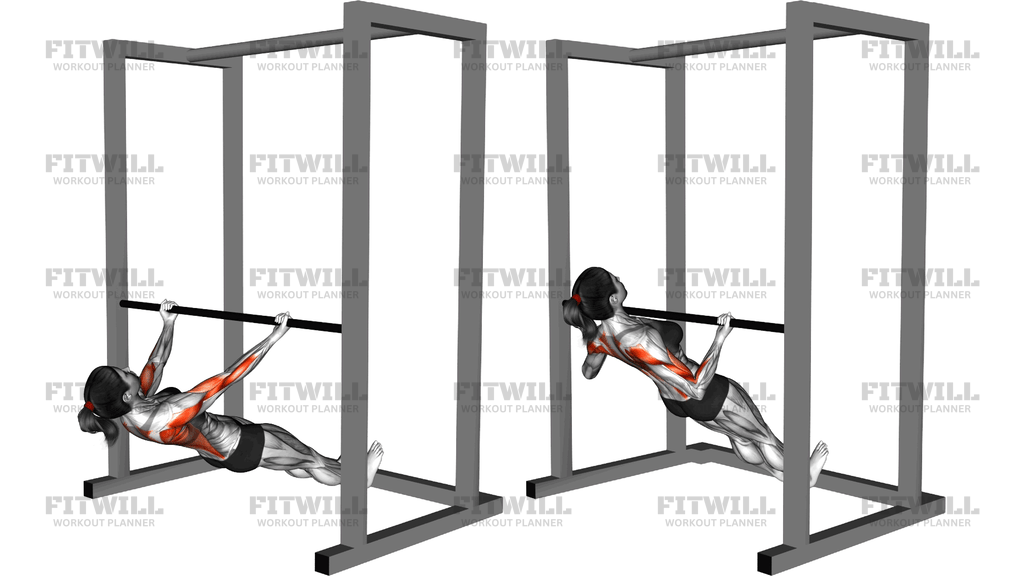
Instructions
- Set a bar on a rack at a height you can reach while lying underneath it, then lie on your back with your chest under the bar and your heels planted on the floor.
- Take an underhand grip slightly inside shoulder width, stack your wrists under the bar, and keep your forearms vertical from the start.
- Straighten your legs, tighten your glutes and abs, and hold your body in one line from shoulders through heels.
- Let your shoulders stay down away from your ears before the first pull so you start from an active, not slack, position.
- Pull your chest toward the bar by driving your elbows back and keeping them close to your sides.
- Bring the lower chest or sternum to the bar while keeping the hips level and the ribs from flaring.
- Squeeze your shoulder blades together at the top for a brief pause without bending your neck or shrugging.
- Lower yourself slowly until your arms are straight again, keeping the torso rigid and the bar path controlled.
- Reset your brace before the next rep, or step out carefully once the set is complete.
Tips & Tricks
- A slightly narrower underhand grip usually makes it easier to keep the elbows tracking close to the ribs.
- If your chest cannot reach the bar without losing body tension, raise the bar instead of cutting the range short.
- Keep your heels planted and your glutes squeezed so the row does not turn into a hip-driven swing.
- Think about pulling the bar to your lower chest, not lifting your chin toward it.
- Keep your wrists stacked under your forearms; letting them curl back can make the underhand grip feel unstable.
- A brief pause at the top helps prevent half reps and keeps the mid-back honest.
- If your shoulders shrug on the way up, lower the bar height or bend the knees a little to reduce leverage.
- Slow the descent on the way down so the lats and biceps keep working instead of dropping out between reps.
Frequently Asked Questions
What muscles does Supinated Grip Inverted Row work most?
It mainly trains the lats, mid-back, and biceps, with the rear shoulders and core helping to keep the body rigid under the bar.
Is Supinated Grip Inverted Row good for beginners?
Yes. It is a strong beginner pulling exercise because you can make it easier by raising the bar or bending the knees slightly.
How wide should my underhand grip be on Supinated Grip Inverted Row?
Start slightly inside shoulder width. That usually keeps the elbows close and makes it easier to pull the chest to the bar without flaring.
Where should the bar touch in Supinated Grip Inverted Row?
Aim for the lower chest or sternum. If you have to reach your chin first, the body line is probably breaking and the rep is turning into a shrug.
Why do my hips drop during Supinated Grip Inverted Row?
Usually the feet are too far away or the set is too hard. Bring the feet in, raise the bar, or reduce the number of reps so you can keep a straight line.
What is the difference between Supinated Grip Inverted Row and a regular inverted row?
The underhand grip usually brings more biceps involvement and lets many people keep the elbows tucked a little more easily than an overhand grip.
Can I bend my knees in Supinated Grip Inverted Row?
Yes. Bending the knees shortens the lever and makes the row easier while you learn to keep the chest, hips, and heels moving together.
What should I do if Supinated Grip Inverted Row bothers my wrists or elbows?
Narrow the grip a little, lower the bar height, and stop short of the top if needed. If the underhand position still irritates the joints, switch to a neutral or overhand row variation.