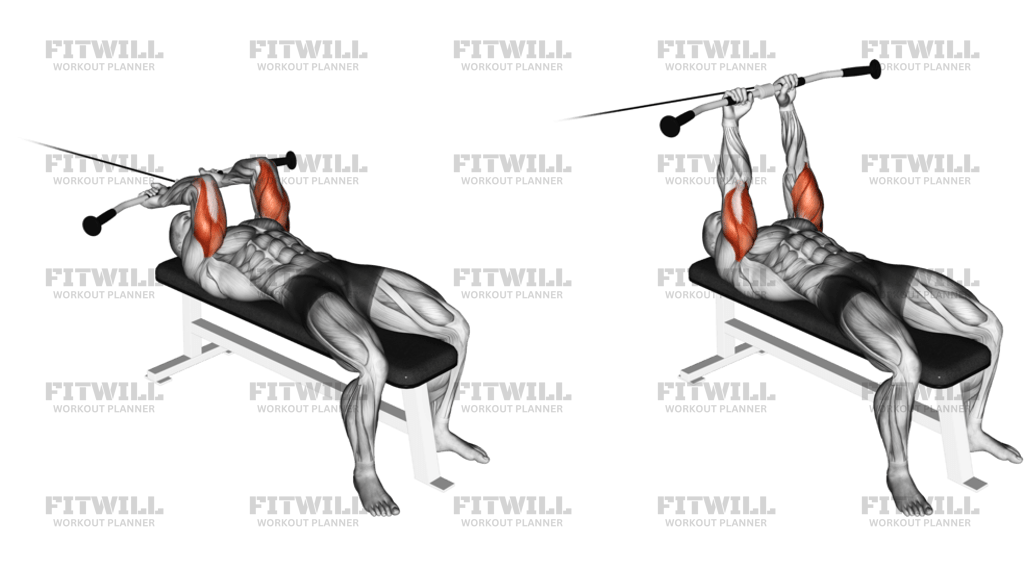
Cable Standing Crossover Overhead Tricep Extension
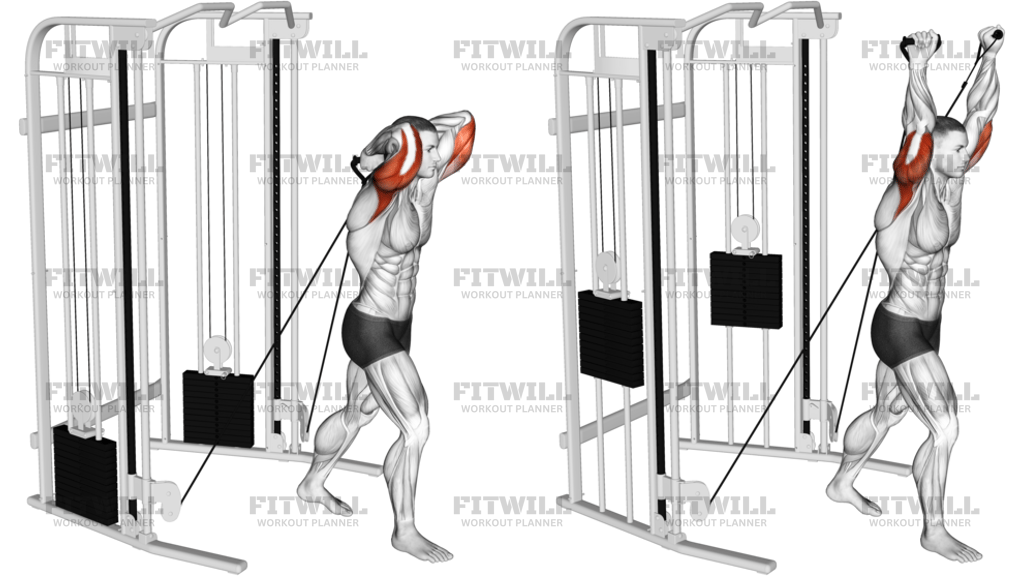
Cable Standing Crossover Overhead Tricep Extension is a standing cable triceps isolation exercise performed between two low pulleys with the arms taken overhead so the lines of pull cross behind the body. The setup matters because the crossed cable angle changes where the resistance feels strongest and keeps tension on the triceps through the whole rep, especially when the elbows are flexed and the long head is stretched.
This movement is mainly a triceps exercise, but the shoulders, forearms, and trunk have to stabilize the body so the arms can do the work cleanly. The overhead position makes it more demanding than a simple pressdown because the upper arms stay elevated while the elbows open and close. That makes it useful for lifters who want direct arm work with a cable path that stays smooth and easy to load precisely.
The best reps start with a stable stance, a slight forward lean, and the ribs stacked over the pelvis so the lower back does not take over. From there, the elbows should stay pointed up and mostly fixed in space while the forearms straighten the handles overhead. If the shoulders shrug, the elbows drift wide, or the torso swings to finish the rep, the set stops being a triceps isolation pattern and becomes a full-body compensation.
Because the cables continue pulling from behind and below, control on the lowering phase is as important as the press itself. Lower the handles until the triceps are stretched but not irritated, then reverse the motion without bouncing out of the bottom. That controlled stretch is what makes this variation valuable for hypertrophy-focused arm work, accessory training, or high-rep cable sessions where constant tension is the goal.
It is a practical option for intermediate and beginner lifters alike as long as the load is light enough to keep the elbows steady and the neck relaxed. If the overhead position feels uncomfortable, shorten the range, reduce the load, or switch to a less demanding triceps cable variation. The exercise should feel like the triceps are doing the elbow extension, not like the shoulders are trying to hold the whole stack in place.
[ Workout Log & Planner ]
Put your next workout in Fitwill
Keep your plan and training log ready when you are.


Instructions
- Set both cable pulleys low, attach single handles, and stand between the towers so the cables cross behind you.
- Face away from the machine, take a split stance, and bring the handles overhead with your elbows bent and pointing mostly upward.
- Keep your chest tall, ribs stacked over your pelvis, and your neck long before you start the first rep.
- Hold the handles so your wrists stay neutral and your upper arms stay close to your head instead of flaring wide.
- Exhale and extend your elbows until your arms are nearly straight, stopping short of a hard lockout.
- Pause briefly at the top while keeping the cables under tension and your shoulders quiet.
- Inhale and lower the handles back behind your head in a controlled arc until you feel a strong triceps stretch.
- Keep your torso still through the return, then repeat for the planned reps before carefully stepping out of the cable line.
Tips & Tricks
- A split stance helps you resist the backward pull of the cables and keeps the low back from arching.
- Keep the elbows high and relatively fixed; if they drift wide, the shoulders start stealing the rep.
- Choose a load you can lower slowly, because the stretch position is where sloppy reps usually show up first.
- Let the handles travel just behind the crown of the head, not far down the neck, to keep the line of force on the triceps.
- If one side feels stronger, lighten the stack before you chase symmetry with a heavier load.
- Keep the wrists stacked over the forearms so the hands do not bend back under cable tension.
- Stop the set when you have to lean forward or jerk the handles to finish the extension.
- A controlled tempo should make the triceps burn; if the shoulders or lower back are burning first, the setup is off.
Frequently Asked Questions
What muscle does Cable Standing Crossover Overhead Tricep Extension target most?
The triceps are the primary target, with the overhead position putting extra emphasis on the long head.
Can beginners perform this exercise?
Yes, beginners can use it if they keep the load light, the elbows steady, and the torso from leaning back.
Why are the cables crossed behind the body?
The crossover setup changes the angle of pull and keeps tension on the triceps through the start, middle, and finish of the rep.
Should my elbows move during the rep?
The elbows should stay mostly fixed overhead while the forearms open and close. Big elbow flare usually means the shoulders are taking over.
How far should I lower the handles?
Lower them until you feel a strong triceps stretch without pain or shoulder irritation, then reverse smoothly instead of bouncing.
Is a split stance necessary?
No, but a split stance makes it easier to stay balanced and keep the ribcage from flaring under cable tension.
What if the overhead position bothers my shoulders?
Shorten the range, reduce the load, or use a less overhead triceps variation such as a pressdown.
What should I avoid to keep tension on the triceps?
Avoid leaning back, shrugging the shoulders, and using momentum to snap the handles into lockout.
How do I know the load is too heavy?
If you cannot keep the elbows stacked overhead and the return becomes a bounce, the stack is too heavy for clean work.