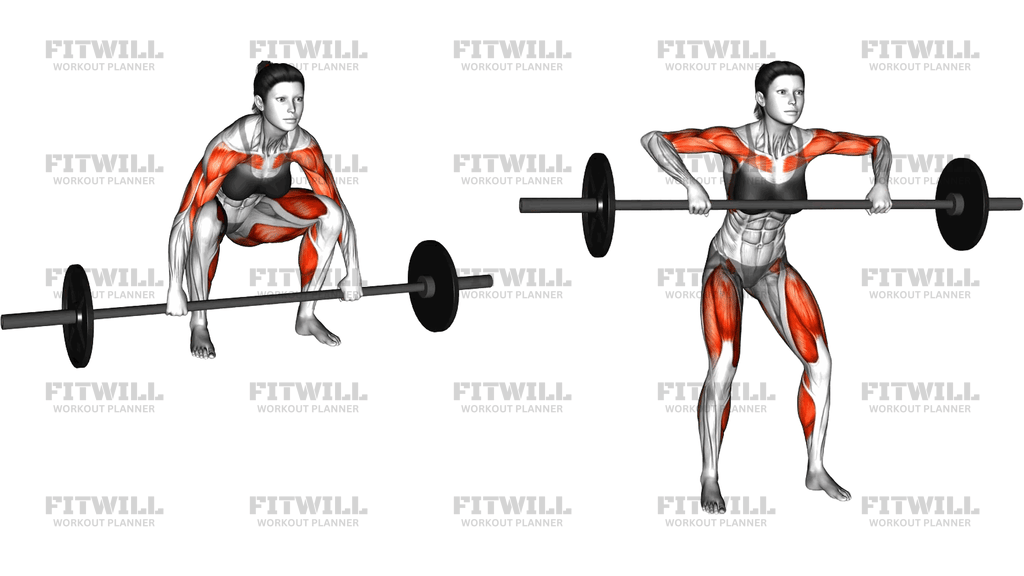
Barbell Behind The Back Deadlift
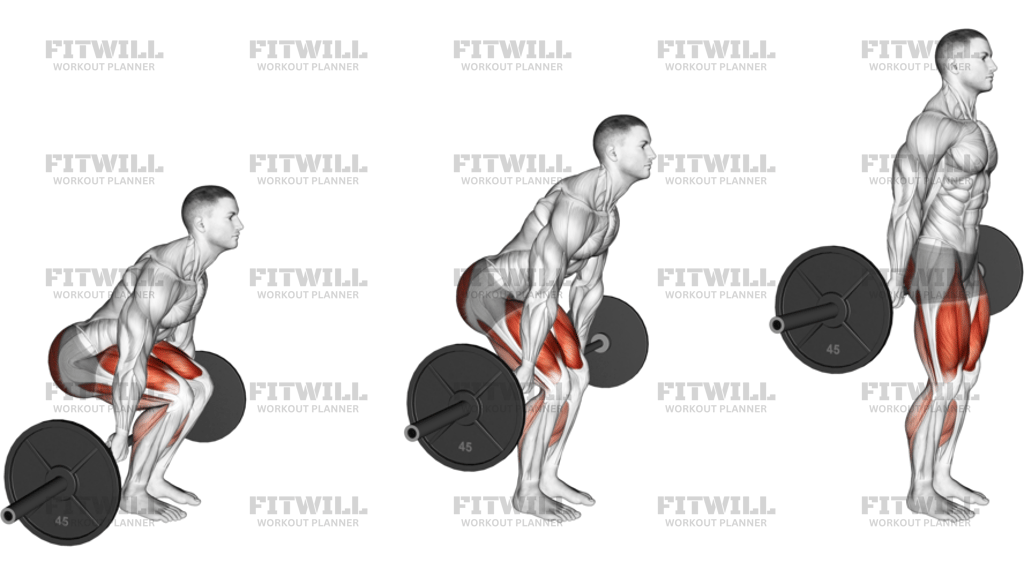
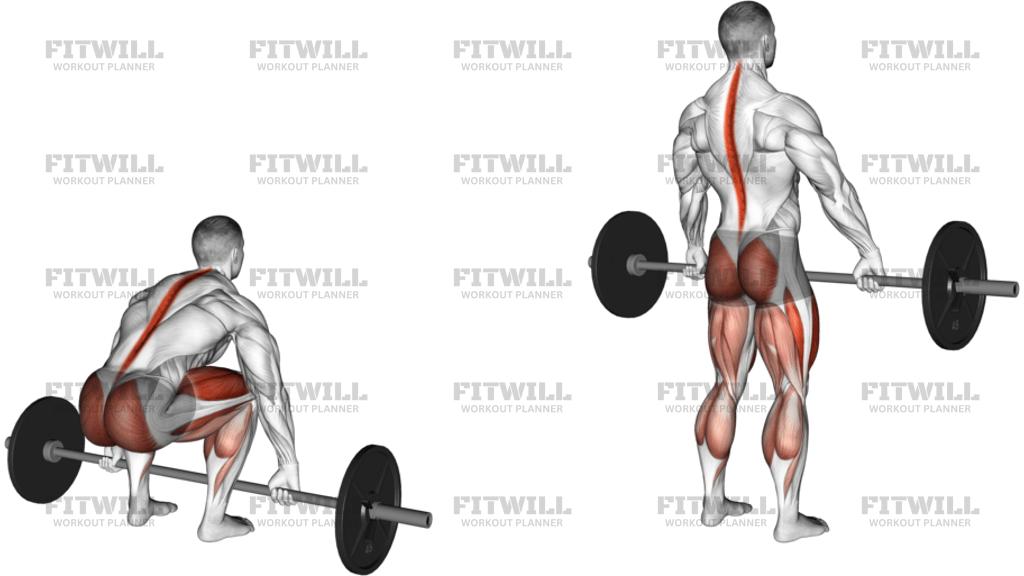
Barbell Behind The Back Deadlift is a hip-dominant barbell variation that places the load behind the body instead of in front of the shins. That setup changes the feel immediately: the hips have to sit back, the torso has to stay organized, and the bar must travel close to the legs instead of drifting away from them. It is useful when you want to train the posterior chain with a strict hinge pattern and a strong lockout.
This movement primarily challenges the hips and glutes, with the hamstrings, spinal stabilizers, and grip helping keep the position clean. Because the bar starts behind the body, the posture demand is higher than on a standard deadlift, and the setup matters more than ego loading. A stable stance, a neutral spine, and a controlled brace make the difference between a smooth repetition and a lift that turns into a tug-of-war with your lower back.
Barbell Behind The Back Deadlift works best when you reach for the bar with the hips hinged, the chest angled forward, and the shoulders packed instead of rounded. The bar should stay close to the calves and thighs as you stand up, then track back down the same path under control. If the bar drifts away from the legs or the knees shoot forward too early, the lever gets longer and the hips lose the work.
This is a good accessory lift for lifters who want more glute and hamstring involvement, stronger hinge mechanics, or extra posterior-chain volume without changing to a different machine. It can also be helpful for teaching a clean lockout because the top position is easy to read: ribs down, glutes tight, knees extended, and the body stacked over the feet. The range of motion should stay smooth and pain-free, not forced deeper than your hamstrings or setup allow.
Use a load that lets you keep the bar path tight and the return controlled from the last rep to the first. The moment your lower back starts doing the lifting, shorten the set, reset the stance, or reduce the weight. Barbell Behind The Back Deadlift should feel deliberate and strong, not rushed, and the safest reps are the ones where the hinge stays predictable from start to finish.
[ Workout Log & Planner ]
Put your next workout in Fitwill
Keep your plan and training log ready when you are.


Instructions
- Stand with your feet about hip-width apart and the barbell on the floor behind your heels, close enough that you can reach it without rounding your back.
- Hinge at the hips, bend your knees, and reach both hands behind your legs to take the bar with straight arms and a balanced grip just outside your thighs.
- Set your shoulders down, lift your chest slightly, and brace your midsection before the bar leaves the floor.
- Drive through your feet and stand up by pushing your hips forward while keeping the bar brushing close to your calves and thighs.
- Finish tall with your glutes squeezed, ribs stacked over your pelvis, and your knees fully extended without leaning back.
- Lower the bar by hinging your hips back first, then bending your knees as the bar passes them, keeping the descent smooth and controlled.
- Let the plates settle on the floor behind your heels without losing your brace or letting your shoulders round forward.
- Reset your hinge and breathing before the next repetition or before stepping away from the bar.
Tips & Tricks
- Keep the bar close to your legs on both the lift and the lower. If it swings forward, the hinge turns into a back-dominant pull.
- Start lighter than you would for a standard deadlift. The behind-the-body setup makes the position harder to control, especially off the floor.
- Think hips back before knees bend again on the descent. Dropping the knees too soon shortens the hamstring tension and changes the path.
- Keep your chin neutral instead of craning forward to watch the bar. A long neck helps the spine stay organized while you stand up.
- Squeeze your glutes hard at lockout, but do not lean back to finish the rep. The top should look tall, not exaggerated.
- If your grip is the limiting factor, use straps only after you can keep the bar path clean without them.
- A small pause just above the floor can help if the bar bounces or your hips shoot up faster than your shoulders.
- Stop the set when the bar starts drifting away from your thighs or your lower back takes over the last few reps.
Frequently Asked Questions
What does Barbell Behind The Back Deadlift train most?
It emphasizes the hips and glutes, with the hamstrings, grip, and spinal stabilizers helping keep the hinge controlled.
Can beginners perform this exercise?
Yes, but only with a light load and a very deliberate hinge. The behind-the-body setup is less forgiving than a standard deadlift.
Where should the bar travel during Barbell Behind The Back Deadlift?
It should stay close to the calves and thighs from the floor to the top. If it drifts away from your body, the lift gets harder on the lower back.
Should my knees stay bent the whole time?
No. Bend them enough to reach the bar, then let the hips drive the movement. On the way up, the knees and hips should extend together.
Why does Barbell Behind The Back Deadlift feel different from a regular deadlift?
Because the bar sits behind your body, it changes your balance and forces a cleaner hip hinge. The torso usually has to work harder to stay stacked.
What if I cannot keep my chest up?
Reduce the load and shorten the range slightly until you can hinge without rounding. The bar should leave the floor only when your brace and back position are set.
Is this exercise better for glutes or hamstrings?
It hits both, but the glutes usually take the lead at lockout while the hamstrings do more work in the hinge and lowering phase.
Can I use straps with Barbell Behind The Back Deadlift?
Yes, if grip starts limiting the set before your hips do. Use straps as a way to keep the bar path clean, not to mask a sloppy hinge.