Weighted Full Can Exercise
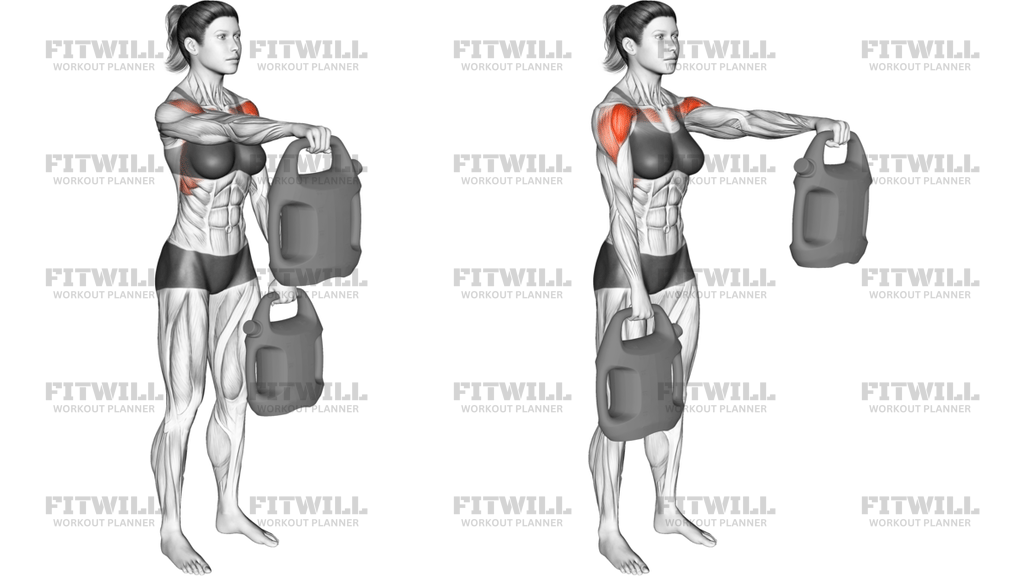
Weighted Full Can Exercise is a standing dumbbell shoulder raise performed in the scapular plane with the thumbs turned up. It is a strict accessory movement for building shoulder control, clean humeral positioning, and smooth overhead-line strength without turning the rep into a shrug or a swing. The image shows the classic full-can pattern: dumbbells begin at the sides and travel on a slightly forward arc to shoulder height.
The full-can angle matters because the arms do not lift straight out from the torso. Instead, they rise a little in front of the body, which usually keeps the shoulder joint more organized and makes it easier to hold the upper arm in a stronger path. The thumbs-up grip encourages external rotation and helps reduce the urge to roll the shoulders forward as the dumbbells get heavier.
This is not a momentum exercise. A good repetition starts with tall posture, stacked ribs, and a quiet torso. The weights should move as one controlled unit, with only a small bend in the elbows and no leaning back to finish the lift. If the shoulders hike toward the ears, the load is too heavy or the range is too high.
Use the movement to train clean shoulder mechanics, especially when you want a lighter accessory lift that still demands precision. It fits well in warmups, shoulder-focused sessions, and rehab-style strength work where pain-free range and repetition quality matter more than load. The lift should feel smooth through the midrange and controlled on the way down, with no pinching at the top.
If the position causes discomfort, shorten the range slightly, keep the dumbbells a touch farther in front of the body, and lighten the resistance. The goal is a repeatable, shoulder-friendly arc from the thighs to shoulder height, not a forced overhead finish. When performed well, the exercise gives the deltoids and surrounding stabilizers a clean dose of tension without unnecessary joint stress.
Fitwill
Log Workouts, Track Progress & Build Strength.
Achieve more with Fitwill: explore over 9600 exercises with images and videos, access built-in and custom workouts, perfect for both gym and home sessions, and see real results.
Start your journey. Download today!




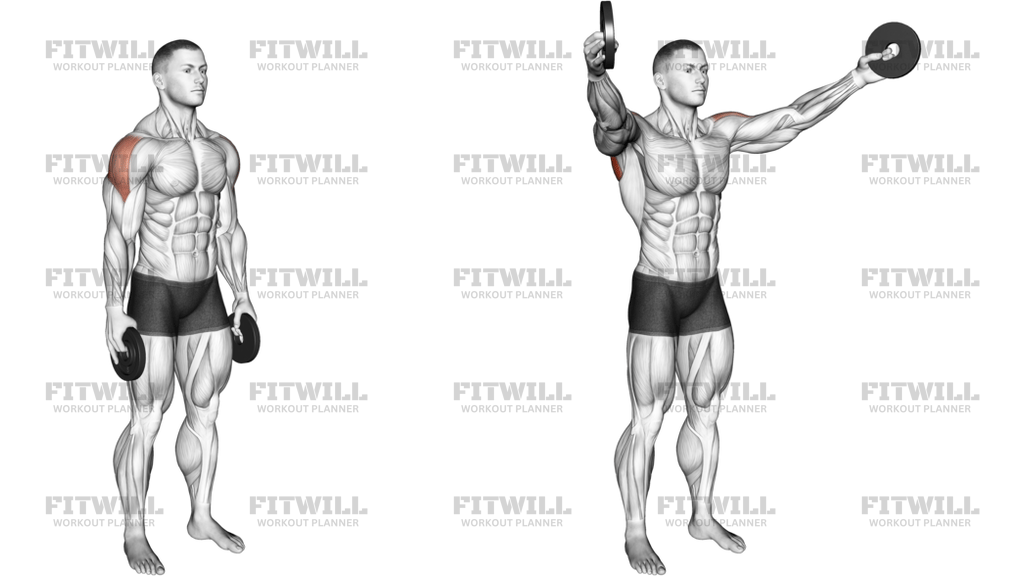
Instructions
- Stand tall with your feet about hip-width apart and hold a dumbbell in each hand beside your thighs, palms facing your body and thumbs slightly turned forward.
- Set the dumbbells a little in front of your hips so the arms start in the scapular plane instead of directly out to the sides.
- Keep a soft bend in both elbows, pull the shoulders away from the ears, and stack your ribs over your pelvis before the first rep.
- Brace lightly through the torso so the weights move without any lean, swing, or arch in the lower back.
- Raise both dumbbells together in a smooth arc until your upper arms reach about shoulder height.
- Keep the thumbs up and the wrists neutral as the arms travel; do not let the pinkies rise above the thumbs.
- Pause briefly at the top only if you can stay relaxed through the neck and keep the shoulders from shrugging.
- Lower the dumbbells along the same slightly forward path until they return to your thighs, then reset before the next rep.
- Exhale as you lift and inhale as you lower, stopping the set if the motion turns into a swing or a painful pinch.
Tips & Tricks
- Keep the thumbs up the whole time; if the hands start turning down, the shoulder usually loses the cleaner full-can position.
- Use a lighter pair of dumbbells than you would for a normal lateral raise, because the stricter path exposes cheating quickly.
- Stop around shoulder height; taking the dumbbells higher usually turns the rep into a trap-dominant shrug.
- Let the elbows stay softly bent instead of locking out, which helps keep tension on the deltoids and off the joints.
- Think about lifting slightly forward and out, not straight sideways from the body.
- Keep the neck long and quiet; if you feel yourself reaching the ears, the load is too heavy.
- Lower the dumbbells slowly enough to feel the shoulders working on the way down, not just on the way up.
- If one shoulder pinches before the other, shorten the top range for both arms rather than forcing the painful side through it.
- Do not use leg drive or torso sway to finish the set; that usually means the set has gone past strict accessory work.
Frequently Asked Questions
What muscles does the weighted full can raise work?
It primarily trains the shoulder complex, especially the deltoids, with the rotator cuff and scapular stabilizers helping guide the dumbbells.
Why are the thumbs turned up in this dumbbell raise?
The thumbs-up position keeps the arm in a more external-rotation-friendly path and often feels friendlier on the shoulder than a palms-down raise.
How high should I raise the dumbbells?
Stop around shoulder height. Going higher usually shifts the effort toward the upper traps and can make the movement feel pinchy.
Can beginners do the weighted full can exercise?
Yes, as long as the dumbbells are light and the person can hold the scapular-plane path without shrugging or swinging.
What is the difference between a full can raise and a regular lateral raise?
A full can raise travels slightly forward with the thumbs up, while a regular lateral raise is more directly out to the side and often turns the palms down.
Where should the dumbbells travel during each rep?
They should move from the thighs to shoulder height on a smooth arc a little in front of the torso, not straight out from the body.
What should I do if the top of the rep pinches my shoulder?
Reduce the range, keep the arms slightly farther forward, and lower the weight. If the pinch stays, choose a different shoulder drill.
What is the biggest form mistake with this dumbbell raise?
Shrugging the shoulders and using torso sway to move the dumbbells is the most common error.