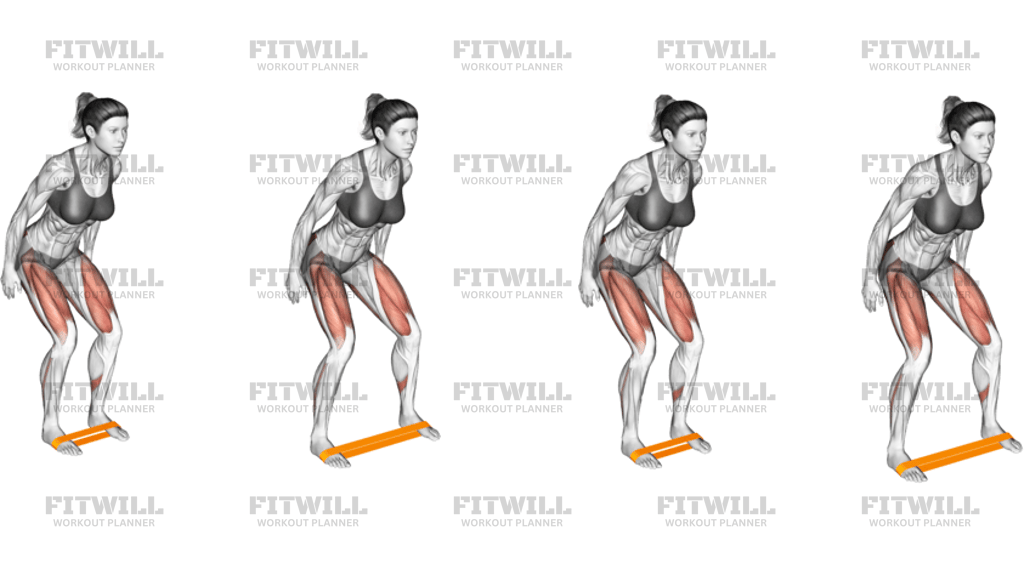
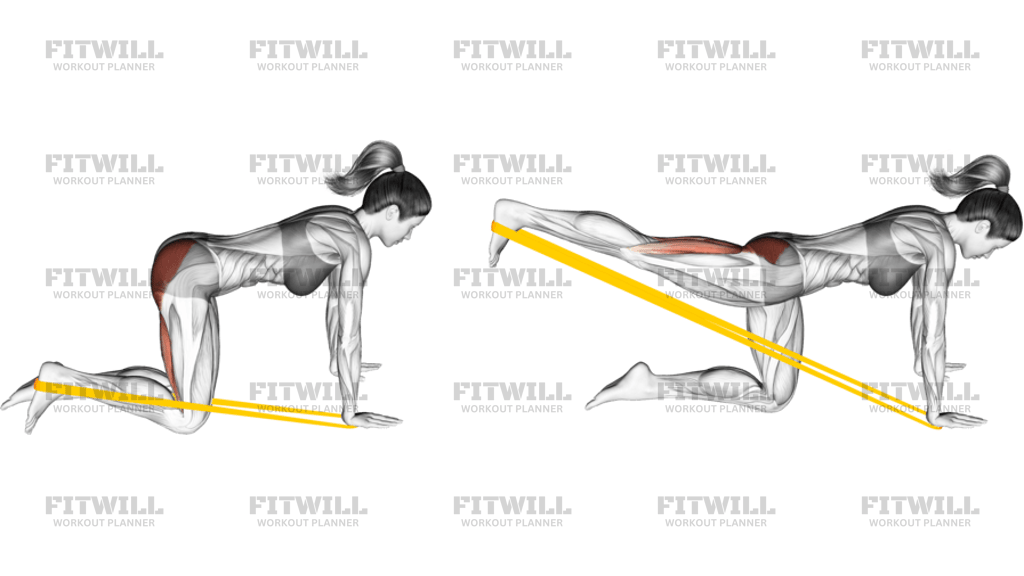
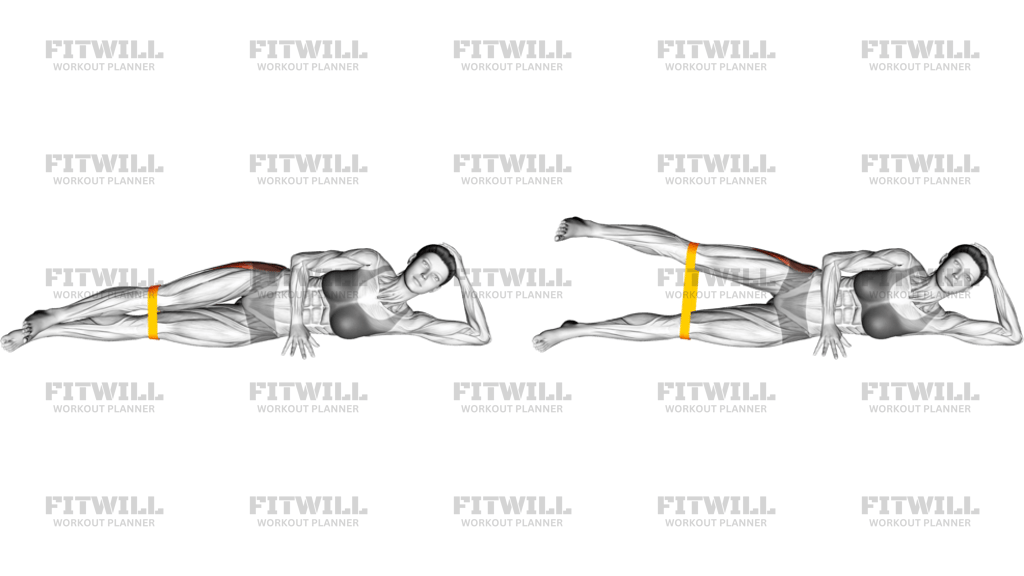
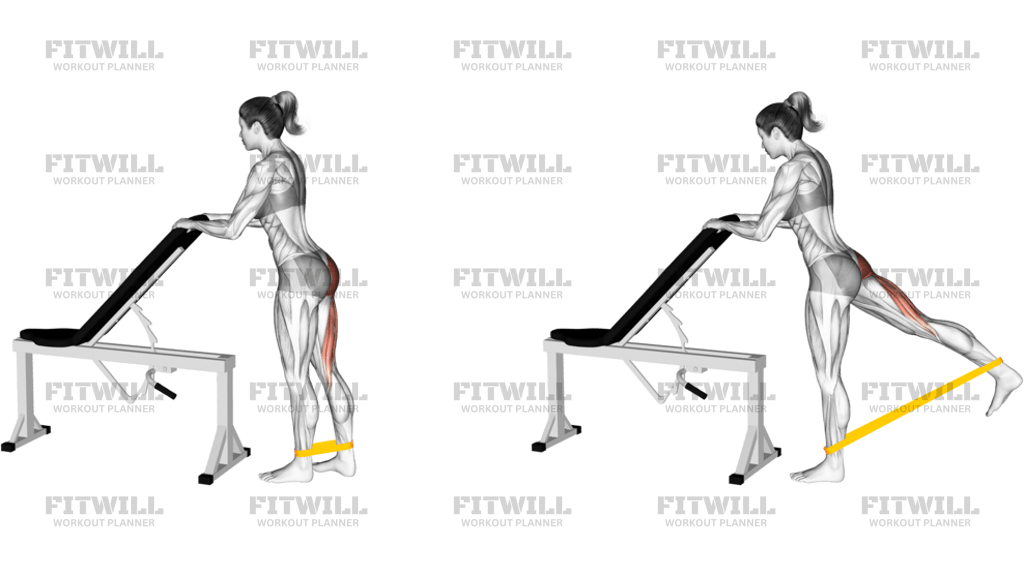
Resistance Band Pull Through
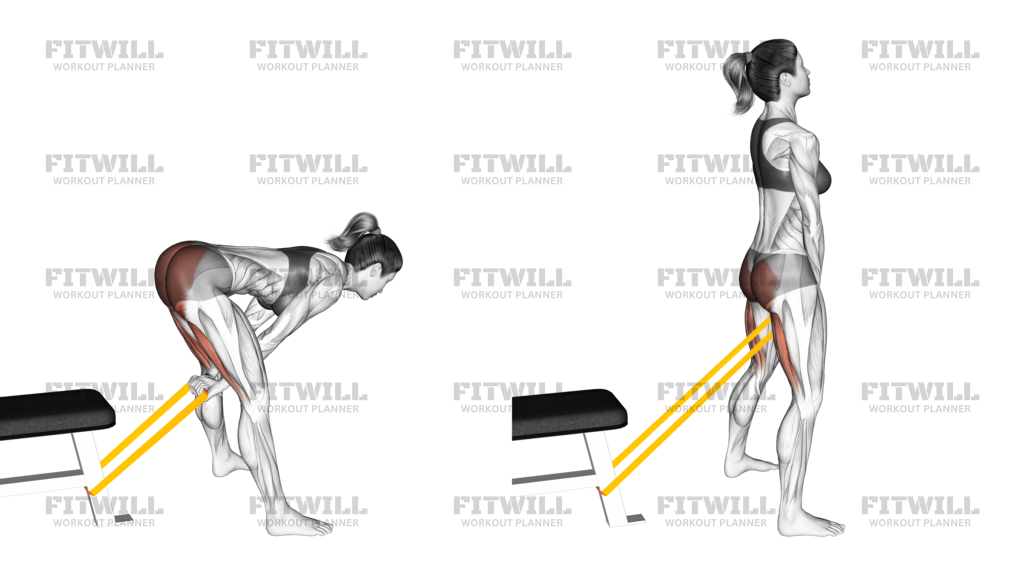
Resistance Band Pull Through is a hip-hinge exercise that teaches you to load the glutes and hamstrings without putting much stress on the shoulders or upper back. It is especially useful when you want a simple, repeatable pattern for glute training, hinge practice, or posterior-chain work that does not require a lot of equipment. The band keeps tension on the hips through the full rep, so the exercise works best when you stay organized and avoid turning it into a squat or a lower-back swing.
The main emphasis is on the glutes, with the hamstrings, core, and lower back helping you hold position and control the path of the movement. In anatomy terms, the primary muscle is the Gluteus Maximus, with support from the Biceps Femoris, Rectus Abdominis, and Erector Spinae. Resistance Band Pull Through is a good choice when you want hip extension volume with a cleaner line of pull than free-weight hinging or when you need a lower-impact accessory exercise for the posterior chain.
The setup matters because the band should pull from behind you, through the legs, and across the hips as you hinge. Stand a few steps in front of the anchor so the band already has tension at the top, then step into position with feet about hip-width apart and the band running between the legs. Keep the knees soft, the spine long, and the shoulders quiet so the band line stays centered and the hips can travel back smoothly.
Each repetition should start with the hips moving back, not the chest dropping forward. Let the torso tip from the hips until the band is stretched and the glutes and hamstrings are loaded, then drive the hips forward by squeezing the glutes and standing tall. The finish should feel like strong hip extension, not a hard lean-back or a squeeze from the lower back. A controlled return keeps tension on the target muscles and helps the movement stay consistent from rep to rep.
Resistance Band Pull Through works well as accessory glute work, warm-up hinge practice, or a lower-load finisher when you want clean posterior-chain volume. Beginners can learn it quickly because the band gives clear feedback, but the exercise still rewards careful tempo and attention to posture. If the band drags you off balance, the stance is too narrow or the anchor is too high; if you feel the lower back taking over, shorten the range slightly and finish with the glutes instead of arching to the top.
[ Workout Log & Planner ]
Put your next workout in Fitwill
Keep your plan and training log ready when you are.


Instructions
- Anchor the band low behind you on a sturdy post and step forward until the band has light tension before you hinge.
- Stand facing away from the anchor with feet about hip-width apart and the band running between your legs.
- Hold the band ends or handle low in front of your hips with straight arms and relaxed shoulders.
- Soften your knees, brace your midsection, and hinge your hips back until your torso leans forward and the band stretches.
- Keep your spine neutral and let your hips travel back instead of dropping into a squat.
- Drive your hips forward by squeezing your glutes until you stand tall without leaning backward.
- Finish the rep with your ribs stacked over your pelvis and your arms still hanging straight in front of you.
- Inhale as you hinge down, exhale as you extend the hips, and keep the band under control on the way back.
- After the set, step back carefully and let the band tension off before you release it.
Tips & Tricks
- Set the anchor low enough that the band pulls straight through the hips instead of climbing up toward your waist.
- Take a step forward before starting so the top of each rep already has tension; a slack band makes the first half of the movement sloppy.
- Think hips back, not chest down. If your knees travel far forward, the exercise starts looking like a squat instead of a hinge.
- Keep your shins nearly vertical so the glutes and hamstrings do the work instead of your quads taking over.
- Stop the finish when your hips are fully extended; do not lean back or flare your ribs to fake a bigger rep.
- Let your arms stay long and loose. If you start rowing the band, the tension shifts away from the hips.
- Use a shorter hinge range if you feel your lower back taking over before the glutes load properly.
- A smooth 2-second hinge down and strong drive up usually works better here than fast, jerky reps.
- Choose a band that lets you keep the same torso angle and hip path on every rep.
Frequently Asked Questions
What muscles does Resistance Band Pull Through work?
It mainly targets the glutes and hamstrings, with the core and lower back helping you keep the hinge stable.
Is Resistance Band Pull Through good for beginners?
Yes. The band gives clear tension feedback and makes it easier to learn a clean hip hinge before moving to heavier loading.
Where should I anchor the band for Resistance Band Pull Through?
Anchor it low and behind you so the band pulls through the legs and across the hips. A high anchor changes the line of pull and makes the setup awkward.
How far should I hinge on Resistance Band Pull Through?
Hinge until you feel a strong stretch in the hamstrings and the band is loaded, then drive the hips forward. You do not need to force a huge range if your back starts rounding.
Why do I feel Resistance Band Pull Through in my lower back?
That usually means you are finishing by arching the spine instead of extending the hips. Shorten the range a little and squeeze the glutes to stand tall.
Should my knees bend a lot during Resistance Band Pull Through?
No. Keep only a soft bend so the movement stays a hip hinge and the shins stay close to vertical.
Can I use Resistance Band Pull Through instead of cable pull throughs?
Yes. The pattern is very similar, but the band version usually feels lighter at the top and more forgiving for home training or warm-ups.
What rep range works best for Resistance Band Pull Through?
Moderate to higher reps usually work well, especially when the goal is glute activation, hinge practice, or accessory posterior-chain work.