3 Leg Dog Pose
3 Leg Dog Pose is a bodyweight yoga-style stretch and strength drill that moves between a high plank, downward dog, and a single-leg three-legged dog position. The pose is built to lengthen the shoulders, lats, hamstrings, calves, and back line while also asking the core and supporting shoulder to keep the torso steady. It is not a loaded strength exercise, but the quality of the position still matters because the benefit comes from clean alignment rather than forcing a bigger shape.
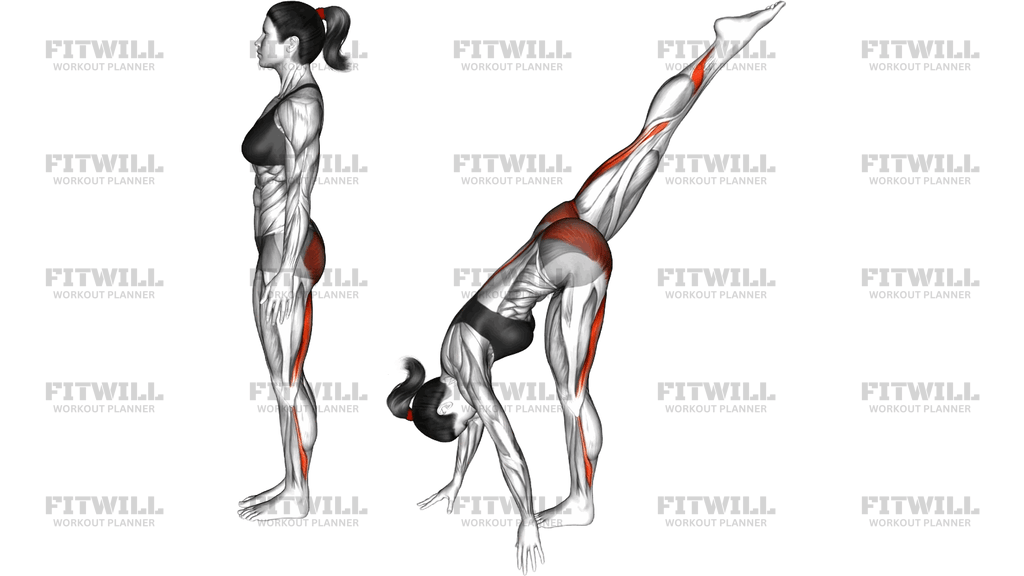
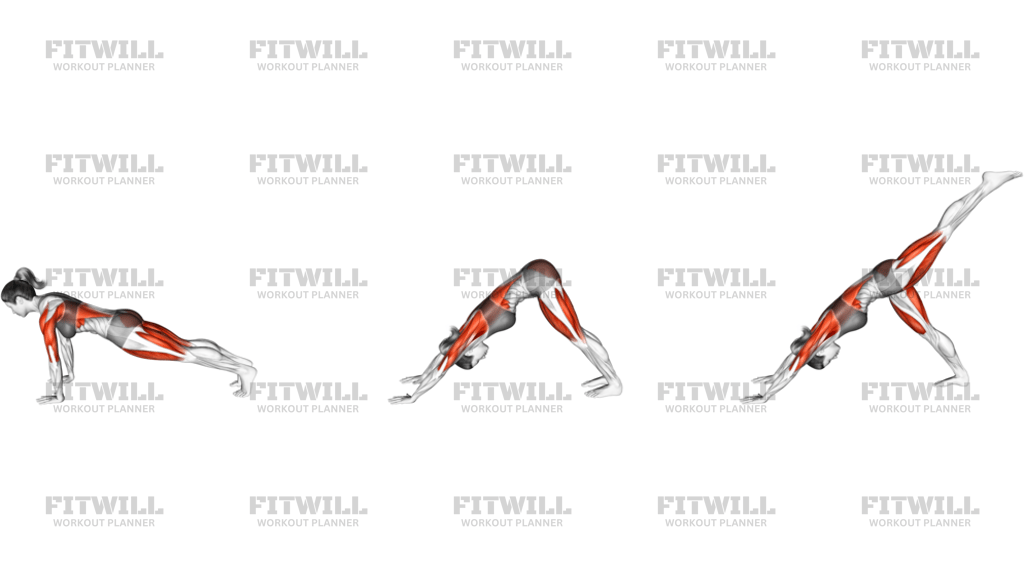
The image shows the body passing from a plank into a strong inverted V and then reaching one leg high behind the hips. That sequence makes the exercise useful for warming up the shoulders, opening the posterior chain, and rehearsing hip extension without compressing the low back. Keeping the hands grounded, the ribs organized, and the standing heel active helps the stretch land where it should instead of turning into a collapsed lower-back arch.
The setup starts on the floor with the hands under or slightly in front of the shoulders and the feet planted long behind you. From plank, press the floor away and send the hips up and back into downward dog, then keep one leg straight and reach it toward the ceiling for the three-leg variation. The lifted leg should feel long, not yanked upward, and the standing leg can stay softly bent if that helps you keep both hips level and the spine long.
Because this is a control-based pose, the best reps are smooth and repeatable. Breathe into the back and side ribs as you lengthen, then exhale as you lift and stabilize. If the shoulders shrug, the pelvis twists hard, or the low back takes over, reduce the height of the raised leg and make the position smaller. This exercise fits well in warmups, mobility circuits, recovery sessions, and low-intensity core work where you want active length rather than fatigue.
[ Workout Log & Planner ]
Put your next workout in Fitwill
Keep your plan and training log ready when you are.


Instructions
- Start on the floor in a high plank with your hands under your shoulders, fingers spread, legs long, and your body in one straight line from head to heels.
- Press through your palms and shift your hips back and up until you arrive in downward dog, keeping your arms straight and your chest moving toward your thighs.
- Let one heel reach toward the floor while the other leg stays grounded and your ribs stay tucked enough to avoid over-arching your lower back.
- From downward dog, keep the standing foot anchored and lift the other leg straight behind you until it reaches the three-legged dog position shown in the image.
- Reach the lifted heel high and long instead of flinging the leg up; keep the pelvis as square as you can while the leg stays active.
- Hold the position for a breath or two if you are using it as a stretch, or move smoothly between plank, downward dog, and three-legged dog if you are flowing.
- Keep your shoulders active by pushing the floor away, and keep your neck relaxed so the head hangs between the arms without strain.
- Lower the lifted leg back to downward dog, then return to plank or switch sides, keeping the movement slow and controlled.
Tips & Tricks
- Spread your fingers and press through the base of the index finger and thumb so the wrists do not dump all the pressure into the heel of the hand.
- If your hamstrings are tight, keep the knees soft in downward dog instead of trying to lock the legs straight immediately.
- Think about sending the lifted heel away from your hands, not just higher toward the ceiling, so the stretch stays long through the hip and hamstring.
- Keep the front of the ribs from flaring open; a small rib tuck helps the low back stay out of the movement.
- Do not let the standing shoulder collapse toward the ear. Push the floor away and keep the shoulder blade wrapped and stable.
- A smaller leg lift is better than an exaggerated arch in the spine, especially if you feel the pose in the low back more than the back of the leg.
- Use a bent standing knee when needed to keep both hips more level and make the pose more accessible.
- Move slowly through the plank-to-downward-dog transition so your wrists, shoulders, and calves can actually organize into the shape.
Frequently Asked Questions
What does 3 Leg Dog Pose train the most?
It mainly stretches the shoulders, lats, hamstrings, and calves while the core and supporting shoulder work to keep the shape controlled.
Is 3 Leg Dog Pose a stretch or a strength exercise?
It is mostly a mobility and stretch drill, but the plank and three-legged dog positions also challenge shoulder and trunk stability.
Should my standing heel touch the floor in downward dog?
It does not have to. Let the heel reach down as far as your calf and hamstring flexibility allow without rounding or forcing the pose.
How high should the lifted leg go?
Only as high as you can keep the pelvis mostly square and the low back quiet. The goal is a long line, not the biggest kick possible.
Can beginners do this pose?
Yes. Beginners usually do best with a smaller leg lift, a soft knee in downward dog, and a short hold instead of forcing a deep shape.
Why do my wrists feel loaded in this movement?
The pose starts from the hands, so some wrist loading is normal. Spread the fingers, press evenly through the palm, and shorten the hold if the wrists get irritated.
What is the most common mistake with three-legged dog?
The biggest mistake is opening the hips and arching the lower back just to get the foot higher. Keep the lift smaller and the torso more organized.
Where does this exercise fit in a workout?
It works well in warmups, mobility flows, recovery days, and light core sessions where you want active length and shoulder control.