3 Leg Chatarunga Pose
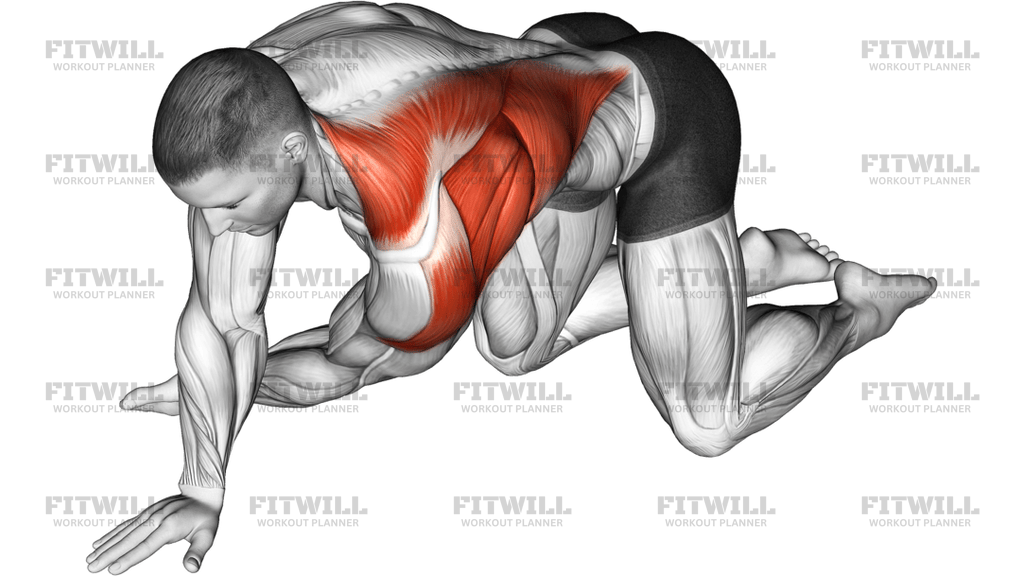
3 Leg Chatarunga Pose is a bodyweight yoga transition that links a high plank, a three-legged pike or downward-dog shape, and a chaturanga-style low plank while one leg stays active. It is less about speed and more about staying square through the shoulders and pelvis as you travel between those positions. The movement challenges shoulder stability, trunk control, and the ability to keep a long line through the lifted leg without dumping into the lower back.
Because the body is supported only by the hands and toes, the setup matters immediately. Hands should be planted firmly under or just slightly in front of the shoulders, fingers spread wide, with the torso braced before the hips move. The lifted leg adds leverage, so the core and glutes have to keep the pelvis from opening or twisting. When that shape stays organized, the exercise trains control through the chest, shoulders, triceps, core, and the back line of the raised leg.
The most useful version of the pose is smooth and deliberate. Shift from the plank into the lifted-leg pike, keep pressure through both palms, then glide forward into the low chaturanga without crashing the chest toward the floor. The elbows stay close, the neck stays long, and the ribs stay contained so the shoulders do not roll forward. A controlled return is just as important as the lowering phase, because the transition is what teaches coordination rather than a static hold.
This is a good choice for yoga-based strength work, warmups that need more than a simple plank, or accessory work that teaches scapular control and body awareness. Beginners can scale it by keeping the lifted leg lower, shortening the range into chaturanga, or dropping the knees before the forward glide if the shoulders cannot maintain position. If the movement becomes noisy or the hips start to swing open, the set is too hard for the current quality target.
[ Workout Log & Planner ]
Put your next workout in Fitwill
Keep your plan and training log ready when you are.


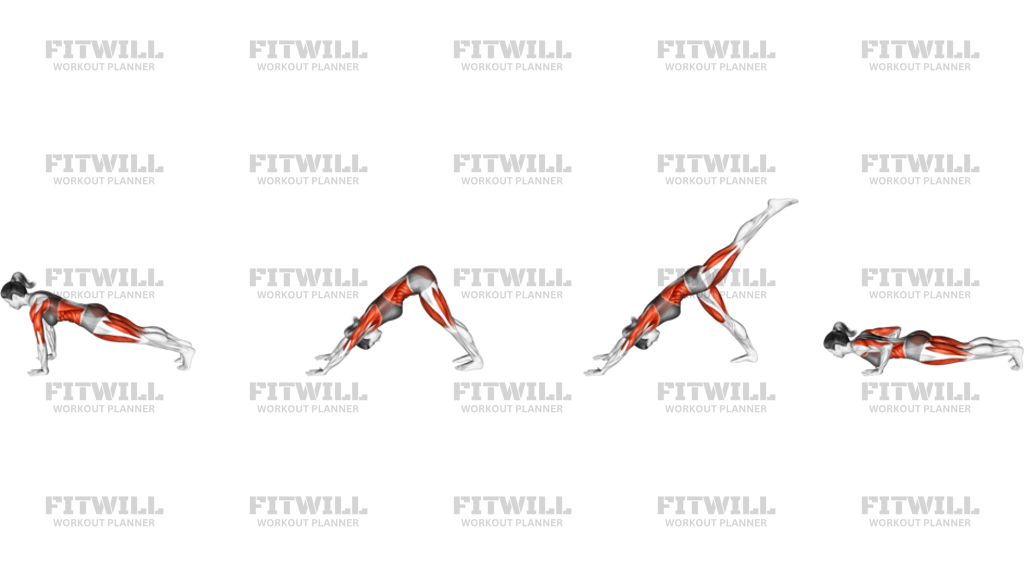
Instructions
- Place both hands on the floor under or slightly ahead of your shoulders, spread your fingers, and start in a strong high plank with one leg already lifted behind you.
- Press the floor away, keep your elbows straight, and draw your ribs in so your torso does not sag when the raised leg leaves the ground.
- Shift your hips up and back into a three-legged pike or downward-dog shape while keeping the lifted leg long and active.
- Square your hips as much as you can so the raised leg does not open the pelvis to the side.
- From the pike, glide your body forward so your shoulders travel over the wrists and your chest moves toward a chaturanga position.
- Lower with your elbows tucked close to your ribs and stop before the shoulders collapse below the elbow line.
- Keep the lifted leg active through the whole transition instead of letting it drop or bend to create momentum.
- Inhale on the setup or forward shift, exhale as you lower, and reset the plank shape before starting the next rep.
Tips & Tricks
- Spread your fingers and press through the whole palm so the wrists are not taking the load alone.
- Keep the shoulders firm and slightly protracted in plank; collapsing between the shoulder blades makes the forward glide unstable.
- If your hips rotate open when the leg lifts, lower the leg a little and shorten the range before chasing a higher line.
- Think of the chaturanga as a controlled hover, not a push-up rep that dumps the chest down.
- Keep the neck in line with the spine and look slightly ahead of your hands instead of tucking the chin hard.
- Move the leg from the hip, not by swinging the low back; the glute of the raised leg should stay active.
- Use a slow tempo so you can feel the shift from pike into the low plank without losing shoulder position.
- Stop the set if the elbows flare, the ribs flare, or the lower back starts to sag.
Frequently Asked Questions
What does 3 Leg Chatarunga Pose work most?
It mainly trains shoulder stability, triceps, chest, and core control, with the lifted leg and glutes adding extra demand.
Do I keep the raised leg straight the whole time?
Yes if you can keep the pelvis square. A straight, active leg makes the transition cleaner, but you can soften the knee slightly if you need more control.
How high should the leg lift in the three-legged position?
High enough to feel the glute and hamstring, but not so high that your lower back arches or the hips twist open.
Where should my hands be during the chaturanga part?
Place them under or just ahead of the shoulders and keep pressure through the whole hand so the wrists stay stacked and stable.
Why do my shoulders feel shaky in this pose?
The transition asks the shoulders to stabilize while the body shifts forward and one leg is lifted, so shaky reps usually mean the movement is too fast or the range is too big.
Can beginners do this exercise?
Yes, but it works best with a reduced range, a lower lifted leg, or a knee-down modification until the plank and chaturanga positions feel solid.
What is the most common mistake in 3 Leg Chatarunga Pose?
Letting the ribs flare and the hips twist as the leg lifts, which turns the transition into a swing instead of a controlled shift.
Should I lower all the way to the floor in chaturanga?
No. Stop when the upper arms are about parallel to the floor and the shoulders still feel packed and controlled.