90 To 90 Stretch
90 To 90 Stretch is a seated hip mobility drill that places one leg in front of you and the other out to the side so both hips work through a clean 90-degree rotation pattern. The position is simple, but the benefit comes from keeping the pelvis organized while the femur rotates. It is commonly used to improve comfort in the hips before squats, lunges, running, kicking, or any session that asks for better lower-body rotation.
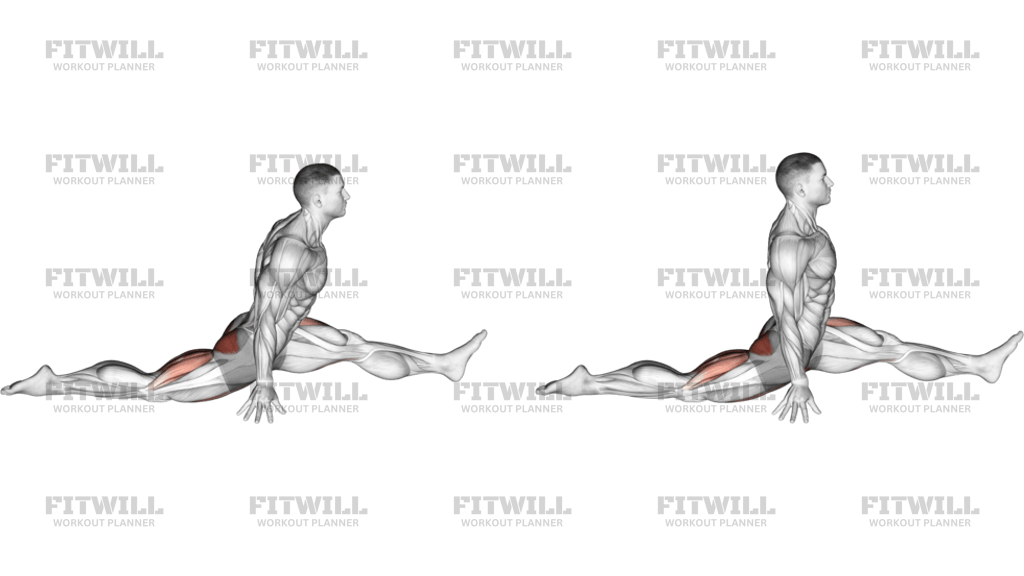
In the image, the torso stays tall and the hands support the body on the floor. That support matters because it lets you control the stretch without collapsing through the low back. The front hip is usually working through external rotation while the back hip gets more internal rotation, so the drill can feel very different on each side. The goal is not to force the deepest possible position; it is to find a shape you can breathe in and repeat cleanly.
A good 90/90 stretch starts with a stable base. Sit on a mat with both knees bent at about right angles, keep the sit bones as grounded as you can, and use your hands to keep the chest lifted. From there, you can stay upright for a general mobility emphasis or hinge slightly toward the front shin if you want a stronger stretch through the outer hip and glute on that side. Move slowly enough that the hips, not the spine, are the thing adapting.
This stretch is useful in warm-ups, cool-downs, mobility flows, and recovery sessions because it teaches control at end range instead of just passively hanging there. It can also reveal side-to-side differences: one hip may fold in comfortably while the other resists, pinches, or lifts the pelvis. If that happens, reduce the angle, sit on a folded towel or pad, and keep the movement smooth rather than forcing symmetry.
For best results, treat each transition like a controlled reset. Breathe out as you settle deeper, keep the knees and feet relaxed, and avoid bouncing or twisting hard through the lumbar spine. The stretch should feel like a directed hip opening drill with light support from the hands, not a strain through the knee or a crank through the low back.
[ Workout Log & Planner ]
Put your next workout in Fitwill
Keep your plan and training log ready when you are.


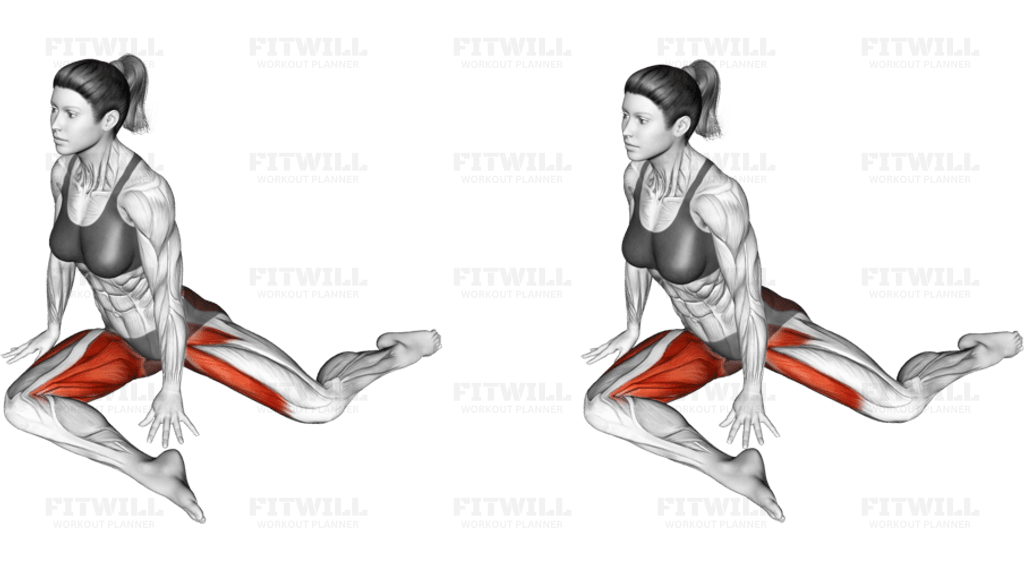
Instructions
- Sit on the mat with one leg in front of you and the other leg folded out to the side so both knees are bent near 90 degrees.
- Place both hands on the floor just outside your hips and lift the chest so your spine stays long.
- Keep both sit bones as grounded as possible and square your torso before you move deeper.
- Press lightly into your hands, inhale, and prepare the hips without shrugging or leaning into the low back.
- Exhale and hinge forward from the hips, keeping the chest tall as you settle toward the front shin.
- Stop at a stretch you can control, then breathe slowly and let the hips relax without bouncing.
- If one side feels tighter, use your hands to support more of your weight instead of forcing the knee or groin.
- Hold the position for a few breaths, then use your hands to rotate both knees through center and switch to the other side.
Tips & Tricks
- Use the hands as support, not as a way to yank yourself deeper into the stretch.
- If the front knee feels pinchy, bring that shin in a little closer and keep the torso more upright.
- If the back hip feels jammed, move the rear shin farther from your pelvis instead of twisting harder.
- A tall chest usually shifts the work into the hips more cleanly than collapsing over the front leg.
- Keep the front foot and back foot relaxed; gripping through the feet often turns the stretch into a cramp.
- A folded mat or towel under the sit bones can make it easier to stay upright and balanced.
- Breathe out as you settle into the side that feels tighter, but do not force a bigger range on the exhale.
- The stretch should be felt mostly in the outer hip, glute, or inner hip, not as sharp stress in the knee.
Frequently Asked Questions
What does the 90 To 90 Stretch train?
It trains hip rotation control, especially external rotation on the front leg and internal rotation on the back leg.
Which muscles usually feel this stretch most?
You will usually feel it in the glutes, deep hip rotators, adductors, and the side of the hip depending on which leg is forward.
Should my torso stay upright or lean forward?
Stay upright for a general hip mobility focus, or lean forward slightly over the front shin if you want a stronger stretch through the outer hip.
Why do my sit bones keep lifting off the floor?
That usually means the hips need a smaller angle or more support. Sit on a folded mat or reduce the amount you lean forward.
Is it normal to feel one side much more than the other?
Yes. Side-to-side differences are common with this drill, and the tighter side may need a shorter range and more time to open up.
Should I feel this in my knee?
No. The main sensation should be in the hip and surrounding soft tissue. Back off if the knee feels twisted or pinched.
Can beginners do the 90 To 90 Stretch?
Yes. Beginners should stay tall, use their hands for support, and keep the range comfortable instead of forcing the legs flatter.
When is this stretch most useful?
It works well in warm-ups, mobility sessions, or cool-downs when you want better hip rotation before lower-body training.
How can I make the stretch easier?
Keep more weight in your hands, sit on a pad, and reduce the forward hinge until you can breathe smoothly.