Single Leg Bridge With Outstretched Leg Left Side
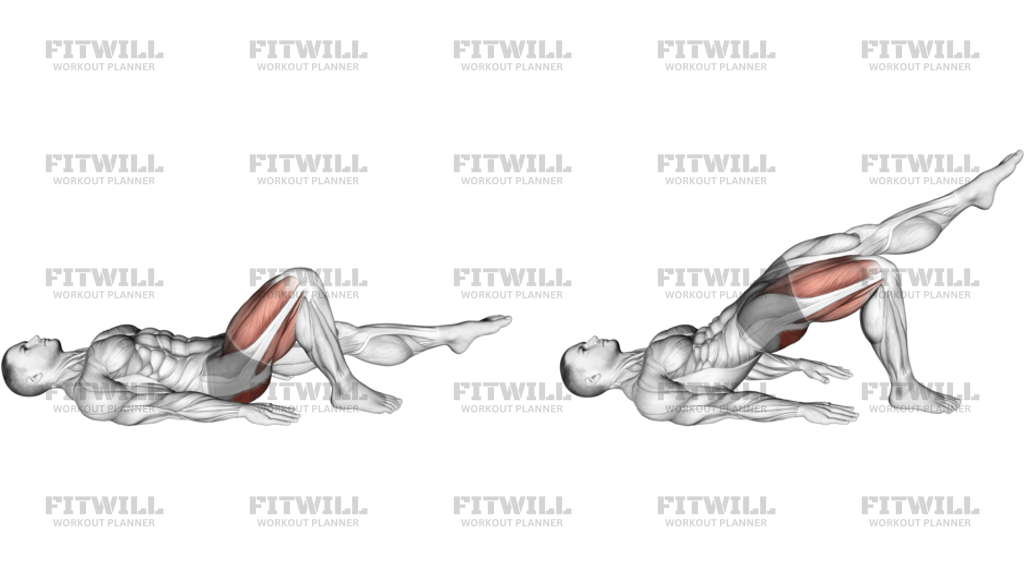
Single Leg Bridge With Outstretched Leg (left) is a floor bridge variation performed on an exercise mat with body weight. The left leg stays long and lifted while the opposite foot is planted, so the hips have to rise and stay level without help from both legs. That setup makes the movement much more demanding than a standard bridge because the working side has to extend the hip, the trunk has to resist rotation, and the pelvis has to stay square from start to finish.
This exercise is a strong choice when you want direct glute work with extra hamstring and core involvement. The planted leg drives the lift, while the extended leg changes leverage and removes the easy push from two feet on the floor. That asymmetry is useful for correcting side-to-side differences, improving single-leg stability, and teaching the hips to extend without arching the lower back. The body weight version is also easy to place in warmups, accessory blocks, rehab-style sessions, or lower-body circuits.
The quality of the rep depends on the starting position. Lie on your back with your shoulders relaxed on the mat, the left leg extended, the opposite knee bent, and the planted foot close enough that you can press through the heel without cramping. Before lifting, brace the trunk and set the ribs down so the pelvis can move as one unit. If the foot is too far away, the hamstring usually takes over; if it is too close, the rep can turn into a short, jammed motion. The best setup lets the glute drive the bridge while the pelvis stays controlled.
At the top, the body should form a straight line from the shoulders through the hips to the bent knee, with no twist toward the lifted-leg side. Pause briefly, squeeze the working glute, and lower with control until the hips touch down or nearly touch down without losing position. Do not throw the hips up, flare the ribs, or chase height by arching the lumbar spine. Smooth breathing, a steady tempo, and a clean side-specific setup matter more here than a big range of motion.
[ Workout Log & Planner ]
Put your next workout in Fitwill
Keep your plan and training log ready when you are.


Instructions
- Lie on your back on the mat with your left leg extended, your other knee bent, and the planted foot flat close to your glutes.
- Place your arms by your sides, relax your shoulders, and keep the extended leg long with the toes pointed slightly up.
- Set your ribs down and brace your trunk before you begin the lift.
- Press through the heel of the planted foot and drive the hips up without pushing off the extended leg.
- Lift until your shoulders, hips, and bent knee form a straight line.
- Keep the pelvis level and avoid letting the lifted-leg side rotate open or drop.
- Pause briefly at the top while squeezing the working glute.
- Lower the hips slowly with control until they nearly touch the mat.
- Reset fully and repeat for the target reps, then switch sides if you are training both legs.
Tips & Tricks
- Keep the planted heel heavy. If you feel the hamstring cramping, move the foot a little farther from your hips and reduce the range.
- Do not chase extra height by arching the lower back. The top position should come from hip extension, not spinal extension.
- Keep the extended leg active and off the floor. A lazy trailing leg makes the pelvis twist and steals tension from the glute.
- A short pause at the top usually improves glute engagement better than trying to pump out fast reps.
- If the hips drift to one side, narrow your focus to keeping both front hip bones level as you lift.
- Exhale as the hips rise and inhale on the way down so the trunk stays braced without becoming rigid.
- Keep the chin slightly tucked and the neck long so the ribcage does not flare during the bridge.
- Use a controlled lowering phase. The descent tells you whether the working side can really own the range.
- Stop the set if the planted side feels more like a low-back bridge than a glute bridge.
Frequently Asked Questions
What does Single Leg Bridge With Outstretched Leg (left) train most?
It primarily trains the glutes on the planted side, with the hamstrings and core working hard to keep the pelvis level.
Why is the left leg kept outstretched?
Keeping the left leg long removes support from both feet and forces the working hip to extend under more stability demand.
How should my planted foot be positioned?
Plant it flat on the mat close enough to drive through the heel, but not so close that the hamstring takes over immediately.
What is the most common mistake in this bridge?
The biggest mistake is twisting the hips or arching the low back to get higher instead of lifting from the glute.
Can beginners do this version of the bridge?
Yes, but they should start with a short range and slow tempo so they can keep the pelvis square and avoid hamstring cramping.
What should the top position look like?
Your shoulders, hips, and bent knee should form one straight line while the extended leg stays lifted and the pelvis remains level.
Why do my hamstrings cramp during this exercise?
Hamstring cramping usually means the foot is too close or you are trying to lift too high; move the heel slightly farther away and shorten the range.
Is this more of a strength or stability exercise?
It is both: the bridge builds hip extension strength while also challenging pelvic control and trunk stability on one side.