Ab Tuck
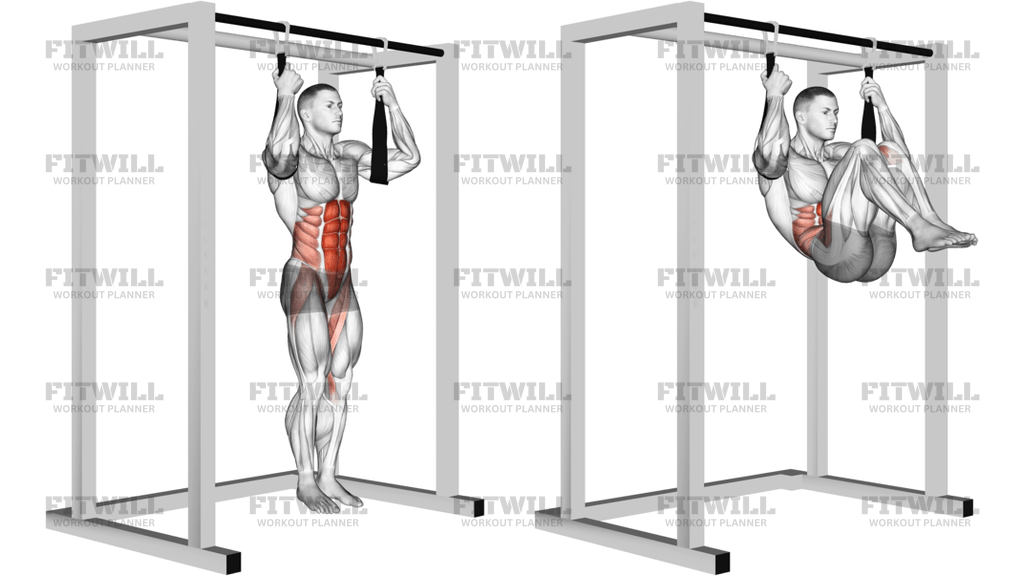
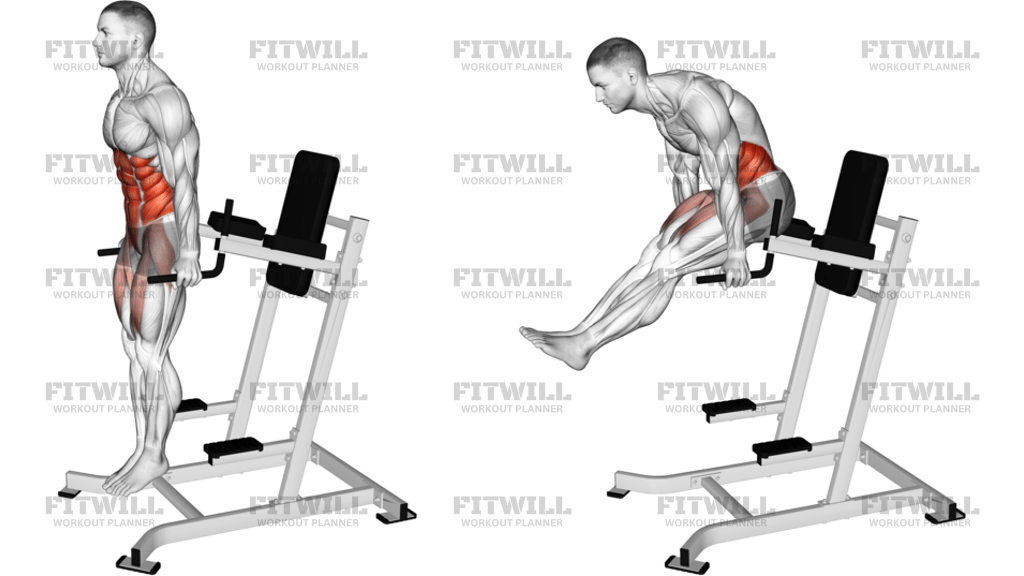
Ab Tuck is a supported core exercise performed on a captain's-chair or dip-station style apparatus. With your forearms on the pads and your hands on the handles, you draw the knees and pelvis upward while keeping the torso braced, which makes it a direct way to train the front of the waist without needing external load. The supported position reduces swing compared with hanging variations, so the exercise rewards control, pelvic position, and clean repetition speed more than brute force.
The main target is the rectus abdominis, with the obliques and deep abdominal wall helping you keep the pelvis from tipping forward as the thighs move. The hip flexors contribute strongly because they help lift the thighs, but the best repetitions still start from the trunk: you should feel the abs initiate the tuck rather than the legs flinging upward. When that relationship is right, the movement feels compact, deliberate, and easy to repeat.
The setup matters because the pads and handles should let you lock in a stable upper body before the lower body starts moving. Press the forearms into the pads, keep the shoulders down, and use the handles to avoid shrugging or swinging. From there, the rep is a controlled tuck, not a jump or a kick. A good rep shortens the front of the hips and curls the pelvis under while the chest stays quiet and the neck stays relaxed.
This exercise is useful when you want core work that is stricter than floor crunches and more accessible than unsupported hanging raises. It fits well in accessory work, abdominal circuits, or warmups when you want to train hip flexion and trunk control together. The biggest quality markers are smooth reps, a controlled return, and no swing through the bottom. If the lower back starts arching hard or the legs start whipping upward, the set is too heavy or too fast.
For most lifters, Ab Tuck is best treated as a bodyweight strength-and-control movement rather than a race for volume. Use a range of motion you can own, keep the pelvis tucked, and stop each set before the torso starts rocking. That approach keeps the work on the abs and hip flexors while protecting the shoulders and lower back from sloppy compensation.
[ Workout Log & Planner ]
Put your next workout in Fitwill
Keep your plan and training log ready when you are.


Instructions
- Set your forearms on the pads, grip the side handles, and let your shoulders stay down away from your ears.
- Brace your midsection while your torso stays tall and your lower back remains neutral against the support.
- Start with your legs hanging or lightly supported below you, with no swing or momentum from the bottom.
- Exhale and tuck your knees upward by curling the pelvis under, not by kicking the legs forward.
- Bring the thighs toward the torso as far as you can without rounding the upper back or jerking the body.
- Pause briefly at the top and keep pressure through the forearms and handles.
- Lower the legs in a slow, controlled path until the hips are extended again and the core is still braced.
- Reset the shoulders and breathing before the next rep, then repeat for the planned set.
Tips & Tricks
- Think about curling the pelvis upward first; that keeps the abs involved instead of turning the rep into a pure leg lift.
- Keep the forearms heavy into the pads so your upper body does not drift forward as the knees come up.
- Do not let the shoulders creep toward the ears; shrugging usually means you are losing trunk control.
- If the body starts swinging, shorten the range and slow the lowering phase before adding more reps.
- A small pause at the top makes the abs work harder and prevents you from bouncing through the tuck.
- Use a controlled lowering phase all the way back down; dropping the legs turns the set into momentum practice.
- Keep the neck long and the gaze neutral so you do not crank the upper spine while the hips move.
- Stop the set when the lower back starts arching or the thighs can no longer lift without a kick.
Frequently Asked Questions
What muscles do Ab Tucks train most?
The rectus abdominis is the main target, with the obliques and deep core muscles helping control the tuck.
Do the hip flexors work in this exercise?
Yes. They help lift the thighs, but the best reps still start with a strong abdominal tuck and pelvic curl.
How is the Ab Tuck different from a hanging knee raise?
This version uses forearm pads and handles for support, which reduces swing and makes it easier to stay strict.
Where should I feel the movement?
You should feel it mainly in the front of the waist and lower abs, not as a swinging pull in the hips or lower back.
What is the most common mistake on the pads and handles?
People often push forward, shrug the shoulders, or kick the legs instead of keeping the torso braced and the tuck controlled.
Is Ab Tuck a good beginner core exercise?
Yes, as long as the range stays short and controlled. Beginners should focus on smooth reps before trying high volume.
Should my knees go all the way to my chest?
Only if you can do it without swinging or rounding hard through the upper back. A smaller strict tuck is better than a sloppy full rep.
How can I make this exercise harder without adding weight?
Slow the lowering phase, add a brief pause at the top, or use a stricter pelvic curl while keeping the upper body still.