Barbell Deadlift From Blocks
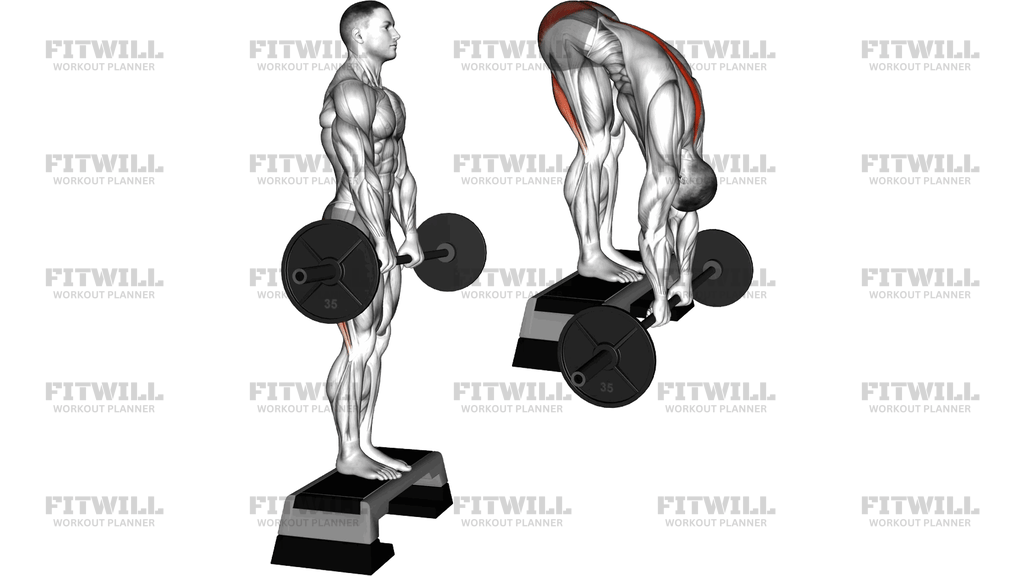
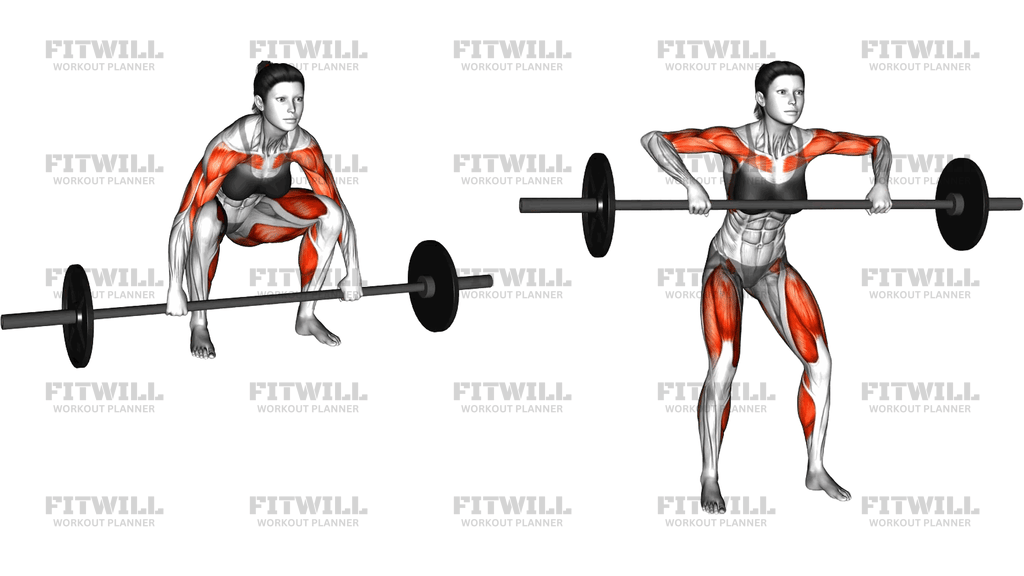
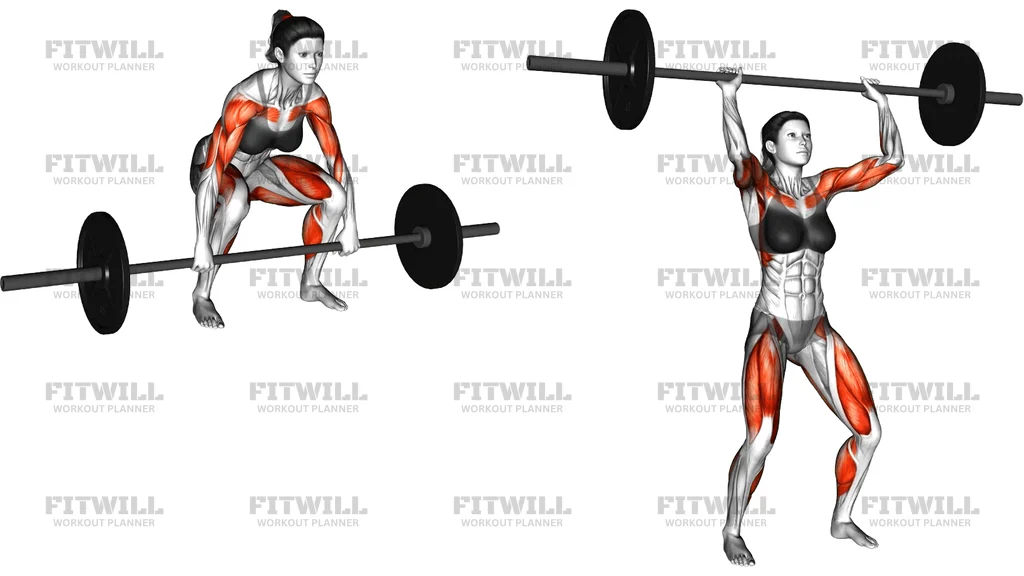
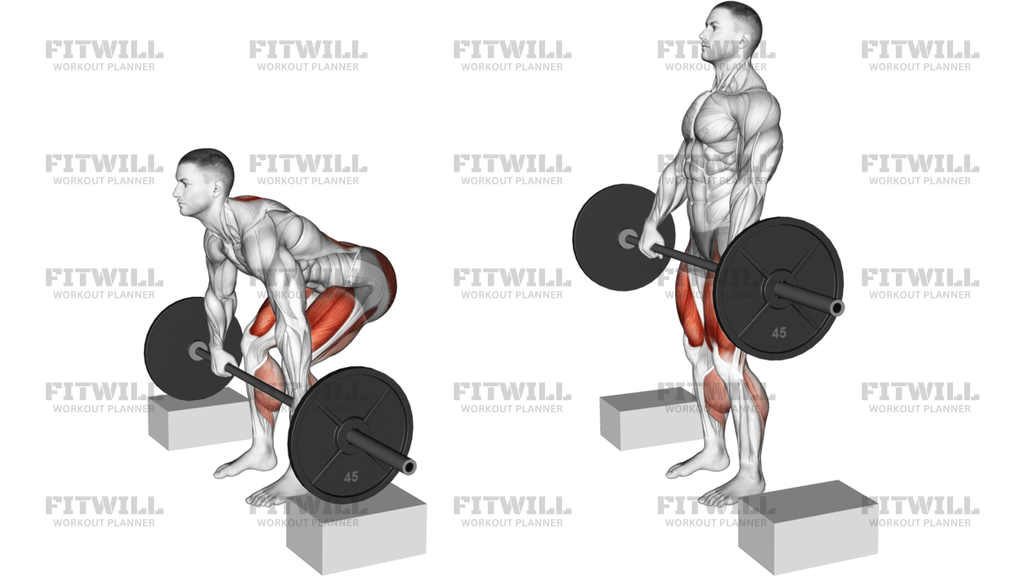
Barbell Deadlift From Blocks is a shortened-range deadlift that starts with the bar resting on blocks instead of the floor. That raised start reduces the amount of knee and hip bend needed off the bottom, so the lift can focus more on the lockout, posterior chain, and bracing demands of a heavy hinge. In the image, the bar is set just above the floor on separate blocks, which is the key setup detail that distinguishes this variation from a conventional deadlift.
This variation trains the glutes, hamstrings, adductors, spinal erectors, upper back, grip, and core while still letting the lifter use a strong, stable start position. Because the bar begins higher, it is often used to build confidence with heavier loads, reinforce tight positioning, and practice driving the bar in a straight line close to the legs. It is especially useful when the floor start is limited by mobility, fatigue, or a need to reduce stress from the bottom of the pull.
The setup matters more than the load. Stand with the bar centered over the midfoot, feet about hip-width, and shins close enough to touch the bar once you hinge down. Grip the bar just outside the legs, lock the lats in, and take the slack out before the plates leave the blocks. Your chest should stay proud without overextending the lower back, and your shoulders should begin slightly in front of the bar so you can push the floor away instead of yanking the bar upward.
On the way up, extend the knees and hips together while keeping the bar close to the body. The bar should travel from the blocks up the thighs without drifting forward. At the top, stand tall with the ribs stacked over the pelvis and the glutes finished, but do not lean back to “overlock” the rep. Lower under control by hinging the hips back first, then bending the knees once the bar clears them, and reset the bar fully onto the blocks before the next repetition.
Barbell Deadlift From Blocks works well in strength blocks, hinge assistance work, or as a bridge between rack pulls and full deadlifts. It rewards patience and tightness more than speed. If the blocks are too high, the movement becomes closer to a partial lockout; if they are too low, it starts to resemble a floor deadlift. Keep the range deliberate, the bar path vertical, and the torso braced so each rep looks identical from start to finish.
[ Workout Log & Planner ]
Put your next workout in Fitwill
Keep your plan and training log ready when you are.


Instructions
- Place the barbell on sturdy blocks so the plates start just above the floor and the bar sits level on both sides.
- Stand with your feet about hip-width apart and the bar over the middle of your feet.
- Hinge at the hips, bend your knees, and bring your shins close to the bar without tipping your chest forward.
- Grip the bar just outside your legs, keep your arms straight, and pull your shoulders slightly in front of the bar.
- Take a deep breath and brace your torso before the bar leaves the blocks.
- Drive through your whole foot, extending the knees and hips together as the bar travels close to your legs.
- Stand tall at the top with your glutes finished and your ribs stacked over your pelvis, without leaning back.
- Lower the bar by hinging your hips back first, then bending your knees once the bar clears them.
- Set the bar fully back onto the blocks, reset your brace, and repeat for the planned reps.
Tips & Tricks
- Keep the blocks the same height on both sides so the bar starts level and does not tip before the pull.
- Pull the slack out of the bar before it moves; that makes the first inch of the lift feel tight instead of jerky.
- Keep the bar close enough to brush the thighs on the way up, because a drifting bar makes the lift much harder on the lower back.
- Do not bounce the plates off the blocks; each rep should start dead still, with a clean reset.
- Use heavier loads only if you can keep the torso angle and bar path consistent from rep to rep.
- If grip is limiting the set before the hinge muscles are tired, use straps so your back and hips can still do the work.
- Finish the rep by standing tall, not by leaning backward and overextending the spine.
- If the bar starts at mid-shin, expect more hamstring and glute demand; if it starts much higher, the lift becomes a shorter partial and should be treated that way.
Frequently Asked Questions
What does Barbell Deadlift From Blocks train most?
It mainly trains the glutes, hamstrings, spinal erectors, upper back, grip, and core through a shortened deadlift range.
Why use blocks instead of pulling from the floor?
Blocks shorten the start position, which lets you practice a stronger hinge, overload the lockout, and reduce stress from the bottom of the pull.
How high should the blocks be?
The bar should start just above the floor or around mid-shin, high enough to reduce the bottom range but low enough that it still feels like a deadlift, not a rack pull.
Where should the bar sit before I pull?
It should be centered over the midfoot, with your shins close to the bar and your shoulders slightly in front of it.
What is the most common form mistake?
Most mistakes come from yanking the bar off the blocks, letting it drift away from the legs, or leaning back at the top.
Can beginners do this exercise?
Yes, if they can hinge safely and keep the bar level on the blocks. Light loads and crisp setup are more important than the amount of weight.
Should I feel this more in my back or legs?
You should feel a strong hinge through the glutes and hamstrings, with the back working hard to hold position rather than to move the bar by itself.
Can I use straps or a mixed grip?
Straps are fine if grip is the limiting factor. A mixed grip can be used for heavier sets, but only if you keep the shoulders even and the bar under control.