Weighted Three Bench Dips
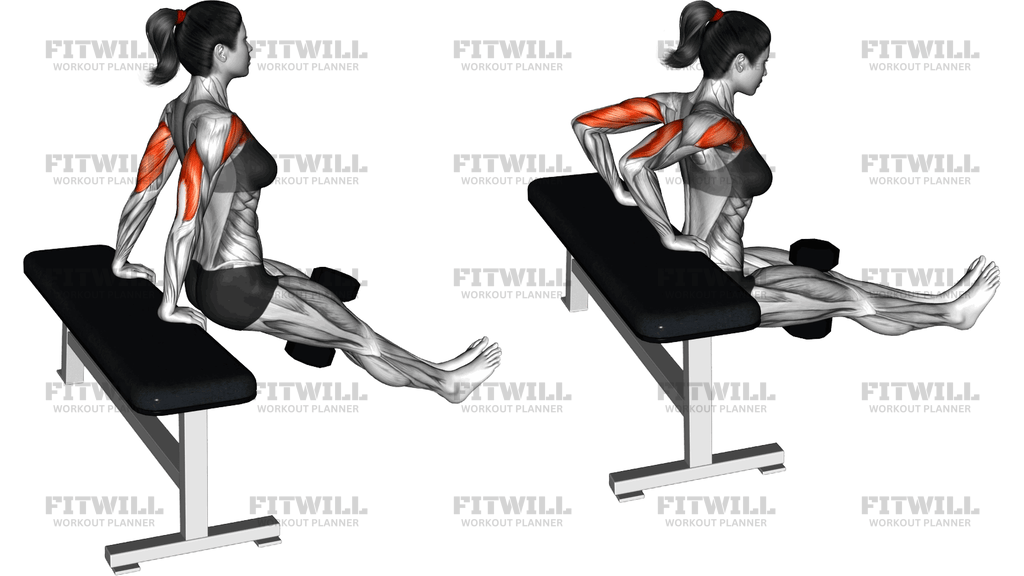
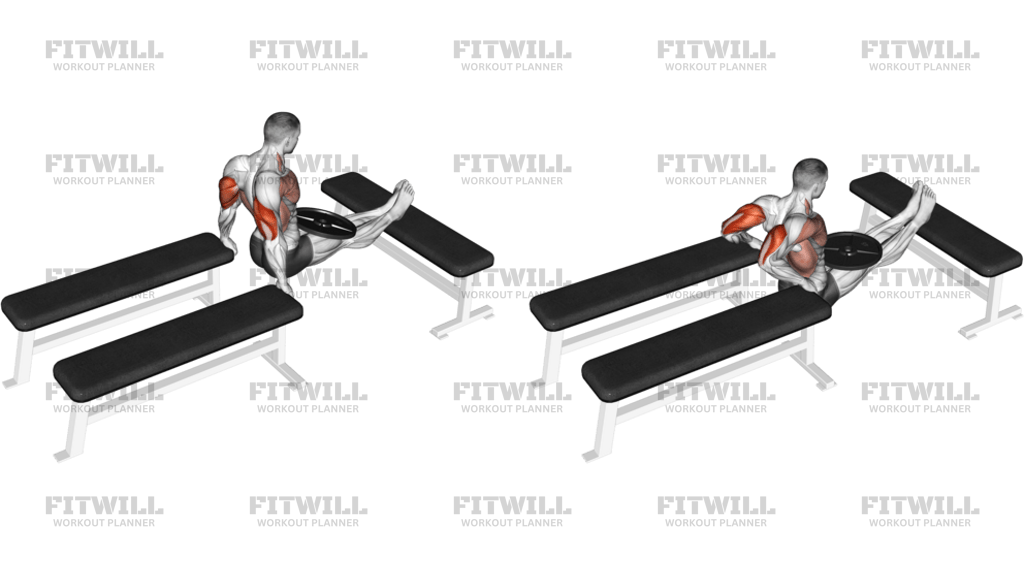
Weighted Three Bench Dips is a loaded bench dip variation performed with your hands on one bench, your heels supported on a second bench, and a weight plate resting across the hips or upper thighs. The setup creates a longer lever than a standard bench dip, so the triceps have to extend the elbows while the shoulders and trunk work hard to keep the torso steady.
The exercise mainly targets the triceps brachii, with the anterior deltoids, chest, forearm muscles, and abdominal wall helping stabilize the body through the bottom and top of each rep. Because the feet stay elevated, the torso tends to shift more if the shoulder blades, elbows, or pelvis are not controlled. That makes the exercise useful for lifters who want direct arm loading with a clear bodyweight strength component.
The setup matters more here than on many other triceps exercises. Place the hands on the rear bench edge, sit between the benches, and walk the heels onto the front bench so the legs are straight and the hips can clear the floor. The weight should sit securely across the lap before you begin. Keep the chest lifted enough to open the shoulders, but do not let the rib cage flare or the lower back over-arch to chase depth.
During each repetition, lower by bending the elbows and letting the upper arms track back naturally while the shoulders stay controlled. Descend only as far as the shoulders tolerate without pinching, then press the body upward by driving the hands down through the bench and extending the elbows. The path should feel smooth and vertical, not like you are sliding forward off the hands or bouncing out of the bottom.
This movement is best used as a triceps-strength accessory, an overload variation for dip training, or a focused upper-body finisher when you want joint control and arm tension together. It is not a good exercise to rush, especially with added weight, because excessive depth or sloppy scapular position can irritate the shoulders. Keep the reps deliberate, load it only as far as you can control, and treat the return phase as part of the training stimulus rather than a reset between efforts.
[ Workout Log & Planner ]
Put your next workout in Fitwill
Keep your plan and training log ready when you are.


Instructions
- Place one hand on the rear bench behind you and the heels on the front bench so your body is suspended between the two supports.
- Set a weight plate across the hips or upper thighs before you start, then keep it centered so it does not shift during the set.
- Lock the elbows softly at the top, lift the chest, and keep the shoulders down and slightly back without shrugging.
- Lower by bending the elbows until the upper arms reach a comfortable depth and the shoulders stay pain-free.
- Keep the forearms nearly vertical as you descend so the hands stay under the load.
- Press the hands into the bench and extend the elbows to raise the body back to the starting position.
- Exhale as you press up and inhale as you lower under control.
- Reset the shoulders and reposition the plate before the next rep if the load shifts.
Tips & Tricks
- Keep the hands close enough to the bench edge that the elbows can travel mostly backward instead of flaring wide.
- If the plate rolls on the lap, reduce the load or place a towel under it so the weight stays centered.
- Stop the descent before the front of the shoulders feel jammed; depth should be controlled, not forced.
- A slightly forward torso angle usually keeps the triceps honest and reduces shoulder strain compared with staying perfectly upright.
- Do not let the hips sag below the bench line, or the rep turns into a shoulder-dominant grind.
- Use a tempo you can repeat, especially on the lowering phase, because the bottom position is where form usually breaks first.
- Keep the chin neutral and the ribs from flaring so the press comes from the arms instead of lumbar extension.
- Choose a load that lets every rep start from a stable top position; if you have to kick or rock to begin, it is too heavy.
Frequently Asked Questions
What muscle does Weighted Three Bench Dips target most?
The triceps are the main target, especially when you keep the elbows tracking back and finish each rep with full elbow extension.
Why are there two benches in this setup?
One bench supports the hands and the other supports the heels, which increases the lever length and makes the triceps work harder than a basic bench dip.
Where should the weight plate sit?
It should rest flat across the hips or upper thighs, centered so it does not slide when you lower and press.
How deep should I lower on the dip?
Lower only until the shoulders stay comfortable and the upper arms are controlled. Chasing extra depth is one of the fastest ways to irritate the front of the shoulder.
Are the shoulders supposed to stay fixed the whole time?
They should stay controlled, not frozen. Let them move naturally with the dip, but avoid shrugging forward or collapsing at the bottom.
Can beginners use this version?
Yes, but only with a light plate and a small range at first. If shoulder comfort or balance is an issue, start with bodyweight bench dips before adding load.
What is a common mistake on this exercise?
Letting the hips drop or the plate shift while chasing a deeper rep. Both usually turn the dip into a sloppy shoulder movement instead of a triceps-focused press.
How can I make the exercise harder without adding much weight?
Slow the lowering phase, pause near the bottom, or keep the heels slightly farther out on the front bench to lengthen the lever.