Weighted Standing Hand Squeeze
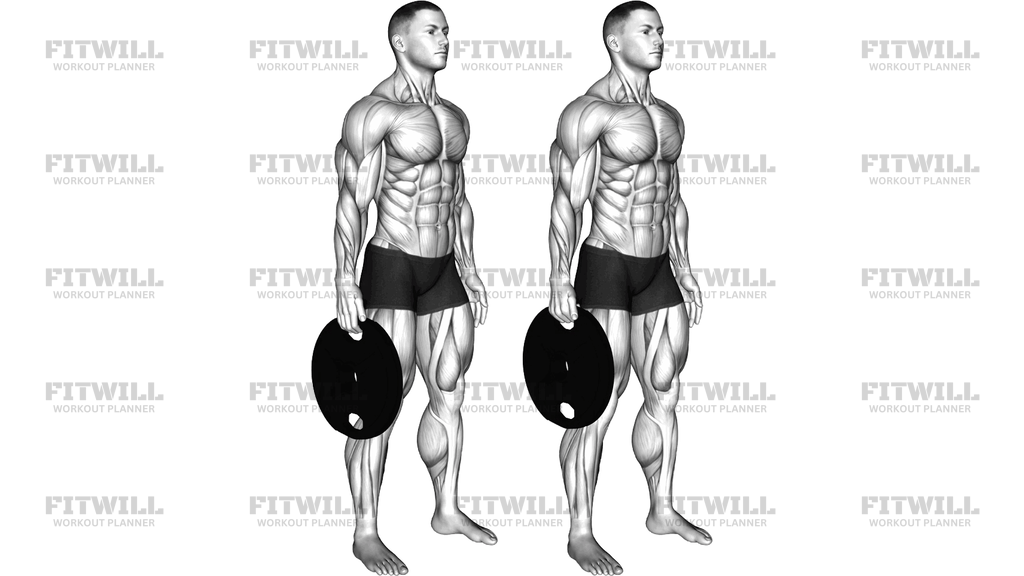
Weighted Standing Hand Squeeze is a standing grip and forearm exercise built around an isometric squeeze on a weight plate. It looks simple, but the exercise is demanding because the hand has to keep the plate pinned in place while the forearm, wrist, and smaller hand muscles stay switched on. That makes Weighted Standing Hand Squeeze useful for grip-focused training, accessory forearm work, and any program that needs stronger hand control for pulling, carrying, or racket and combat sports.
The setup matters because a sloppy hand position turns the exercise into a wrist or shoulder problem instead of a grip exercise. Stand tall with the plate held at your side, keep your chest stacked over your pelvis, and set the working wrist straight before you squeeze. The plate should sit securely in the hand so the fingers and thumb can do the work without the wrist folding back or the shoulder creeping upward.
Each repetition is really a hard squeeze followed by a controlled hold. Crush the plate, keep the elbow relaxed, and resist the urge to lean toward the loaded side as fatigue builds. Breathing should stay calm and deliberate during the hold so the torso does not tighten up and start helping with momentum. Because this movement is isometric, the quality of the squeeze matters more than chasing a bigger range of motion.
Weighted Standing Hand Squeeze fits well near the end of a workout, after rows, deadlifts, carries, or upper-body pulling work, when the forearms can be challenged without needing a lot of joint movement. It can also work as a short finisher when you want local fatigue in the hands and forearms without adding more pressing or curling volume. Beginners usually do best with a light plate and short holds, while more experienced lifters can progress by using a heavier plate or extending the hold time.
Keep the exercise strict enough that the hand is clearly doing the work. If the fingers start to open, the wrist starts bending, or the shoulder rises toward the ear, the load is too heavy or the hold is too long. Weighted Standing Hand Squeeze should feel like a controlled test of grip strength, not a whole-body tug-of-war.
Fitwill
Log Workouts, Track Progress & Build Strength.
Achieve more with Fitwill: explore over 9600 exercises with images and videos, access built-in and custom workouts, perfect for both gym and home sessions, and see real results.
Start your journey. Download today!




Instructions
- Stand tall with your feet about hip-width apart and hold a weight plate in one hand at your side.
- Thread your fingers through the plate opening or clamp the rim so the plate sits securely in your hand.
- Let the other arm hang naturally and keep both shoulders level before you start the hold.
- Stack your ribs over your pelvis, keep your wrist straight, and keep a soft bend in the working elbow.
- Squeeze the plate as hard as possible without curling the wrist or hiking the shoulder.
- Hold the squeeze for the planned time while breathing in short, controlled breaths.
- Keep your torso upright and avoid leaning toward the loaded side as fatigue builds.
- Relax the hand only enough to reset, then repeat or switch hands for the next hold.
Tips & Tricks
- Choose a plate with a rim or opening that fits your hand cleanly; an awkward edge turns the hold into a wrist fight.
- Keep the wrist stacked over the forearm instead of letting it bend back during the squeeze.
- If the working shoulder starts creeping toward your ear, the plate is too heavy for a strict hold.
- Treat the rep as a crush-and-pinch hold, not a dead hang from your fingers.
- Shorter, harder holds build grip strength; longer holds with a lighter plate build forearm endurance.
- Reset the grip if the plate starts sliding instead of trying to save the rep with a weird wrist angle.
- Match both sides by using the same plate and the same hold time on each arm.
- Stop the set when the fingers open or the wrist begins twisting to finish the hold.
Frequently Asked Questions
What does Weighted Standing Hand Squeeze train most?
It mainly trains the forearms and grip, especially the wrist flexors, with help from the brachioradialis and other forearm stabilizers.
Is Weighted Standing Hand Squeeze a pinch grip or a crush grip?
It is mostly a grip-and-squeeze hold on the plate, so you should actively clamp the hand rather than just let the fingers hang on.
Should my elbow stay straight during Weighted Standing Hand Squeeze?
A soft elbow is fine, but keep it quiet. The exercise should come from the hand and forearm, not from curling the arm.
Can beginners do Weighted Standing Hand Squeeze?
Yes. Start with a light plate and short holds so you can keep the wrist straight and the shoulder relaxed.
How long should I hold the plate?
Most people do best with short timed holds, especially at first. Use a duration that lets you keep a hard squeeze without the wrist bending or the plate slipping.
What are the most common mistakes with Weighted Standing Hand Squeeze?
Shrugging the shoulder, bending the wrist back, and leaning toward the loaded side are the biggest errors. If any of those show up, the plate is too heavy or the hold is too long.
Can I use a dumbbell or kettlebell instead of a plate?
A plate is usually the best option because the rim or opening gives you a clear squeeze target. A dumbbell or kettlebell changes the feel and usually turns it into a different grip exercise.
When should I program Weighted Standing Hand Squeeze?
It works well after rows, deadlifts, carries, or pulling sessions, when the forearms can be challenged without needing much shoulder or elbow movement.