Weighted Plate Bent-Over Row
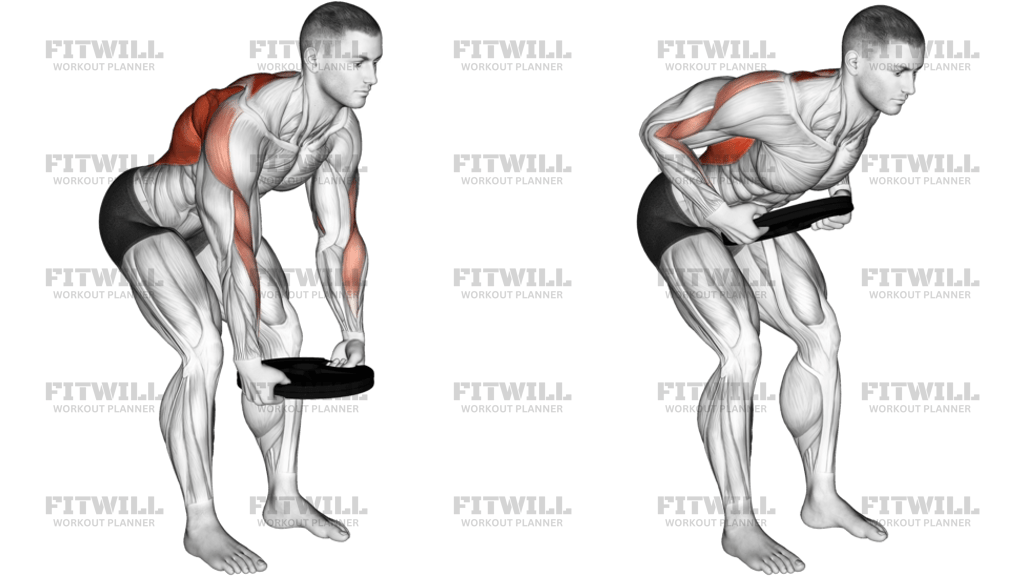
The Weighted Plate Bent-Over Row is a hinged pulling exercise that trains the upper back, lats, rear shoulders, and arms while asking the torso to stay braced. Holding a single plate in both hands changes the feel of the row: the load sits low and centered, the grip is usually neutral and compact, and the movement rewards a steady hip hinge more than a big heave. It is a useful accessory exercise when you want horizontal pulling volume without a barbell, cable, or machine.
The setup matters because the row only works well when the torso angle is fixed. Hinge at the hips, keep a soft bend in the knees, and let the chest stay long with the spine neutral instead of rounding forward. The plate should hang just below the knees or around mid-shin level depending on your hinge depth and arm length, with both hands controlling it from the sides of the plate. If your lower back is doing most of the work before the first rep starts, the hinge is probably too shallow, too deep, or not braced enough.
Each rep begins by pulling the elbows back and slightly toward the hips, not by lifting the hands high. The plate should travel toward the lower ribs or upper abdomen, stopping when the shoulder blades are squeezed back without the torso rising to meet the load. Lower the plate under control until the arms are fully extended again and the shoulders stay packed instead of shrugging. Smooth breathing helps keep the hinge stable: inhale before the pull, exhale through the effort, and reset tension before the next repetition.
This exercise fits well in back-focused strength work, pull-day accessories, or as a simple free-weight row when space and equipment are limited. It is especially useful for lifters who need practice keeping the torso still while the arms and upper back do the pulling. Keep the repetitions strict, stop short of any pinching in the shoulder, and reduce load if the plate starts swinging or the spine starts to round to finish the set.
[ Workout Log & Planner ]
Put your next workout in Fitwill
Keep your plan and training log ready when you are.


Instructions
- Stand with your feet about hip-width apart and hold a single weight plate with both hands in front of your thighs.
- Hinge at the hips until your torso is angled forward, keep a soft bend in the knees, and let the plate hang below the shoulders with your arms straight.
- Set your spine neutral, draw your ribs down, and brace your midsection before the first pull.
- Pull the plate toward your lower ribs by driving your elbows back and keeping them close to your sides.
- Squeeze your shoulder blades together at the top without standing up taller or jerking the load.
- Lower the plate slowly until your arms are straight again and your shoulders stay controlled.
- Keep your neck long and your gaze slightly ahead of the floor so the upper back stays in line with the hinge.
- Breathe in before each pull, exhale as you row, and repeat for the planned number of reps.
Tips & Tricks
- Keep the plate close to your legs on the way down so the weight does not drift forward and pull you out of the hinge.
- Think about rowing the elbows behind the body, not lifting the hands upward; that keeps the tension in the mid-back instead of the biceps.
- If your torso rises on every rep, shorten the range and reduce the load until the hinge stays fixed.
- Hold the plate firmly through the rim or sides so the grip does not slip when the elbows reach the top position.
- Pause for a beat against your torso only if you can keep the ribcage down and the lower back quiet.
- A moderate load usually works better than a heavy one because the plate gives less natural handle leverage than a dumbbell or bar.
- Do not round the upper back to get extra range; stop the pull when the shoulder blades finish retraction.
- Slow, even lowering helps the lats and rear delts do their job without swinging the plate.
- If the hinge feels unstable, widen the stance slightly and soften the knees before trying to add weight.
- Stop the set when the plate starts bouncing off the torso or you have to snap the hips to finish the pull.
Frequently Asked Questions
What muscles does the Weighted Plate Bent-Over Row work?
It mainly trains the lats, mid-back, rear shoulders, and biceps, with the core and spinal erectors working hard to hold the hinge.
Can beginners perform this exercise?
Yes. Beginners should use a light plate and focus on a steady hip hinge before trying to increase the row speed or load.
How should I hold the plate?
Use both hands on the sides or rim of the plate with the wrists straight and the plate centered under your shoulders.
Where should I pull the plate?
Aim the pull toward the lower ribs or upper abdomen. If the plate ends up near your chest, you are probably shrugging and shortening the hinge.
What is the biggest form mistake?
The most common error is standing up with each rep. The torso should stay fixed while only the arms and shoulder blades move.
Is this different from a dumbbell bent-over row?
Yes. A plate row usually uses a more compact hand position and a more centered load, so it often feels less natural to grip but very stable when done strictly.
What should I do if my lower back gets tired first?
Reduce the load, shorten the set, and raise your torso angle slightly so the hinge is easier to hold.
How many reps work best?
It works well in moderate rep ranges, especially when you want controlled back volume without relying on heavy loading.