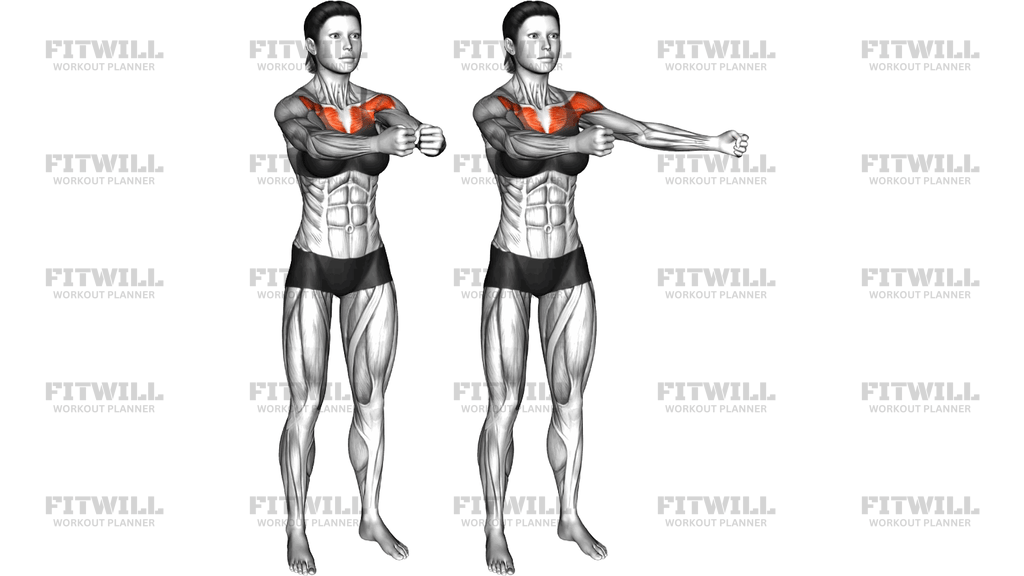
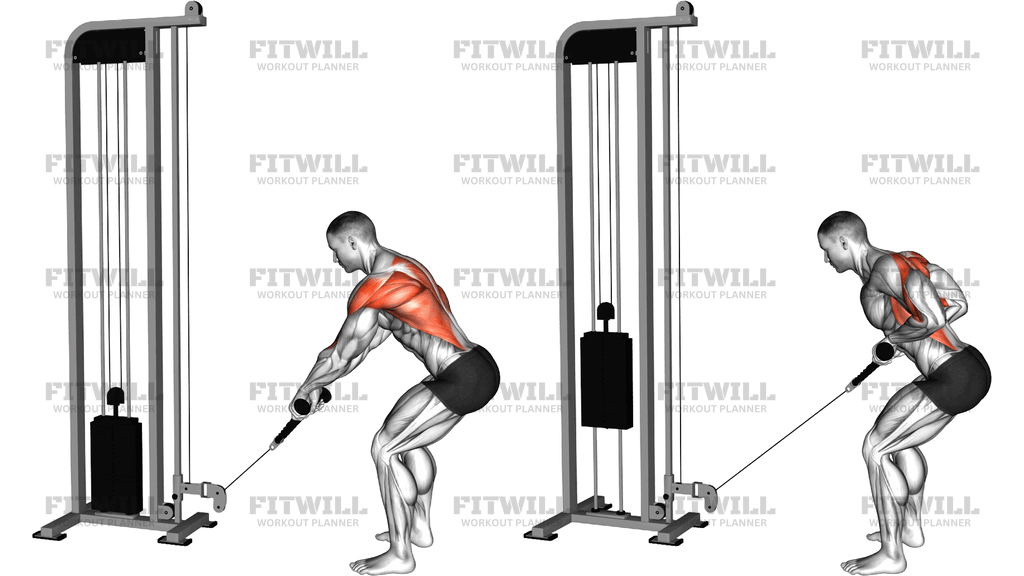
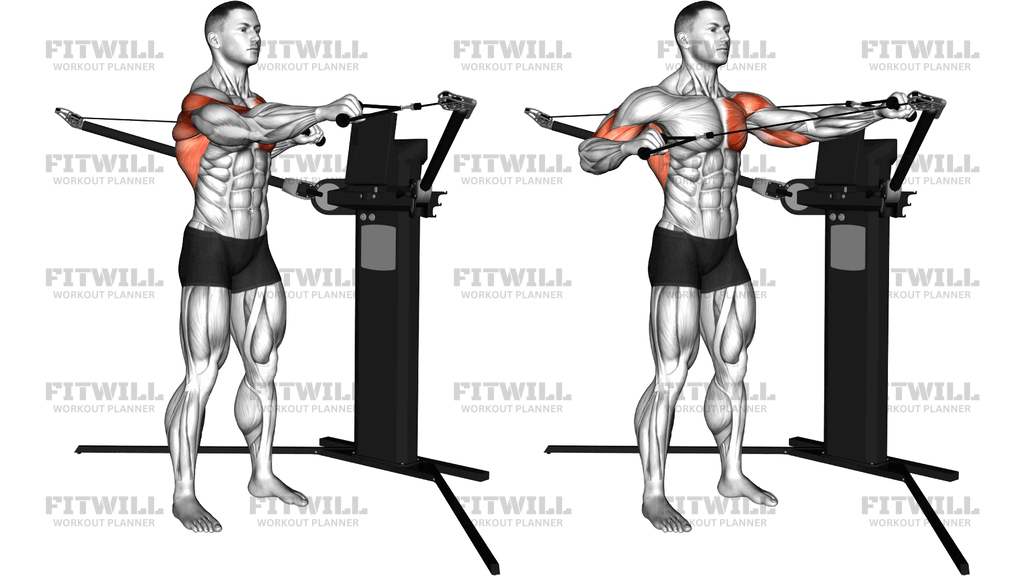
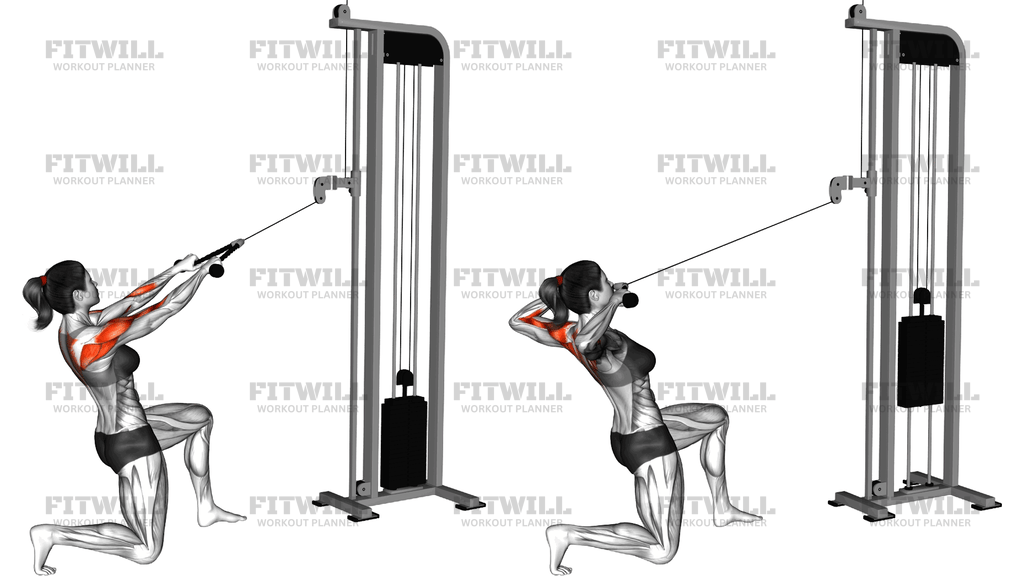
Cable Standing Single-Arm Fly
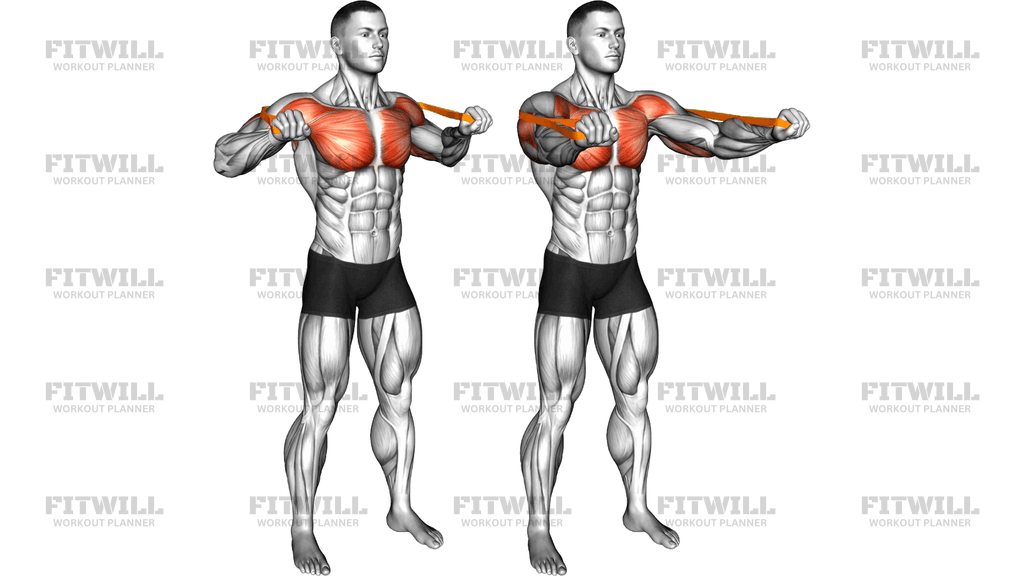
Cable Standing Single-Arm Fly is a unilateral chest isolation exercise performed with a single handle on a cable machine. It trains horizontal adduction of the arm while the torso, shoulder girdle, and trunk work to stay steady, so the chest can do the moving without the body turning it into a press, row, or front-raise pattern.
The single-arm setup is useful when you want each side of the chest to work through the same line of pull. It helps you notice side-to-side differences in strength, reach, and control, and the cable keeps tension on the working side from the start of the rep until the handle returns under control. Because the load is coming from one side, the free arm and core also have to resist rotation.
Set the pulley around chest or shoulder height, stand a short step away from the stack, and square your hips and ribs to the front. The working arm should start slightly in front of the body with a soft bend in the elbow, the shoulder down, and the wrist aligned with the handle. A staggered stance can help you stay balanced, but the torso should stay quiet while the arm sweeps across the body.
Each repetition should travel in a smooth arc toward the midline or slightly past it, then return slowly until the chest opens without the shoulder rolling forward. Exhale as you bring the handle across, inhale as you control it back, and stop the set if you have to twist, shrug, or shorten the range to keep the weight moving.
This movement fits well in a chest accessory block, hypertrophy session, or as a lighter activation drill before pressing. It is usually best with moderate-to-light resistance and strict tempo, because the exercise is most effective when the pec stays loaded and the rep stays clean instead of becoming a momentum swing.
[ Workout Log & Planner ]
Put your next workout in Fitwill
Keep your plan and training log ready when you are.


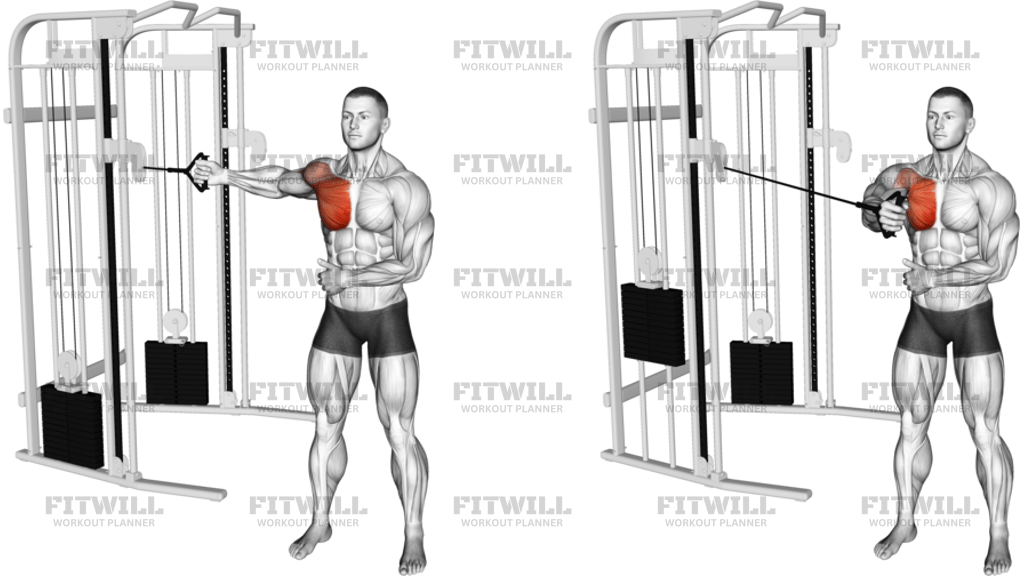
Instructions
- Set the cable pulley at about chest or shoulder height and attach a single handle.
- Stand one step away from the stack, side-on to the machine, with the working arm farthest from the weight stack.
- Plant your feet in a split or shoulder-width stance and keep your hips and ribs facing forward.
- Grab the handle with a soft bend in the elbow and let the arm start slightly in front of the shoulder.
- Brace your midsection, keep the shoulder down, and avoid letting the torso rotate toward the cable.
- Sweep the handle in a wide arc across the front of your chest until your hand reaches the midline or slightly past it.
- Squeeze the chest briefly at the finish without collapsing the shoulder forward or straightening the elbow.
- Return the handle slowly until you feel a controlled stretch across the chest, then reset your posture before the next rep.
- Exhale as you bring the handle across and inhale as you resist the return.
Tips & Tricks
- Pick a pulley height that lets the handle travel across your chest, not up toward your face.
- Keep the elbow angle fixed; the arm should sweep like a hinge, not turn into a bent-arm press.
- If your shoulder rolls forward at the finish, shorten the range and stop at the midline.
- A slight staggered stance often helps you resist being pulled into rotation better than standing square-footed.
- Keep the wrist stacked over the handle so the forearm and hand stay in one line with the cable.
- Use a load that lets you pause for a full second in the shortened position without losing posture.
- The return phase matters: let the pec open under control instead of snapping the handle back to the stack.
- If the front deltoid takes over, move the pulley a little lower and think about bringing the upper arm across the chest instead of lifting it.
Frequently Asked Questions
What does the Cable Standing Single-Arm Fly train most?
It mainly trains the chest, especially the pecs, with the shoulders and core helping you stay square and controlled.
Where should the cable pulley be set for this fly?
A chest-height or slightly higher pulley usually gives the cleanest line of pull for a standing single-arm fly.
How much elbow bend should I keep?
Keep a soft, mostly fixed bend in the elbow so the arm moves as one unit instead of turning into a press.
Should my torso rotate during the rep?
No. Your ribs and hips should stay mostly facing forward so the chest does the work instead of body English.
How far should I bring the handle across my body?
Bring it to the midline or slightly past it if your shoulder stays comfortable and your shoulder blade does not roll forward.
Is a staggered stance better than standing square?
Either can work, but a small stagger often makes it easier to resist rotation and keep the cable fly strict.
Can beginners use this exercise?
Yes, as long as the load is light enough to keep the arm path smooth and the torso still.
What is the biggest form mistake to avoid?
Do not let the movement turn into a front-raise or a twisting reach; keep the handle moving across the chest in a controlled arc.