Barbell Standing Wrist Reverse Curl
Barbell Standing Wrist Reverse Curl is a standing forearm exercise that uses an overhand barbell grip to train the muscles that extend the wrist and help control the hand. The movement is small, but the demand on the forearms is real because the bar stays still in space while the wrists do the work. That makes setup, grip, and tempo more important than trying to move a heavy load.
This exercise is best thought of as targeted accessory work for the forearms and grip, not as a full-body strength lift. A stable stance, quiet shoulders, and pinned elbows keep the motion where it belongs: at the wrists. If the elbows start curling or the torso starts rocking, the set quickly turns into momentum work and the forearms lose most of the benefit.
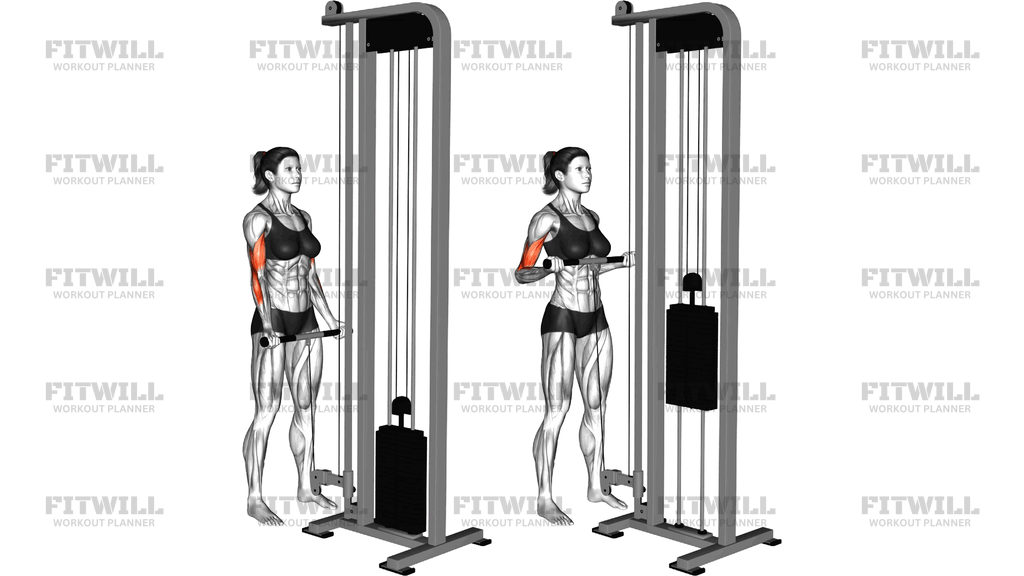
To perform it well, hold the bar with an overhand grip at thigh level and let the wrists move through a controlled arc. The bar should rise as you lift the backs of your hands toward your forearms, then lower slowly back to the start. The range is usually modest, so the quality of the contraction and the control on the way down matter more than chasing a dramatic movement.
Use a light-to-moderate load that lets you keep the forearms doing the work from the first rep to the last. This variation can fit on arm day, pull day, or as finishing work after compound lifts that already taxed the grip. It is also a practical choice for lifters who want stronger wrists and better forearm endurance for rows, deadlifts, carries, climbing, or racquet sports.
Keep the motion pain-free and strict. If the wrists feel cranky, shorten the range, slow the lowering phase, or switch to an EZ bar or dumbbells. The goal is clean repetition, steady tension, and a position that lets the forearms work without the shoulders, hips, or back taking over.
[ Workout Log & Planner ]
Put your next workout in Fitwill
Keep your plan and training log ready when you are.


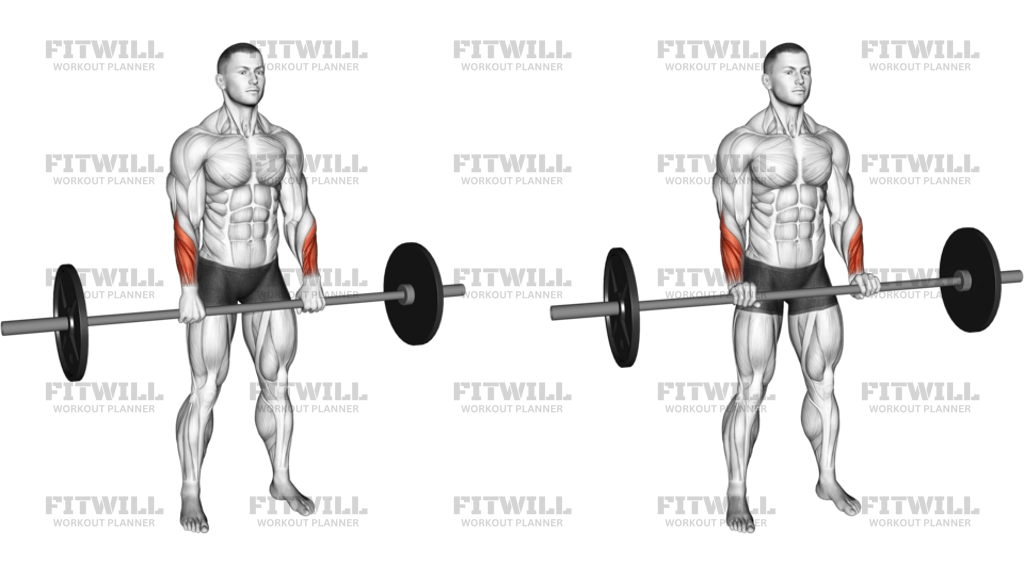
Instructions
- Stand tall with your feet about hip-width apart and hold the barbell in an overhand grip at thigh height, with your hands roughly shoulder-width apart.
- Keep your chest lifted, shoulders down, and elbows tucked close to your ribs so the upper arms stay still.
- Set the bar low enough that your wrists can move freely without drifting your elbows or shoulders forward.
- Lower the backs of your hands toward the floor by extending the wrists while keeping the bar path small and controlled.
- Curl the wrists up and bring the knuckles slightly toward your forearms until you feel a strong forearm contraction.
- Pause briefly at the top without shrugging, bending the elbows, or bouncing the bar.
- Lower the bar slowly back to the start and let the wrists fully reset before the next rep.
- Exhale as you lift and inhale as you lower, keeping the breathing steady and the torso quiet.
Tips & Tricks
- Choose a lighter bar than you would for a reverse curl; the wrist extensors fatigue quickly and do not need much load.
- Keep the elbows fixed against your sides so the set stays a wrist exercise instead of turning into a standing curl.
- Let the bar roll slightly toward the fingers at the bottom if needed, but do not drop it so far that you lose control of the grip.
- A slow lowering phase usually gives more forearm tension than trying to force a bigger top position.
- If the wrists feel pinched, shorten the range and stop just before the joint reaches its irritated end range.
- Avoid leaning back or swinging the hips to get the bar moving; the torso should stay stacked over the feet.
- Hold the top for a brief pause so the forearms finish the rep instead of the rebound.
- Use an EZ bar or dumbbells if a straight barbell feels awkward in the wrists.
Frequently Asked Questions
What muscles does Barbell Standing Wrist Reverse Curl train?
It mainly targets the forearm muscles that extend the wrist, with the grip and wrist stabilizers working hard to keep the bar controlled.
Is Barbell Standing Wrist Reverse Curl the same as a reverse curl?
No. A reverse curl bends the elbows, while this exercise keeps the elbows mostly still and moves mainly at the wrists.
How heavy should I use for Barbell Standing Wrist Reverse Curl?
Use a light load that lets you lift and lower the bar with strict wrist motion, without shrugging, swinging, or bending the elbows.
What is the most common mistake with this exercise?
The biggest mistake is turning it into a body English lift by moving the elbows, shoulders, or hips instead of keeping the motion at the wrists.
Can beginners do Barbell Standing Wrist Reverse Curl?
Yes. Beginners usually do best with a very light barbell and short sets so they can learn the wrist path without irritating the joint.
Why are my wrists burning before my forearms do?
That is normal on this movement because the wrist extensors are small and work through a constant, focused range.
Can I use an EZ bar or dumbbells instead of a straight barbell?
Yes. An EZ bar often feels easier on the wrists, and dumbbells can be a good option if the straight bar position feels awkward.
Should my elbows move at all during the set?
They should stay close to your sides with only a small, natural amount of motion. If they drift or curl, the load is too heavy.
Where does Barbell Standing Wrist Reverse Curl fit in a workout?
It works well near the end of an arm, pull, or grip-focused session after the bigger lifts are done.