Dumbbell Prone Alternate Hammer Curl
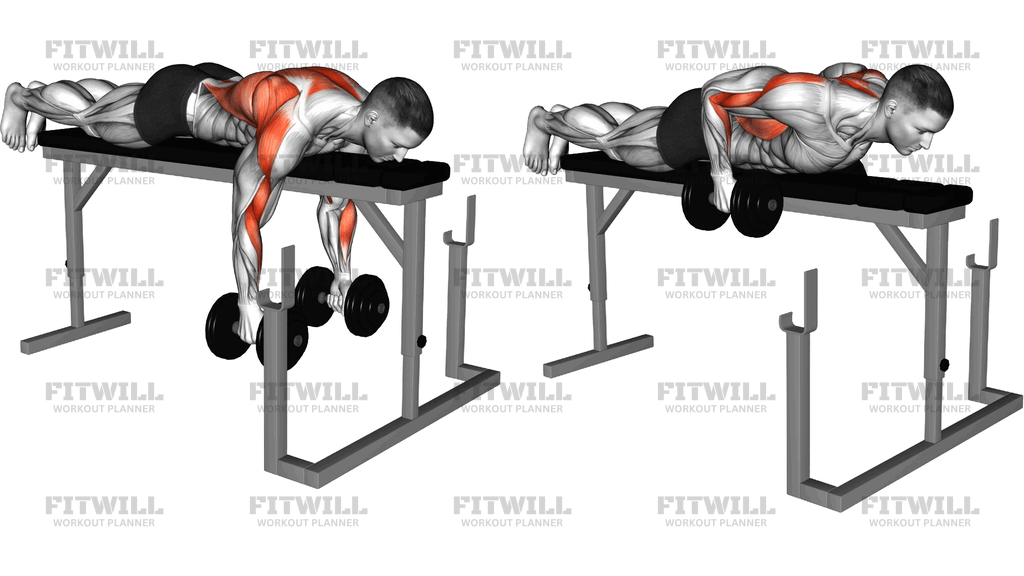
Dumbbell Prone Alternate Hammer Curl is a chest-supported dumbbell curl performed face down on an incline bench with a neutral, thumb-up grip. The prone setup removes most of the urge to swing the torso, so the working arm has to do the job with strict elbow flexion and a steady lowering phase. It is a good choice when you want direct arm work without turning the set into a full-body cheat curl.
The exercise shifts the emphasis toward the brachialis, brachioradialis, and biceps while the rear deltoids, upper back, and trunk help keep the body pinned to the bench. Because your chest stays in contact with the pad, the bench angle matters: too flat and the curl path can feel awkward; too steep and the movement starts to resemble a standard seated curl. A moderate incline usually gives enough support while still letting the dumbbell travel cleanly beside the bench.
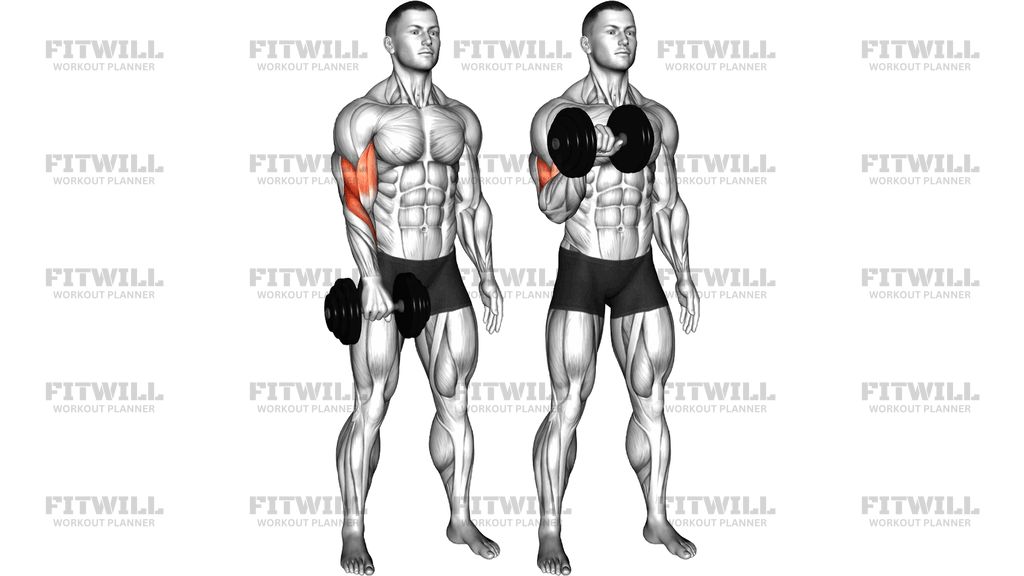
Each rep should start with the arm hanging long under the shoulder, wrist straight, and shoulder relaxed. Curl one dumbbell without turning the palm up, keep the elbow close to its hanging line, and avoid shrugging the shoulder forward as the weight rises. The alternate pattern lets you focus on one side at a time, keeps tension high, and makes it easier to notice when one arm starts to rotate or cheat earlier than the other.
Use this exercise for controlled hypertrophy work, accessory arm training, or any session where you want strict hammer-curl mechanics with less lower-body momentum. It works best with moderate-to-light loading and a tempo you can own on both the lift and the descent. If the chest peels off the bench, the wrist bends back, or the shoulder rolls forward to finish the rep, the load is too heavy or the bench angle is wrong. Keep the setup tidy and the range smooth so the forearm and upper-arm muscles can take the stress instead of your body language.
Fitwill
Log Workouts, Track Progress & Build Strength.
Achieve more with Fitwill: explore over 9600 exercises with images and videos, access built-in and custom workouts, perfect for both gym and home sessions, and see real results.
Start your journey. Download today!




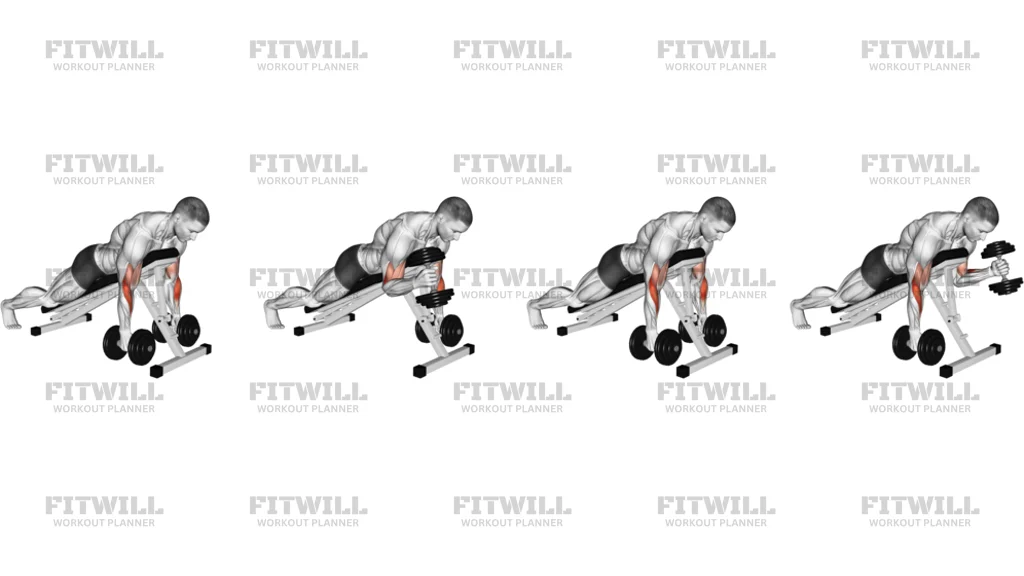
Instructions
- Set an incline bench to a moderate angle and lie face down with your chest and stomach supported.
- Hold a dumbbell in each hand with a neutral, thumb-up grip and let both arms hang straight toward the floor.
- Plant your feet firmly and keep your hips and ribs pressed into the pad so your torso stays still.
- Set your shoulders down away from your ears before the first rep.
- Curl one dumbbell toward the same-side shoulder without turning the palm upward.
- Keep the working elbow pointed down and close to its hanging line as the forearm rises.
- Pause briefly near the top when the forearm is nearly vertical and the wrist stays straight.
- Lower the dumbbell under control until the arm is fully extended, then repeat with the other arm.
- Breathe out as you curl and inhale on the return.
- Finish the set by lowering both dumbbells carefully and keeping your chest on the bench.
Tips & Tricks
- Choose a bench angle that lets your arms hang naturally; if the dumbbells hit the pad too soon, the incline is probably too low.
- Keep the grip neutral the whole time. If the hand turns palm-up, the movement is drifting toward a regular curl.
- Do not let the shoulder roll forward to finish the rep. The upper arm should stay quiet while the forearm moves.
- Press your chest into the bench so you do not lift off and turn the set into a body English curl.
- Use a lighter load than you would for a standing hammer curl because the strict prone position removes momentum.
- Keep the wrist straight at the top. Bending the wrist back usually means the weight is too heavy.
- Lower each dumbbell slowly enough to feel the forearm muscles lengthen instead of just dropping to the bottom.
- If one side starts rotating or shrugging earlier than the other, reduce the load and clean up the alternating rhythm.
Frequently Asked Questions
What does the incline bench change in Dumbbell Prone Alternate Hammer Curl?
The bench supports your chest so you cannot swing the torso. That makes the curl stricter and keeps tension on the arm instead of the body.
Which muscles work hardest in this exercise?
The neutral grip hits the brachialis and brachioradialis hard, with the biceps also contributing to elbow flexion.
Why use an alternate rep pattern instead of curling both arms together?
Alternating helps you focus on one arm at a time and makes it easier to keep the shoulders and torso from shifting.
How do I know if the dumbbell is too heavy?
If you have to shrug, twist the wrist, or lift your chest off the pad to finish the rep, the load is too high.
Should my elbow move as I curl the dumbbell?
The elbow should stay close to its hanging line under the shoulder. A small natural drift is fine, but big forward movement turns it into a cheat curl.
Can beginners use this variation?
Yes. It is beginner-friendly if you start with light dumbbells and a bench angle that keeps the arms hanging freely.
What is the most common mistake on the way up?
The most common error is rotating the hand or rolling the shoulder forward to finish the curl instead of keeping the grip neutral.
How is this different from a standing hammer curl?
The prone version removes leg drive and torso sway, so the arm has to create the rep with cleaner mechanics and less cheating.