Dumbbell Low Split Squat
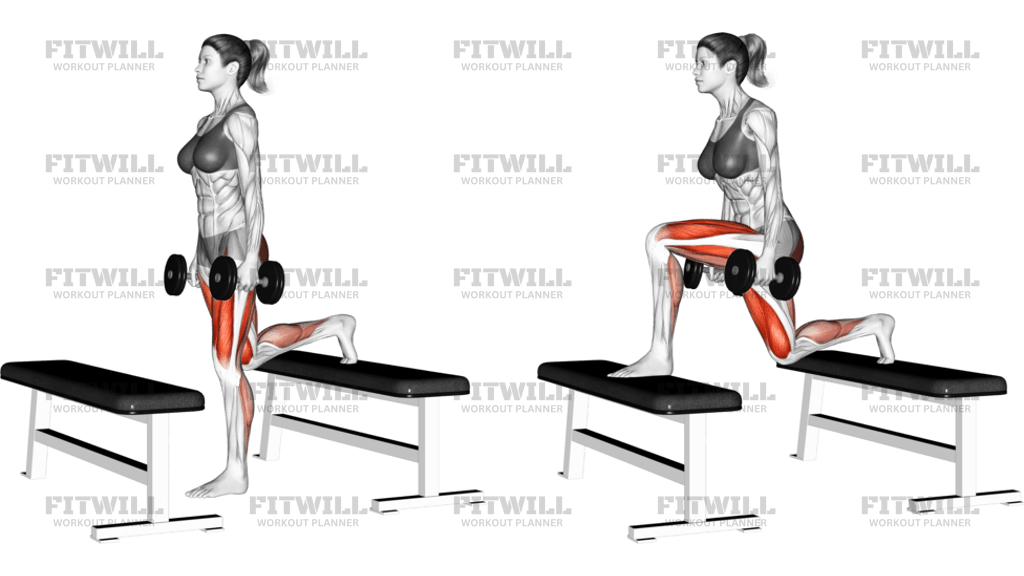
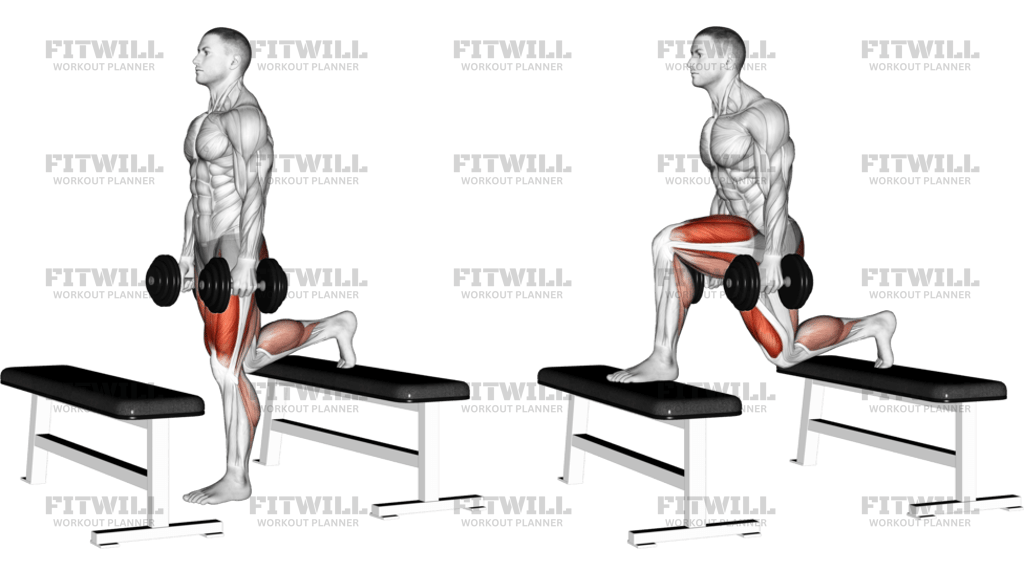
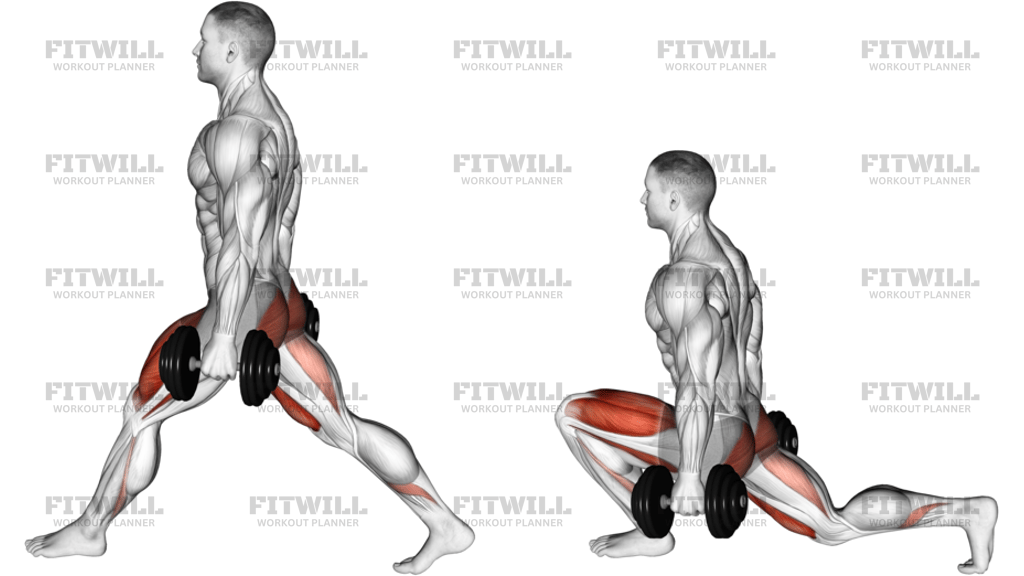
Dumbbell Low Split Squat is a split-stance lower-body exercise that loads the front leg while the back leg stays long and low behind you. It is a practical unilateral strength movement for the thighs, glutes, and adductors, with the dumbbells held at your sides so the legs and hips have to do the work without the help of a machine or bar path.
The low split position changes the feel of the rep. Instead of standing tall between each descent, you stay in a staggered stance and lower the rear knee close to the floor, which keeps tension on the front leg through a longer range. That makes stance length, foot pressure, and hip position important. If the front foot is too close, the movement turns cramped and the knee tends to drift forward; if the stance is too long, you may lose balance or overreach with the hip.
A good repetition starts with the front foot planted flat, the back foot on the ball of the foot, and the torso stacked so the ribs do not flare. Lower under control until the rear knee is just above the floor or lightly touches down if that is your chosen depth, then drive up through the front midfoot and heel. The dumbbells should stay quiet beside the thighs, and the hips should rise together instead of twisting or bouncing.
This exercise fits well as accessory work after squats, deadlifts, or other bilateral lifts when you want extra single-leg volume, side-to-side balance, and leg hypertrophy. It is also useful when you need a squat pattern that is easier to load in smaller spaces and with less spinal compression than a barbell variation. Because the bottom position is low, joint control matters more than depth for its own sake.
Keep the movement pain-free and controlled, especially around the front knee and rear hip. A slight forward torso lean is normal, but collapsing into the front hip or pushing off the back leg defeats the purpose of the exercise. If the bottom position feels unstable, shorten the range, reduce the load, or use a slower tempo until each side can stay organized from the first rep to the last.
Fitwill
Log Workouts, Track Progress & Build Strength.
Achieve more with Fitwill: explore over 9600 exercises with images and videos, access built-in and custom workouts, perfect for both gym and home sessions, and see real results.
Start your journey. Download today!




Instructions
- Stand in a split stance with one foot forward and the other set well back, holding a dumbbell in each hand at your sides.
- Keep the front foot flat and the back foot on the ball of the foot so you can drop the rear knee low without losing balance.
- Square your hips, stack your ribs over your pelvis, and brace before the first rep.
- Lower straight down by bending both knees, letting the front knee travel in line with the toes.
- Keep the dumbbells hanging quietly beside your thighs instead of swinging or drifting forward.
- Descend until the rear knee hovers just above the floor or lightly taps down if that is your chosen depth.
- Drive up through the front midfoot and heel, straightening both legs while keeping the torso controlled.
- Breathe in on the way down and exhale as you stand, then reset your stance before the next repetition.
- Complete all reps on one side before switching to the other side.
Tips & Tricks
- A slightly longer stance usually makes it easier to keep the front heel planted and the rear knee low without crowding the front hip.
- Let the torso lean forward just enough to stay balanced; forcing an overly upright chest often shifts the work away from the front leg.
- Track the front knee over the second or third toe so it does not cave inward as you descend.
- Treat the back foot as a balance point, not a push-off leg; most of the drive should come from the front leg.
- Keep the dumbbells still at your sides. If they swing, the load is too heavy or the descent is too fast.
- Do not bounce off the rear knee at the bottom. A brief controlled hover keeps tension where you want it.
- If ankle or hip mobility limits the depth, shorten the range before you shorten the stance.
- Use a load you can lower under control for every rep, because the low split position exposes sloppy footwork quickly.
Frequently Asked Questions
What muscles does the Dumbbell Low Split Squat work?
It mainly trains the quads and glutes, with the adductors, hamstrings, and core helping to stabilize the split stance.
How is this different from a regular split squat?
The low split version keeps the rear knee closer to the floor and maintains more tension through the bottom of the rep, so the front leg stays under load longer.
Should my back knee touch the floor?
It can lightly tap the floor if you can keep control, but do not crash into the bottom position or relax the front leg.
Where should I feel the exercise most?
You should feel the front thigh and glute doing most of the work, while the back leg mostly helps with balance.
Can beginners use dumbbells for this movement?
Yes, but bodyweight or very light dumbbells are usually the best way to learn the stance, balance, and bottom position first.
Why do my dumbbells swing at the bottom?
That usually means the descent is too fast or the stance is too narrow. Slow down and keep the weights hanging straight under your shoulders.
How do I keep my front knee comfortable?
Use a stance long enough to keep the front heel down, let the knee track with the toes, and shorten the range if the bottom feels pinchy.
How do I progress the Dumbbell Low Split Squat?
Add load only after the stance and depth stay consistent, or make the rep harder by pausing briefly at the bottom.