Dumbbell Standing Wrist Curl
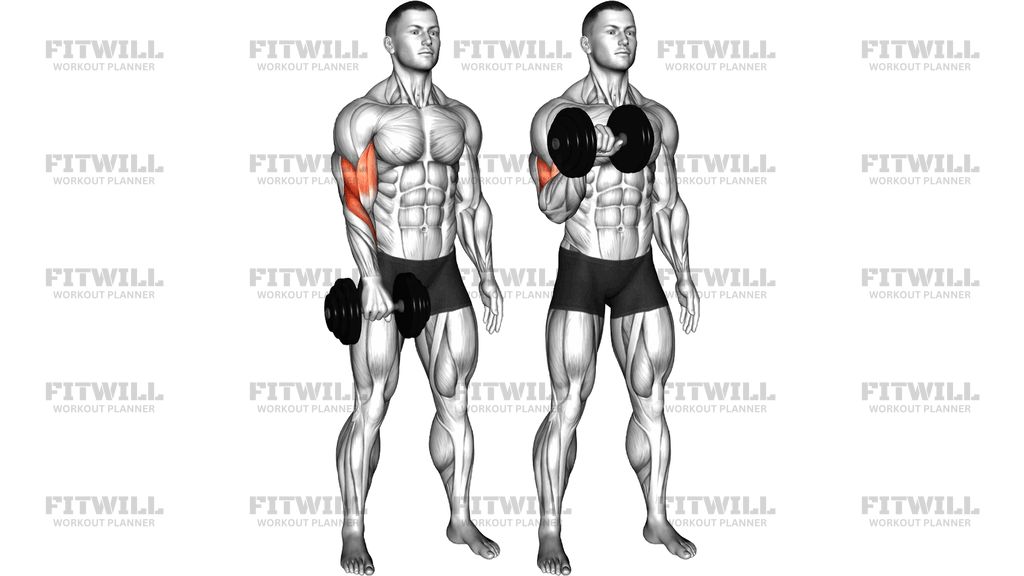
Dumbbell Standing Wrist Curl is a direct forearm isolation exercise built around wrist flexion while the upper arms stay still at your sides. Each dumbbell starts hanging beside the thighs and the movement comes almost entirely from closing the angle at the wrist, which makes the exercise useful when you want to build grip support, forearm size, and control without turning the set into a full-arm swing. The standing position also makes cheating obvious, so the rep quality is easy to judge.
The main training effect comes from the wrist flexors and the smaller muscles that help you control the dumbbells through a short, precise range. That makes Dumbbell Standing Wrist Curl a practical accessory movement for lifters who want better forearm development for pulling, carries, rack work, and bar control. It is also a simple option for beginners because the pattern is easy to learn when the load stays light and the motion stays deliberate.
The setup matters because the exercise only works well when the elbows, shoulders, and torso stay quiet. Stand tall with a dumbbell in each hand, let the arms hang naturally, and keep the upper arms close to the body while the wrists start in a neutral or slightly extended position. If the shoulders shrug, the elbows bend, or the body rocks to create the curl, the movement stops being a wrist exercise and turns into momentum.
A clean repetition is small but focused. Curl the hands upward by flexing the wrists, squeeze hard at the top, then lower the dumbbells slowly until the forearms and hands are back in the stretched start position. Keep the wrists moving in the same plane, avoid rolling the forearms, and breathe steadily so each rep looks controlled from the first inch to the last.
Dumbbell Standing Wrist Curl is useful as accessory work after larger pulling or pressing sessions, or anywhere you want to add direct forearm volume without heavy setup. It can be loaded lightly for higher reps, but the most productive sets still look strict and unhurried. If the dumbbells start to swing or the wrists feel irritated, shorten the range, reduce the load, or stop the set before form breaks down.
Because the motion is small, small errors matter. A good set feels like the forearms are doing the work while the rest of the body stays organized and quiet. Done well, Dumbbell Standing Wrist Curl is a simple, low-complexity way to train a part of the arm that many exercises only stress indirectly.
[ Workout Log & Planner ]
Put your next workout in Fitwill
Keep your plan and training log ready when you are.


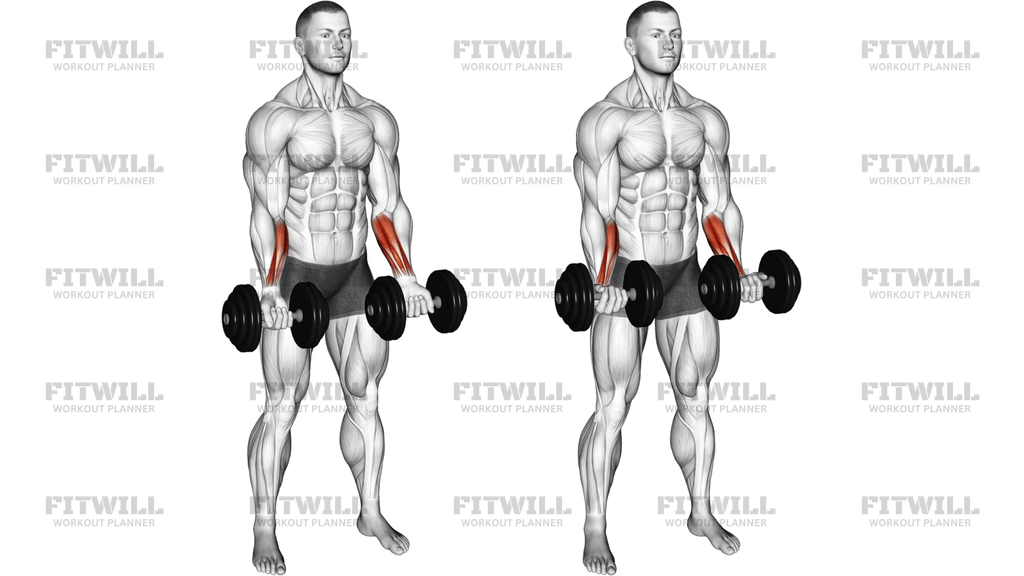
Instructions
- Stand upright with a dumbbell in each hand, arms hanging beside your thighs and palms turned forward or slightly inward so the wrists can flex freely.
- Plant both feet about hip-width apart and keep your knees soft, chest tall, and shoulders down instead of letting them roll forward.
- Let the dumbbells settle at the bottom with the wrists long and neutral, then keep the upper arms pinned close to your sides.
- Without bending your elbows, curl both hands upward by flexing the wrists and letting the knuckles rise toward the forearms.
- Squeeze the forearms hard at the top of the curl for a brief pause while the elbows, shoulders, and torso stay still.
- Lower the dumbbells slowly until the wrists return to the starting position and the forearms feel stretched again.
- Keep your breathing steady through each repetition instead of holding your breath for the whole set.
- Reset the dumbbells beside your thighs between reps if your grip slips, then continue only while the wrists stay in control.
Tips & Tricks
- Keep the elbows locked in place; if they start curling, the dumbbells are too heavy for a true wrist curl.
- Use a smaller range if the bottom position pulls the hands too far back and you lose control on the way up.
- Let the dumbbells sit in the fingers instead of deep in the palm so the wrists can flex without the grip choking the motion.
- Move slowly on the lowering phase, because the forearm flexors get most of their work when you resist the descent.
- Avoid shrugging the shoulders to help the lift; that shifts tension away from the forearms and usually means the set is too hard.
- Stop short of pain in the wrist joint, especially if the dumbbells force an awkward angle at the top or bottom.
- Choose lighter dumbbells than you would for curls or presses; this movement usually works best with strict, high-rep sets.
- Keep the wrists stacked in the same path on both sides so one hand does not drift higher or twist outward.
- If your grip fails before the forearms do, reduce load or use a slower tempo rather than swinging the weights.
- Use the pause at the top to feel the forearm squeeze before you lower the dumbbells under control.
Frequently Asked Questions
What muscles does Dumbbell Standing Wrist Curl train most?
It mainly trains the wrist flexors in the forearms, especially the muscles that help you curl the hand toward the forearm. The grip and upper arm support the movement, but they should not drive it.
How do I know if I am doing a true Dumbbell Standing Wrist Curl?
Your elbows should stay still at your sides while only the wrists move. If the shoulders swing or the elbows bend, you are turning it into a cheat curl instead of a wrist curl.
Should I curl both dumbbells at the same time or one side at a time?
Both work, but curling both dumbbells together is the version shown here and is the simplest way to keep the setup balanced. One side at a time can help if one wrist fatigues or drifts out of position.
Why do my shoulders feel involved during Dumbbell Standing Wrist Curl?
That usually means you are shrugging or swinging the weights to help the curl. Keep the shoulders down and the upper arms quiet so the forearms do the work.
What rep range works best for Dumbbell Standing Wrist Curl?
Higher reps usually work well because the load is small and the range is short. Sets in the 12-20 rep range are common when you want focused forearm fatigue without forcing heavy dumbbells.
Can I use Dumbbell Standing Wrist Curl if I have sensitive wrists?
Yes, but keep the range smaller and avoid forcing the dumbbells into an extreme bend. If the joint feels irritated, lighten the load or stop before the bottom position.
How should I hold the dumbbells during this exercise?
Hold them firmly enough that they do not slip, but not so deep in the palm that the wrist cannot flex. A controlled, relaxed grip usually makes the forearm contraction easier to feel.
What is the most common mistake with Dumbbell Standing Wrist Curl?
Using momentum from the elbows, shoulders, or hips is the biggest problem. The rep should look small and deliberate, with the dumbbells moving because the wrists are curling.