Dumbbell Standing Back Wrist Curl
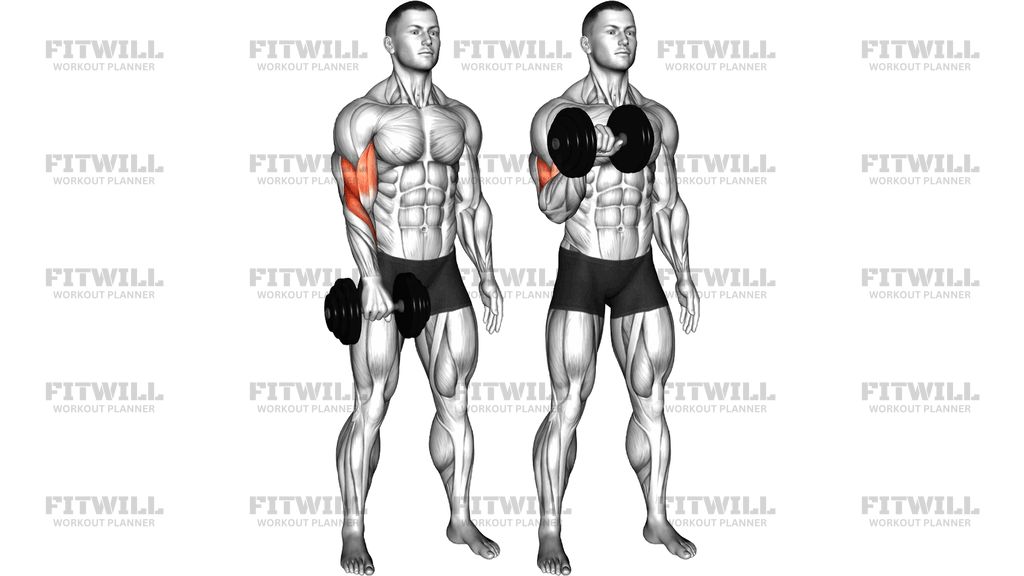
Dumbbell Standing Back Wrist Curl is a standing forearm isolation exercise that trains wrist extension with a pair of dumbbells. It is a simple movement on paper, but it only works well when the wrists do the motion and the elbows, shoulders, and torso stay quiet. The exercise is useful for building balanced forearm strength, especially when your training already includes a lot of gripping, pulling, or wrist-flexion work.
The main emphasis is on the forearm extensors, with the shoulders, grip, and core working mostly as stabilizers. That makes setup important: stand tall with your feet about hip-width apart, let the dumbbells hang beside your thighs, and keep your upper arms close to your body. If you lean back, shrug, or bend the elbows, the set stops being a wrist exercise and turns into a loose full-body compensation drill.
Each repetition should come from the wrists only. Lift the backs of your hands upward by extending the wrists, then lower the dumbbells back down under control until the wrists return to neutral or just below. The range is usually small, but it should be smooth and repeatable, with no bouncing off the thighs and no swinging from the shoulders to create momentum.
Dumbbell Standing Back Wrist Curl is usually best programmed as accessory work after larger upper-body lifts or on days when you want extra forearm volume without heavy joint stress. Light loads and higher reps usually make more sense than chasing weight, because the forearm extensors fatigue quickly and sloppy reps can irritate the wrists. The goal is a clean burn in the forearms, not a dramatic heave of the dumbbells.
When it is done well, the movement builds strength where many lifters are undertrained: the muscles that help extend, stabilize, and balance the wrists during pulling, carrying, and gripping. Keep the motion strict, the tempo controlled, and the posture steady so the forearms stay responsible for the work from the first rep to the last.
Fitwill
Log Workouts, Track Progress & Build Strength.
Achieve more with Fitwill: explore over 9600 exercises with images and videos, access built-in and custom workouts, perfect for both gym and home sessions, and see real results.
Start your journey. Download today!




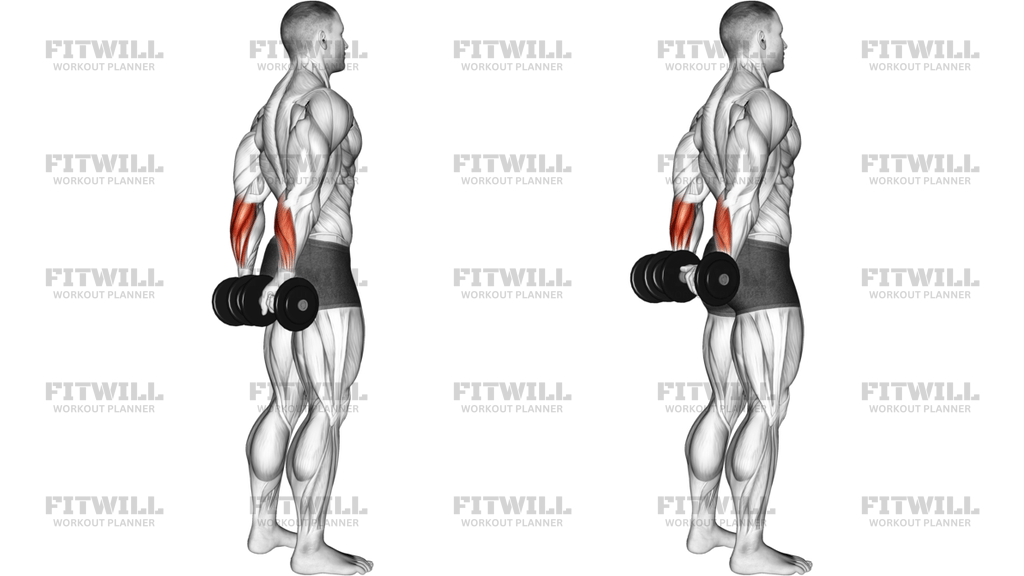
Instructions
- Stand upright with your feet about hip-width apart and hold a dumbbell in each hand beside your thighs, with your arms straight and your palms facing your body.
- Keep your chest tall, your ribs stacked over your pelvis, and your elbows tucked close to your sides without locking them hard.
- Let the dumbbells hang from your fingers so the wrists can move freely instead of letting the handles rest deep in your palms.
- Extend both wrists to lift the backs of your hands upward, keeping your forearms still and your shoulders quiet.
- Raise only as far as you can without the dumbbells bumping your thighs or your elbows drifting forward.
- Squeeze the top position briefly and feel the contraction in the forearms rather than in the shoulders.
- Lower the dumbbells slowly until the wrists return to neutral or slightly below neutral under control.
- Reset your grip, exhale as you lift, inhale as you lower, and finish the set by lowering the dumbbells safely to your sides.
Tips & Tricks
- Choose lighter dumbbells than you would for curls; the forearm extensors fatigue quickly and heavy bells usually turn the set into a shrug.
- Keep the elbows fixed beside your torso so the dumbbells do not drift into a mini curl.
- If the weights bang into your thighs, stand taller and shorten the top range instead of swinging farther.
- Use a slow lowering phase of about two to three seconds to keep tension on the back of the forearm.
- Let the dumbbells sit more in the fingers than the heel of the palm so the wrists can hinge cleanly.
- Keep your shoulders down and relaxed; rising shoulders usually mean the load is too heavy.
- Stop the set when the wrists start twisting or the forearms stop moving symmetrically.
- If the top position feels pinchy, stop just short of the end range and keep the motion smooth.
Frequently Asked Questions
What muscles does Dumbbell Standing Back Wrist Curl work?
It mainly trains the forearm extensors that lift the back of the hand, while the grip, shoulders, and core help stabilize the dumbbells.
Can beginners perform this exercise?
Yes, beginners can use very light dumbbells and short, strict reps. The movement is small, so control matters more than load.
How heavy should Dumbbell Standing Back Wrist Curl be?
Light enough that your elbows stay still and the dumbbells never swing off your thighs. If your shoulders start helping, the weight is too heavy.
Should my elbows move during Dumbbell Standing Back Wrist Curl?
No. Keep the elbows tucked near your sides so the wrist joint does the work instead of turning the exercise into a curl.
How do I know if I am doing the wrist motion correctly?
You should feel the forearms working while the upper arms stay quiet. If the dumbbells travel because your shoulders or torso move, reset and lighten the load.
Can I use Dumbbell Standing Back Wrist Curl for grip training?
It is more of a wrist-extensor exercise than a pure grip drill, but stronger extensors can support better overall forearm balance and wrist endurance.
Should I do one arm at a time or both together?
Both work, but one arm at a time can make it easier to keep the wrist path strict if one side cheats more than the other.
Why do the dumbbells feel awkward in the top range?
The top position is small and easy to overdo. Stop just before the wrists jam, and keep the lift smooth instead of snapping upward.