Bodyweight Triceps Extension From Plank Position
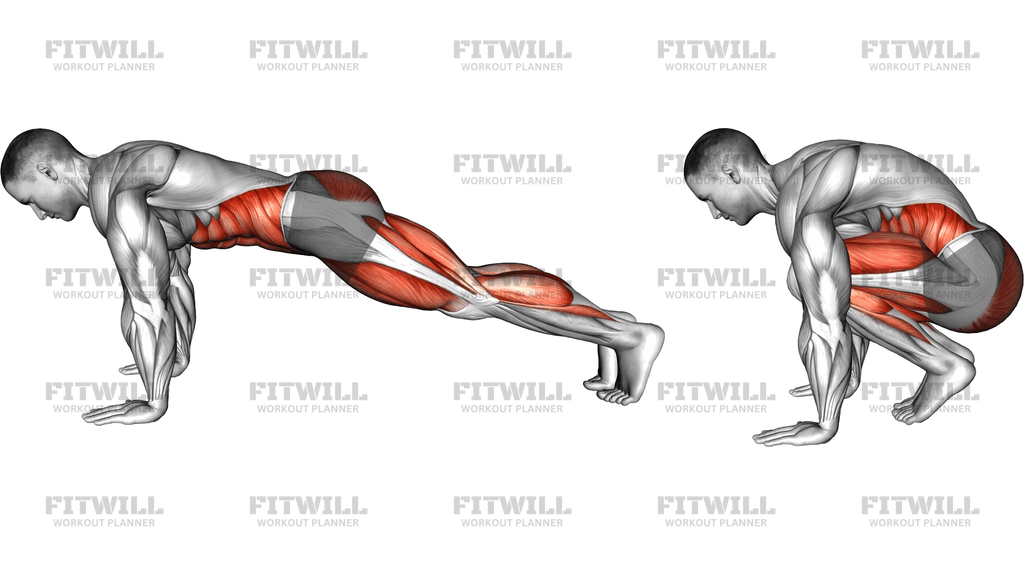
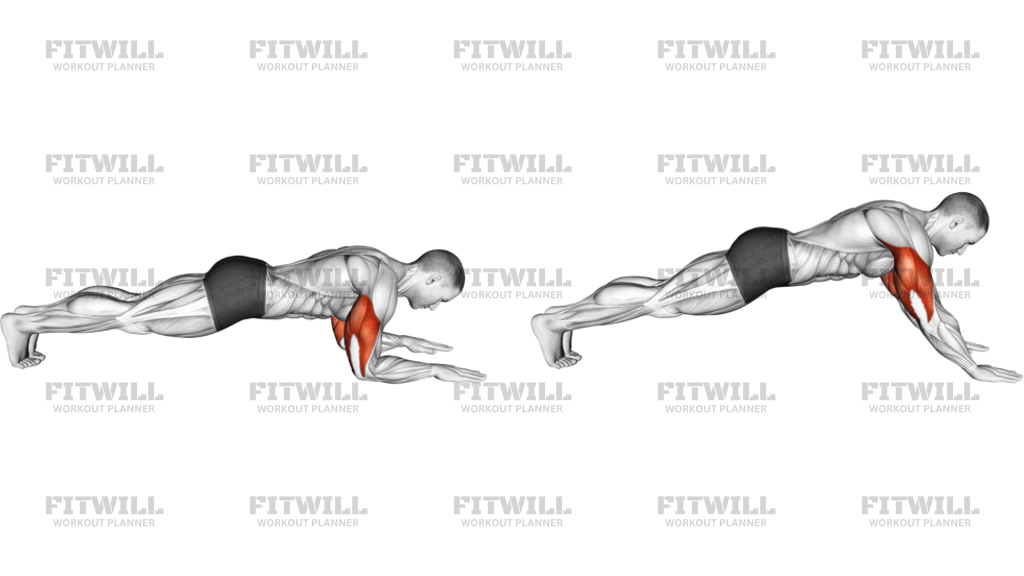
Bodyweight Triceps Extension From Plank Position is a floor-based pressing drill that starts in a forearm plank and finishes in a stronger, more extended plank with the elbows straightened. The image shows a long body line from head to heels with the elbows bent under the torso at the bottom and the arms extending as the body presses away from the floor. That makes the exercise feel less like a classic push-up and more like a controlled elbow-extension pattern driven by the triceps.
The main training benefit is direct triceps work with a large stability demand. The triceps are asked to extend the elbows while the shoulders, chest, forearms, and core keep the torso from sagging or twisting. Because the body stays off the floor the whole time, even a small change in hip height or shoulder position changes the difficulty quickly. Clean reps matter more than speed or range, because the exercise only works well when the plank stays organized.
Setup is what makes the movement feel like a triceps exercise instead of a sloppy plank transition. Start with the forearms on the floor, elbows under or slightly in front of the shoulders, toes tucked, and the legs long behind you. Keep the ribs stacked over the pelvis, squeeze the glutes, and press the forearms down hard before you try to extend the arms. If the hips are already low or the shoulders are drifting forward, the set will turn into a low-back compensation pattern.
On each rep, drive the floor away until the elbows straighten and the body reaches a strong high-plank position. Keep the upper arms steady enough that the work stays around the elbows instead of becoming a shoulder shrug or an uncontrolled press forward. Lower back to the forearm plank under control, letting the elbows bend in a smooth path rather than dropping suddenly. Breathing should stay rhythmic: exhale through the press, inhale on the descent, and reset your brace before the next rep.
This exercise is useful as an accessory drill, a core-and-arms finisher, or a bodyweight option when you want elbow-extension work without equipment. It can also help lifters who need better control in plank-based pressing positions before moving to harder variations. Keep the range honest, stop the set when the low back starts to arch, and use a slightly wider foot stance if the body wants to roll side to side. The goal is a strong, repeatable press from forearms to hands, not a rushed floor scramble.
Fitwill
Log Workouts, Track Progress & Build Strength.
Achieve more with Fitwill: explore over 9600 exercises with images and videos, access built-in and custom workouts, perfect for both gym and home sessions, and see real results.
Start your journey. Download today!




Instructions
- Set your forearms on the floor in a forearm plank with your elbows under or slightly in front of your shoulders.
- Tuck your toes, straighten both legs, and set your feet about hip-width apart so your body forms one long line.
- Press your forearms into the floor, squeeze your glutes, and draw your ribs down before the first rep.
- Drive the floor away by straightening your elbows and pressing your chest up into a strong high plank.
- Keep your head, ribs, and pelvis moving together instead of letting the hips sag or pike early.
- Pause briefly at the top with your wrists under your shoulders and your arms fully extended.
- Lower yourself back to the forearm plank under control, bending the elbows smoothly rather than dropping.
- Exhale as you press up, inhale as you return to the forearms, and reset your brace before the next rep.
Tips & Tricks
- Set your hands slightly wider than your elbows if your wrists feel crowded when you press from forearms to palms.
- Keep the feet a little wider than hip-width if your hips want to wobble during the elbow extension.
- Think about straightening the elbows, not pushing the hips up first; the torso should rise as one piece.
- Do not let the shoulders drift far in front of the wrists at the top, or the rep turns into a forward lean instead of a triceps press.
- A short pause in the high plank makes it easier to feel whether the triceps are doing the work or momentum is taking over.
- If the low back starts to sag, shorten the set or move to a knee-supported version before the plank breaks down.
- Keep the elbows tracking in a smooth line instead of flaring wide, which shifts stress away from the triceps.
- Use slower lowering reps if you want more triceps tension and less bouncing through the transition.
Frequently Asked Questions
What muscles does Bodyweight Triceps Extension From Plank Position work?
The triceps do most of the elbow extension, while the shoulders, chest, forearms, and core help keep the plank rigid.
Is Bodyweight Triceps Extension From Plank Position good for beginners?
Yes, if you can hold a solid forearm plank first. Beginners should use a short set, wide feet, and a smaller range before chasing more reps.
Where should my elbows be in the starting plank position?
Keep the elbows under or slightly in front of the shoulders so the press path stays clean. If the elbows sit too far forward, the shoulders usually take over.
Why do my hips sag during this plank triceps extension?
That usually means the forearm plank is too hard or the brace is leaking. Widen the feet, shorten the set, and keep the ribs pulled down before you press.
Should this feel like a push-up or a triceps extension?
It should feel like a triceps-led press out of a plank, not a chest-dominant push-up. The elbows extend while the torso stays much tighter than in a normal rep.
What if my wrists hurt when I press up to the hands?
Use a slightly wider hand position, keep the wrists stacked under the shoulders at the top, or switch to push-up handles or an incline if the floor angle still bothers you.
How do I know I am using enough range of motion?
The rep should begin in a clear forearm plank and finish in a strong high plank with the elbows straight. If you are barely moving, the triceps are not getting a full extension challenge.
What is the easiest way to make Bodyweight Triceps Extension From Plank Position harder?
Slow the lowering phase, pause longer at the top, or move your feet closer together. All three increase the demand on the triceps and the plank position.