Resistance Band Standing Single-Arm Lateral Shoulder Extension
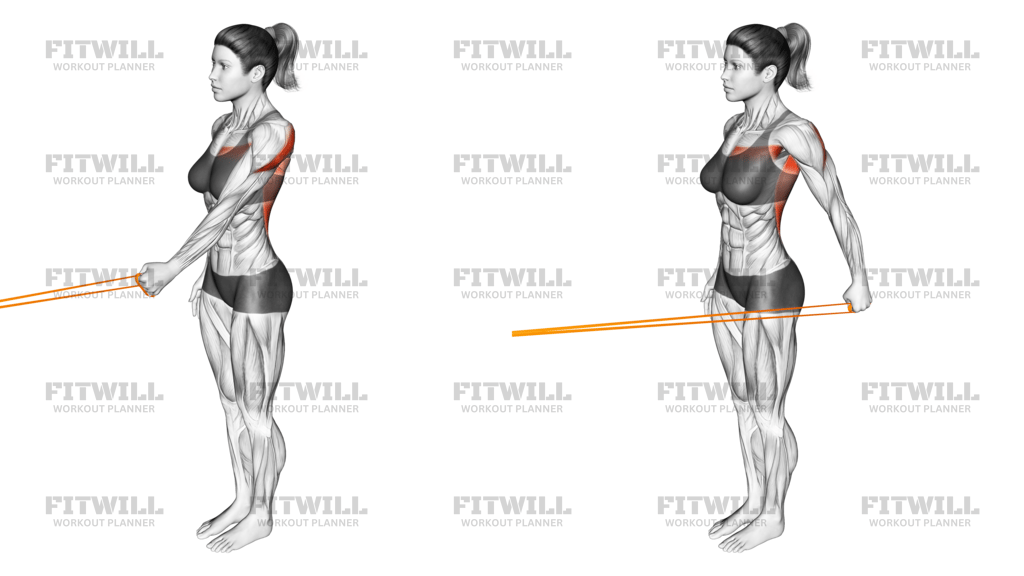
Resistance Band Standing Single-Arm Lateral Shoulder Extension is a standing band drill that trains controlled shoulder extension with the arm kept long and the torso quiet. In the image, the working hand starts slightly in front of the body and sweeps backward toward the side of the hip, which makes this a useful accessory for the rear shoulder, upper back, and arm support muscles that help keep the line of pull clean.
The setup matters because the band should already have enough tension to challenge the rep without forcing you to lean, twist, or shrug. Stand tall with the ribs stacked over the pelvis, the shoulders level, and the working arm held just off the thigh. That position gives you a clear start point and makes it easier to feel the shoulder doing the work instead of letting the trunk take over.
This movement is most useful when you want a small, controlled range that builds shoulder control and positional strength rather than speed. The hand should travel in a smooth arc from in front of the hip to beside or slightly behind it, with the elbow staying nearly straight. A brief squeeze at the end of the pull can help you own the finish without overextending the lower back or swinging the arm.
Because the band keeps tension on both the pull and the return, this exercise works well as accessory work, warm-up preparation, or higher-rep unilateral volume. It is especially helpful when you want to clean up shoulder mechanics on one side at a time or reinforce a stable shoulder blade without loading a free-weight pattern heavily.
Keep the range pain-free and controlled. If the front of the shoulder pinches, shorten the range and lighten the band before forcing the hand farther back. The goal is a smooth shoulder-driven extension with the neck relaxed, the torso still, and the band under steady tension from start to finish.
[ Workout Log & Planner ]
Put your next workout in Fitwill
Keep your plan and training log ready when you are.


Instructions
- Attach a resistance band to a low anchor and stand tall side-on to the anchor with the working hand holding the band and the arm straight but not locked.
- Step far enough away to create light starting tension, then set your feet hip-width apart or stagger them slightly for balance.
- Stack your ribs over your pelvis, keep your chest quiet, and let the shoulder stay down instead of creeping toward your ear.
- Start with the working hand slightly in front of the thigh and the palm turned inward or slightly down.
- Pull the hand backward in a smooth arc toward the side of the hip by extending the shoulder, keeping the elbow nearly straight.
- Stop when the upper arm reaches the line of the torso or just behind it, and avoid turning the rep into a big torso twist.
- Squeeze the rear shoulder and upper back for a brief moment at the end of the pull without arching the low back.
- Return the hand forward slowly until the arm is back in the starting position and the band remains under control.
- Exhale as you pull back and inhale as you return, then repeat for the planned reps before switching sides.
Tips & Tricks
- Choose a low anchor height so the pull line stays close to hip level; a high anchor changes the feel and makes the rep harder to control.
- Keep the elbow almost straight the whole time so the shoulder extension stays honest instead of turning into a bent-arm row or press-down.
- If your torso leans backward to finish the rep, shorten the range and step closer to the anchor before adding resistance.
- Let the hand travel close to the thigh and hip instead of flaring out wide, which keeps the shoulder path cleaner.
- Pause only long enough to feel the back of the shoulder, not long enough to arch your spine or shrug the working shoulder upward.
- Use a lighter band if the front of the shoulder or elbow starts to take over before the rear shoulder does.
- Make the return phase slow and deliberate; the band should not snap the arm back to the start.
- Stop the set when you can no longer keep the ribcage stacked and the shoulder blade quiet.
Frequently Asked Questions
What muscles does Resistance Band Standing Single-Arm Lateral Shoulder Extension work?
It mainly trains the rear shoulder and the muscles that extend the arm behind the body, with upper-back and arm stabilizers helping control the band.
Can beginners perform this exercise?
Yes. It is beginner-friendly if the band is light and the range stays small enough to keep the torso still.
Where should the band be anchored?
A low anchor works best. The line of pull should let your hand start slightly in front of the thigh and move back toward the side of the hip.
Why should I keep my elbow nearly straight?
A long arm keeps the emphasis on shoulder extension. If you bend the elbow a lot, the movement becomes easier to cheat with the arm instead of the shoulder.
What is the most common mistake on this movement?
Twisting the torso or leaning back to force the hand farther behind the body is the main error. Keep the ribs stacked and let the shoulder do the work.
Should I feel this in my lower back?
No. If the low back is doing the work, the band is probably too heavy or the range is too long.
Can I swap a cable for the band?
Yes. A low cable with a handle can follow the same path and is a good substitute if you want more precise resistance.
How do I progress this exercise?
Increase band tension gradually, pause a little longer at the finish, or keep the same load and make the return slower and cleaner.