Lever Glute Press
Lever Glute Press is a machine-based hip extension exercise that keeps your torso supported while you drive one leg back to contract the glutes. The lever arm gives you a guided path, which makes the movement easier to repeat than a free-standing kickback or bridge variation, but it still demands good setup. The exercise is most useful when you want direct glute work without having to balance a barbell or floor-based load.
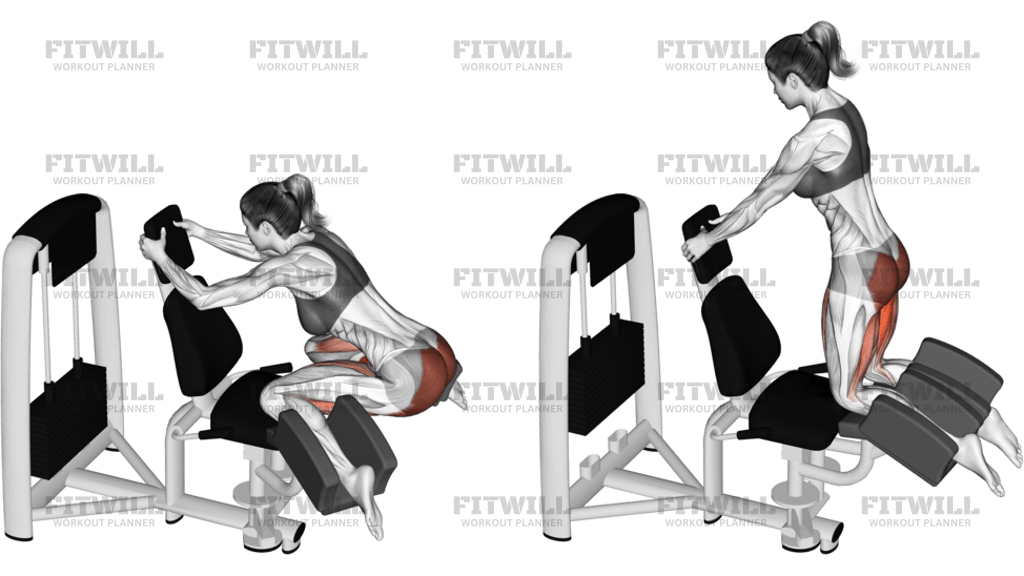
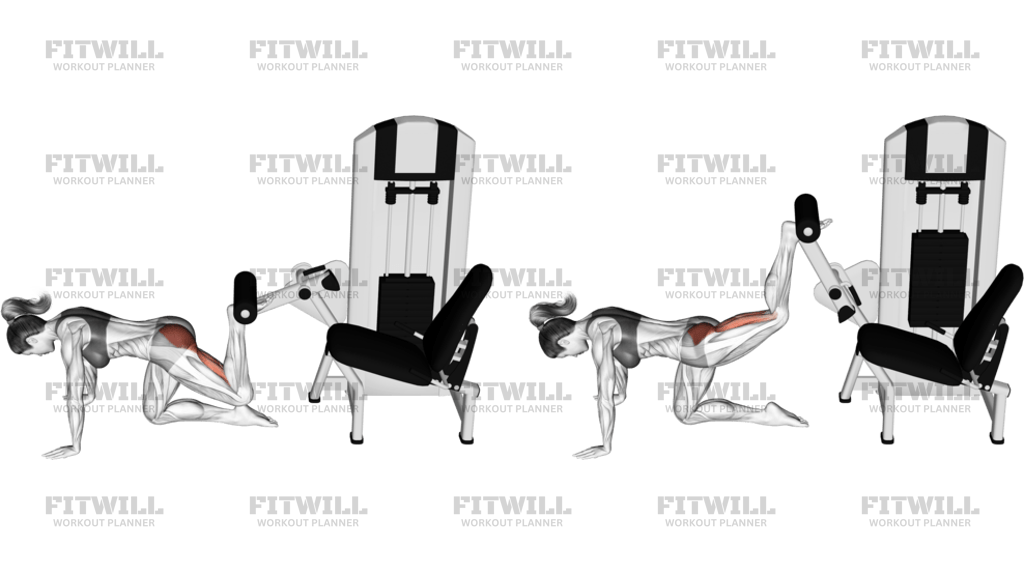
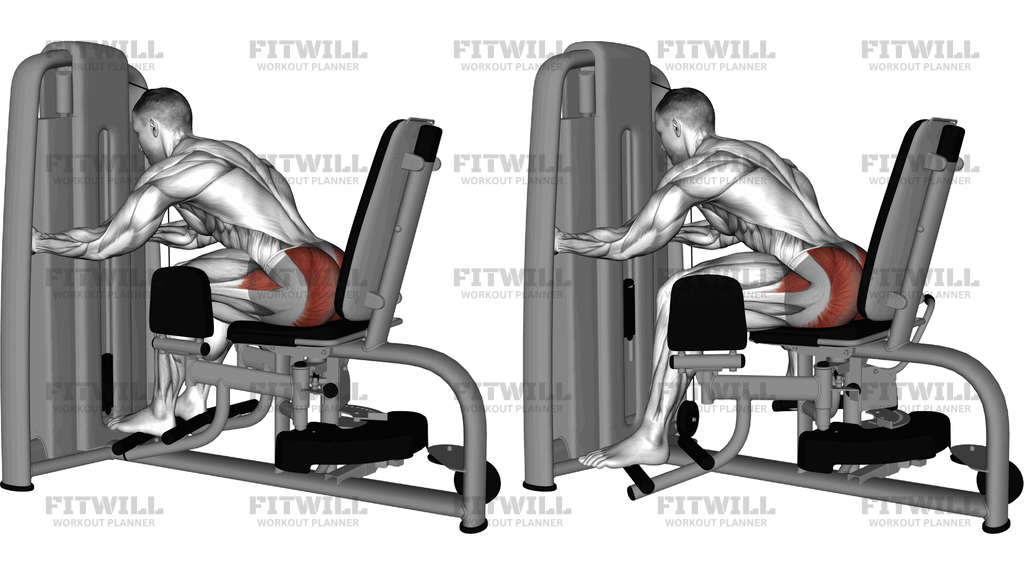
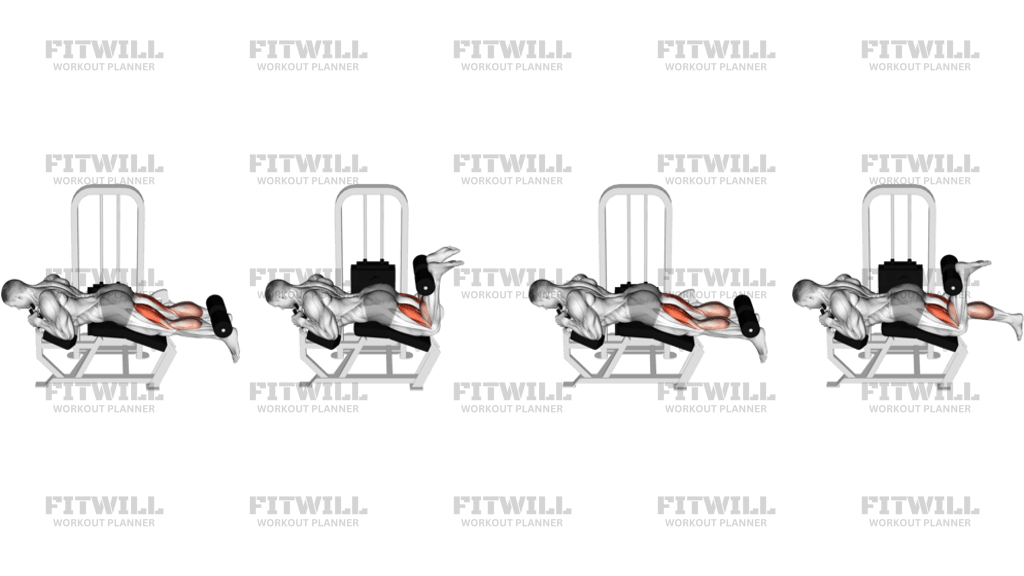
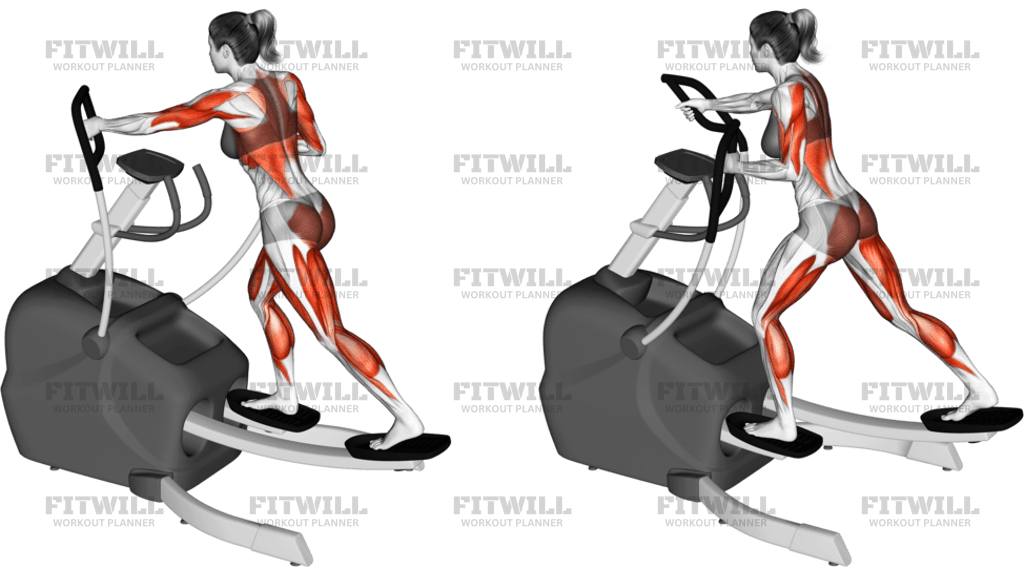
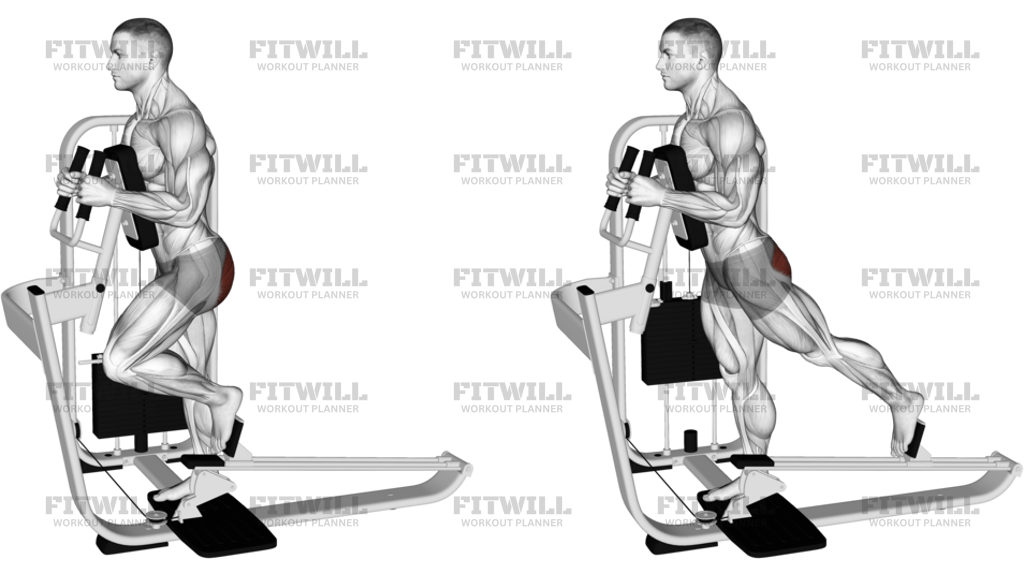
The image shows a chest-supported position with the hands on the handles, the torso leaning into the pad, and one leg pressing through the machine while the other leg stays planted for support. That support matters because the goal is to move the hip joint without turning the rep into a lower-back extension drill. When the pelvis stays square and the rib cage stays stacked over the pad, the glutes can do the work instead of the lumbar spine taking over.
Lever Glute Press is a good choice for accessory work, glute-focused training blocks, and sessions where you want clean unilateral tension. It can help lifters who want more glute volume without loading the spine heavily, and it also gives beginners a stable way to learn hip extension under resistance. The fixed machine path makes it easier to feel where the rep should start and finish, but that only works if the machine is adjusted so the working leg can press smoothly without losing position.
To perform it well, keep the pressing leg driving back and slightly up through the heel or midfoot while the torso stays glued to the support pad. The rep should finish with the glute shortened, not with the lower back arched hard or the hips twisted open. Lower the lever back under control until you feel the glute lengthen again, then repeat with the same tempo and body position.
This exercise is not about momentum or kicking the leg as high as possible. It works best with a controlled range, steady breathing, and a load that lets you keep the support leg quiet and the working hip honest. If the machine feels awkward at first, reduce the range and refine the pad position before adding load. Done correctly, Lever Glute Press is a focused way to train the glutes with a stable setup and a clear line of force.
[ Workout Log & Planner ]
Put your next workout in Fitwill
Keep your plan and training log ready when you are.


Instructions
- Set the chest pad so you can lean in with a tall torso and reach the front handles without rounding your lower back.
- Stand on the support leg and place the working foot on the lever pad with the knee bent and the hip slightly behind your body.
- Hold the handles firmly, keep your ribs stacked over the pad, and square both hips before the first rep.
- Press the working leg back by extending the hip, driving through the heel or midfoot instead of swinging the whole leg.
- Finish the rep when the glute is fully shortened and the leg is long behind you, but stop before your lower back starts arching.
- Pause briefly at the back of the movement to feel the glute working against the machine.
- Return the lever forward slowly until the working knee bends again and the hip reaches the start position under control.
- Keep the support leg quiet and breathe out on the press, then inhale as the lever comes back in.
- Complete all reps on one side, reset your position if needed, and then switch to the other leg.
Tips & Tricks
- If your lower back feels the rep more than your glute, shorten the press and keep your ribs pinned to the chest pad.
- Do not twist the pelvis open to chase a bigger range; keep both hip points facing the machine pad.
- A slight bend in the working knee usually keeps tension on the glute better than locking the leg straight.
- Drive the lever backward smoothly instead of kicking it, especially on the first few reps of the set.
- The support foot should stay planted and quiet; if it starts bouncing, the load is probably too heavy.
- Use the machine’s handles to stop yourself from drifting forward and losing the chest-supported position.
- A slower return makes the glute work harder in the lengthened position, which is where many lifters lose tension.
- Choose a range that lets the lever move cleanly without the weight stack or resistance arm slamming into the stop.
- If the pad sits too low on your chest or torso, readjust before the set instead of compensating with your spine.
Frequently Asked Questions
What muscles does Lever Glute Press work?
It mainly targets the glutes through hip extension, with the support leg, core, and upper body helping you stay fixed against the machine.
Is Lever Glute Press good for beginners?
Yes, because the chest pad and handles give you a stable setup. Start light so you can learn how to press through the hip without arching your lower back.
How should I set up on the Lever Glute Press machine?
Lean your torso into the pad, hold the handles, and place the working foot on the lever so the hip can extend without your pelvis rotating or your back rounding.
Why do I feel Lever Glute Press in my lower back?
That usually means you are finishing the rep by arching instead of extending at the hip. Shorten the range, keep your ribs down, and stop the press when the glute is fully shortened.
Should my working knee stay bent on Lever Glute Press?
A soft bend is usually best because it keeps tension on the glute and avoids turning the movement into a straight-leg kick.
Can I use Lever Glute Press instead of hip thrusts or kickbacks?
Yes, it is a useful machine alternative when you want glute-focused work with more support and less balance demand than free-weight versions.
How many reps should I do on Lever Glute Press?
Most people do best with moderate-to-higher reps because the movement is usually used for glute isolation and controlled tension rather than maximal loading.
Do I need to switch sides during Lever Glute Press?
Yes, it is a unilateral movement, so complete one side, reset the machine if needed, and then repeat on the other leg.