Cable Donkey Diagonal Kickback
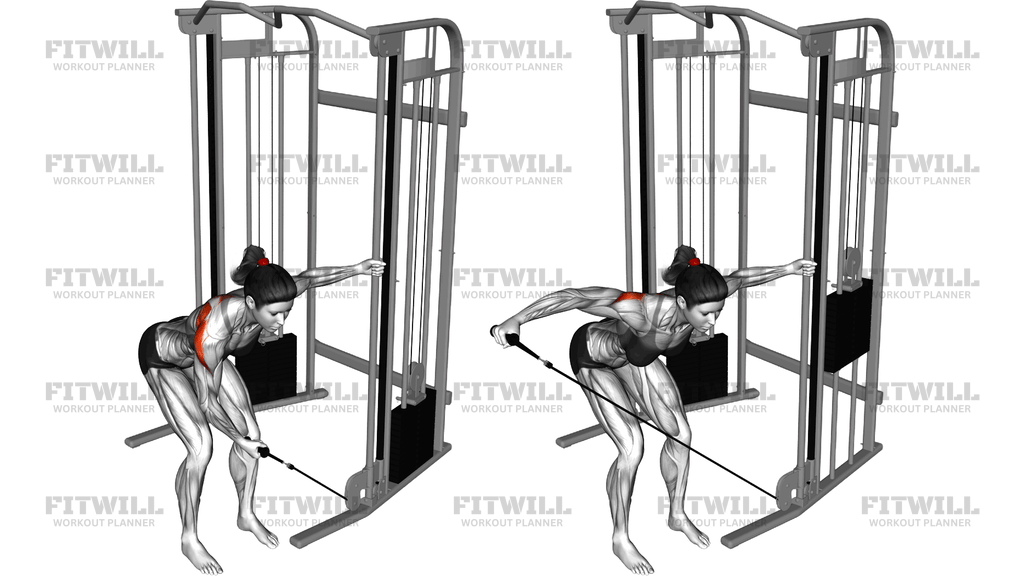
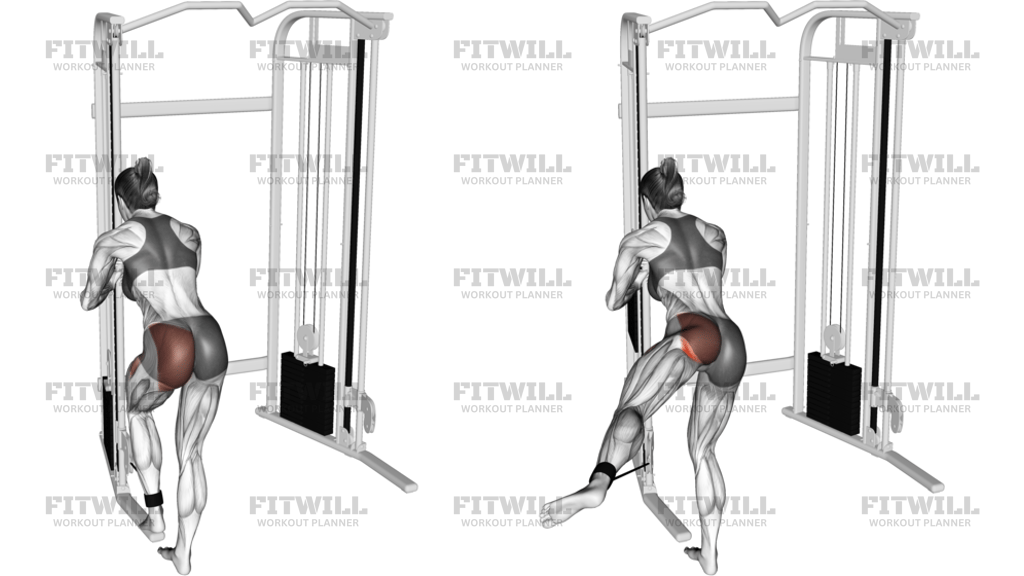
Cable Donkey Diagonal Kickback is a cable-based glute and hip exercise performed from a forward-leaning, supported stance. In the image, the torso is hinged toward the machine, the hands are braced on the frame, and the working leg drives back on a diagonal line instead of traveling straight behind the body. That angled path makes the movement feel more specific to the glutes and hip stabilizers than a simple standing kickback.
The setup matters because this is a controlled, tension-based exercise rather than a swing. A stable support hand position, a soft bend in the standing knee, and a square pelvis keep the load where it belongs. When the trunk stays fixed and the ribcage does not flare, the working hip can extend smoothly while the lower back stays out of the rep. That is especially important with cable work, where it is easy to turn a small glute exercise into a full-body compensation drill.
The diagonal line of travel is the key feature. Instead of kicking only backward, the leg moves back and slightly out, which can increase the challenge on the upper and outer portion of the glute complex while still loading hip extension. The return should be slow and controlled so the cable keeps tension on the working side. The goal is not a huge range; it is a clean line of motion, a brief squeeze at the top, and a repeatable path from rep to rep.
This exercise fits well in glute-focused training, accessory work, or a lower-body session where you want single-leg hip control without the fatigue of heavy compound lifts. Beginners can use it if they keep the load light and the torso position fixed. More advanced lifters can use it to refine pelvic control, improve glute engagement, and add targeted volume without loading the spine. If the low back starts to arch or the hips begin to twist, the set is too heavy or the range is too large.
[ Workout Log & Planner ]
Put your next workout in Fitwill
Keep your plan and training log ready when you are.


Instructions
- Set the cable pulley low, attach the handle to the working foot or lower leg, and stand facing the machine.
- Hold the frame or upright with both hands, hinge forward at the hips, and keep the support foot planted under your center of mass.
- Keep a soft bend in both knees, square the pelvis, and brace the torso before the first rep.
- Start with the working leg close to the floor and slightly behind the support leg.
- Drive the working leg back and diagonally outward in a smooth arc while keeping the trunk still.
- Finish the rep when the hip is fully extended and the glute is squeezed without arching the low back.
- Pause briefly at the top, then lower the leg along the same diagonal path with control.
- Keep tension on the cable as you return to the start, then reset your brace before the next rep.
- Complete all reps on one side before switching legs.
Tips & Tricks
- Keep your ribs stacked over your pelvis so the kickback comes from the hip instead of a low-back arch.
- Think of the leg moving back and slightly out, not simply straight up behind you.
- Use the support handles lightly; if you are pulling hard on the machine, the load is probably too heavy.
- Maintain a soft bend in the standing knee so the pelvis can stay level.
- Stop the lift as soon as the pelvis starts to rotate open on the working side.
- Use a short squeeze at the top instead of trying to force more height.
- Lower the handle slowly so the cable never goes slack between reps.
- Exhale as the leg drives back and inhale on the controlled return.
- Choose a load that keeps the diagonal path smooth for every repetition.
Frequently Asked Questions
What muscles does Cable Donkey Diagonal Kickback work?
It mainly trains the glutes, especially the hip extensors and outer glute stabilizers, with the core and standing leg helping you stay square.
Can beginners perform this exercise?
Yes. Beginners usually do best with a light cable load and a short range of motion until they can keep the torso still and the pelvis level.
How is the diagonal version different from a straight cable kickback?
The diagonal path adds a small outward component, which makes it easier to feel the upper and outer glute while still training hip extension.
Why do I need to face the machine and hold the frame?
That setup gives you a stable brace so the working leg can move cleanly without swinging the torso or twisting the hips.
Should I feel this in my lower back?
No. A small amount of trunk work is normal, but the rep should stay in the glute and hip. If the low back takes over, reduce the load or shorten the range.
How far should the leg travel on each rep?
Only as far as you can keep the pelvis square and the cable under control. Bigger is not better if the movement turns into a back arch or a body twist.
Is this a good accessory exercise after squats or deadlifts?
Yes. It fits well after compound lower-body work when you want extra glute volume without adding much spinal loading.
What is the most common mistake with this exercise?
People usually turn it into a hip swing or twist the pelvis open to get the leg higher. A controlled arc with a still trunk is the better rep.