Seated Rhomboid Stretch
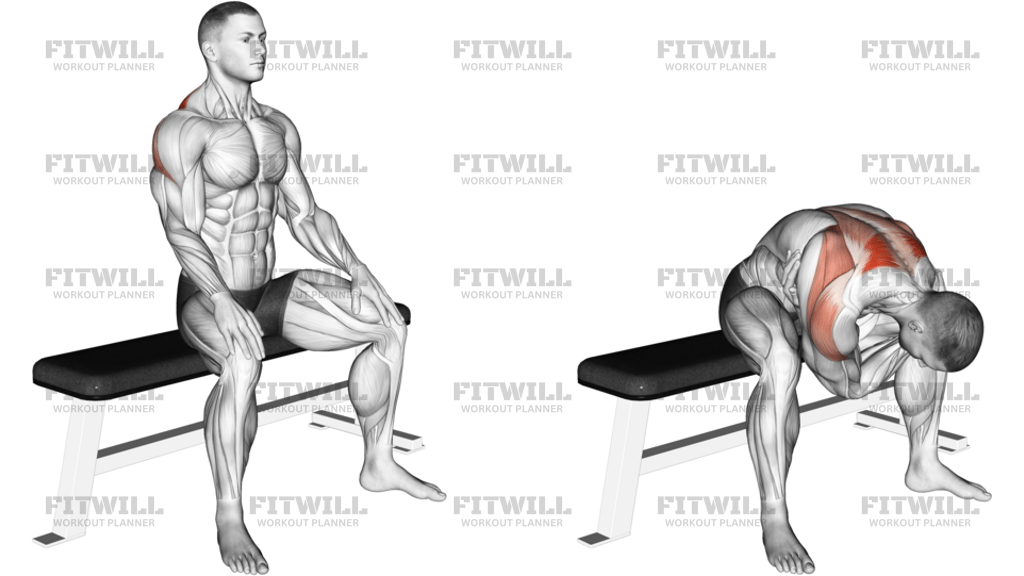
Seated Rhomboid Stretch is a bench-based upper-back mobility exercise that uses body weight and steady breathing to open the area between the shoulder blades. The movement is meant to lengthen the rhomboids, mid traps, rear delts, and the upper back tissues that tend to tighten after pressing, desk work, or long periods of holding the shoulders forward.
The setup matters more than force. Sitting on the edge of a flat bench gives you room to hinge at the hips and round through the upper back without collapsing completely. With the feet planted and the knees slightly apart, the torso can fold forward while the pelvis stays anchored on the bench. That position lets the stretch land in the thoracic spine and scapular area instead of dumping stress into the low back or neck.
As you fold forward, the shoulder blades should drift apart and the chest should soften toward the thighs. Some versions use the forearms crossed over the chest or the hands lightly resting on the opposite shoulders, while others simply let the arms hang relaxed so the upper back can round freely. Either way, the goal is the same: create a controlled stretch across the space between the shoulder blades, then breathe into that position instead of forcing a deeper fold.
This exercise works well as a warm-up before rows and presses, a cooldown after upper-body training, or a postural reset on days when the upper back feels stiff. It is not about loading the movement or chasing range for its own sake. It is about finding a smooth, repeatable position, holding it long enough for the upper back to relax, and returning to upright without jerking or bouncing.
If the stretch shifts into the neck, shoulders, or low back, reduce the depth and sit a little taller. A good rep feels broad across the upper back, controlled through the trunk, and easy to breathe through. That makes the Seated Rhomboid Stretch useful for beginners and experienced lifters alike when the goal is better scapular motion, less mid-back tightness, and cleaner posture for the next exercise.
[ Workout Log & Planner ]
Put your next workout in Fitwill
Keep your plan and training log ready when you are.


Instructions
- Sit on the front edge of a flat bench with your feet flat and slightly wider than hip width.
- Keep your sit bones planted on the bench, lengthen your spine, and let your hands rest on your thighs or lightly across your chest.
- Inhale to prepare, then exhale and hinge forward from the hips while letting your upper back round.
- Allow your shoulder blades to move away from each other as your chest softens toward your thighs.
- Keep your chin tucked slightly so the stretch stays in the upper back instead of the neck.
- Lower only until you feel a broad stretch between the shoulder blades and no sharp pull in the low back.
- Hold the position and breathe slowly, using each exhale to soften a little more without bouncing.
- Return to upright by stacking the spine gradually and resetting your posture before the next hold.
Tips & Tricks
- A flat bench gives you better control than a soft seat because it keeps the pelvis stable while you fold forward.
- If your low back rounds first, sit a little taller and stop the hinge before the pelvis rolls back.
- Think about spreading the shoulder blades apart rather than trying to jam the chest lower.
- Keep the neck long and the chin slightly tucked so the stretch does not migrate into the top of the traps.
- A slow exhale usually lets the rhomboids and upper back relax more than pushing harder with the arms.
- Use a smaller range if the stretch feels pinchy in the front of the shoulders.
- Hold each rep long enough to feel the tissue soften, but not so long that you lose position and start collapsing.
- After upper-body pressing or rowing, this stretch can help restore a more neutral shoulder position before the next set.
Frequently Asked Questions
What does the Seated Rhomboid Stretch target most?
It mainly targets the rhomboids and the upper-back area between the shoulder blades, with help from the rear delts and mid traps.
Do I need a bench for this stretch?
A flat bench or sturdy seat works best because it gives you a stable place to sit on the front edge while you hinge forward.
Should my arms cross my chest or stay on my thighs?
Either position can work. Cross the arms if you want a stronger rounded-back stretch, or keep the hands on the thighs if you want a milder version.
Why do I feel this in my neck instead of my upper back?
That usually means the chin is lifted or the shoulders are shrugging. Tuck the chin slightly and let the shoulders stay heavy.
Is this more of a stretch or a strength exercise?
It is primarily a stretch and mobility drill. The effort comes from controlling the position and breathing, not from resistance.
How long should I hold each rep?
Hold long enough to breathe through the position comfortably, usually for a short controlled pause rather than a fast bounce.
What is the most common mistake with the bench position?
Sitting too far back or collapsing off the front edge. Stay anchored on the bench so the hinge comes from the hips and upper back.
Can I use this after rows or pressing work?
Yes. It is a good cooldown or between-set reset when your upper back feels stiff from pressing, rowing, or desk posture.