Sitting Scapular Adduction Version 2
Sitting Scapular Adduction Version 2 is a seated bodyweight drill for learning how to pull the shoulder blades toward the spine without turning the movement into a shrug, lean-back, or neck-driven rep. The chair gives you a stable base so you can focus on the scapulae moving cleanly while the ribcage stays stacked over the pelvis.
The exercise is most useful when you want better upper-back control, posture awareness, or a low-fatigue activation drill before rows, pulldowns, presses, or other upper-body work. In the image, the torso stays tall, the feet stay planted, and the chest opens as the shoulders glide back. That combination makes the movement more about controlled scapular adduction than about forcing the elbows or arching the lower back.
Set the chair so you can sit all the way on the surface with both feet flat and enough room to keep your knees and hips relaxed. From there, begin in a tall neutral seat, then draw the shoulder blades together and slightly down without flaring the ribs or tipping the head back. The goal is a smooth squeeze across the upper back, not an exaggerated chest lift or a hard pinch that creates tension in the neck.
This version is especially helpful for people who need a simple, equipment-light drill to rebuild awareness of scapular position. Because the body is supported, the exercise can be used as a warmup, a corrective movement, or a technique-only accessory set. Keep the range pain-free and predictable, and stop the set if you start to lose the upright seat, shrug the shoulders, or use momentum to fake the rep.
Done well, Sitting Scapular Adduction Version 2 should feel precise and repeatable: the shoulder blades move, the neck stays long, and the trunk stays organized. That makes it a good choice for teaching upper-back control before heavier pulling work or for reinforcing better posture under very light training stress.
[ Workout Log & Planner ]
Put your next workout in Fitwill
Keep your plan and training log ready when you are.


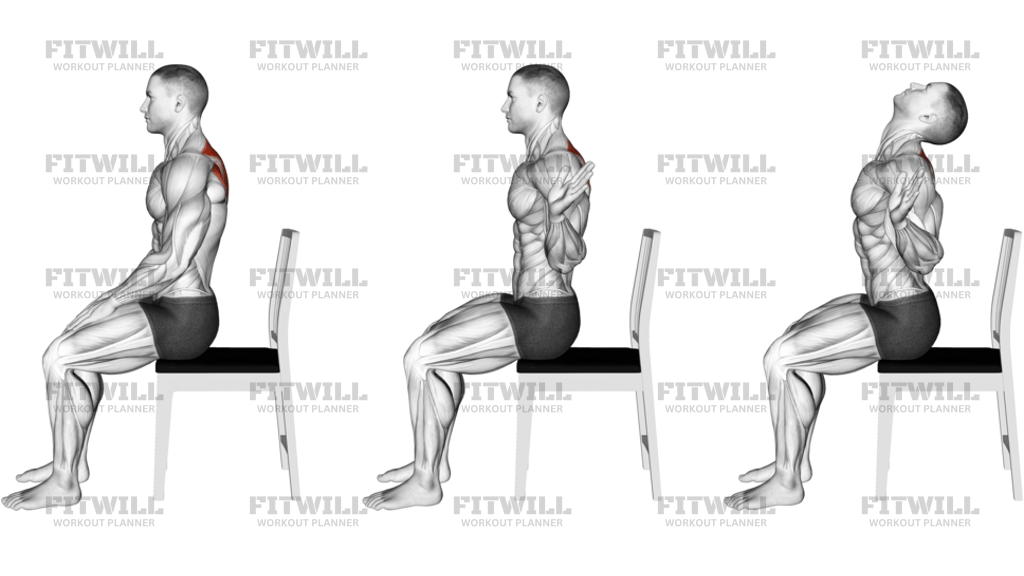
Instructions
- Sit tall on the chair with both feet flat on the floor, knees about hip-width apart, and your weight centered on both sitting bones.
- Keep your chest relaxed, chin level, and ribs stacked over your pelvis instead of leaning back into the chair.
- Let your arms hang naturally or hold the setup position shown in the image, then soften the shoulders away from your ears.
- Exhale and draw the shoulder blades together and slightly down, as if narrowing the space between them across your upper back.
- Keep the neck long and the head still while the movement comes from the shoulder blades, not from the elbows or lower back.
- Squeeze briefly at the end of the rep without jutting the ribs forward or arching to fake extra range.
- Inhale as you slowly release the shoulder blades back to the starting position with control.
- Repeat for the planned reps, keeping every rep smooth, upright, and evenly paced.
Tips & Tricks
- Think about sliding the shoulder blades into your back pockets, not just squeezing the elbows or hands.
- Keep the sternum from popping up; the ribs should stay stacked so the upper back does the work.
- If your neck tightens first, you are probably shrugging instead of adducting the scapulae.
- A small, clean squeeze is better than a big rep that forces the lower back to arch.
- Move slowly enough that you can feel both shoulder blades travel together, not one side drifting ahead.
- Keep pressure evenly through both feet so the torso does not twist while you pull back.
- Use this as a light activation drill before rows or presses, not as a heavy strength movement.
- Stop just short of discomfort in the front of the shoulder and keep the motion smooth on the way back.
Frequently Asked Questions
What does Sitting Scapular Adduction Version 2 train?
It trains the upper back to bring the shoulder blades together with control, which helps with posture, rowing mechanics, and shoulder organization.
Do I need equipment for this version?
No. This version uses body weight and a chair, so the focus stays on the scapular motion instead of on load.
Should I move my elbows during the rep?
The elbows should stay quiet. The motion should come from the shoulder blades sliding together and slightly down.
Why does my neck feel tight during the exercise?
That usually means you are shrugging or craning your head back. Keep the chin level and let the upper back do the work.
How far back should the shoulders move?
Only as far as you can keep the ribs stacked and the torso upright. A smaller, cleaner range is better than an exaggerated pinch.
Can I use this before upper-body lifting?
Yes. It works well as a warmup before rows, pulldowns, presses, or any session where you want better shoulder control.
What is the most common mistake on the chair?
Leaning back into the chair and turning the rep into a chest-thrusting movement instead of a pure scapular squeeze.
How should the rep feel when I do it correctly?
You should feel the space between the shoulder blades working, with the neck staying relaxed and the torso staying still.