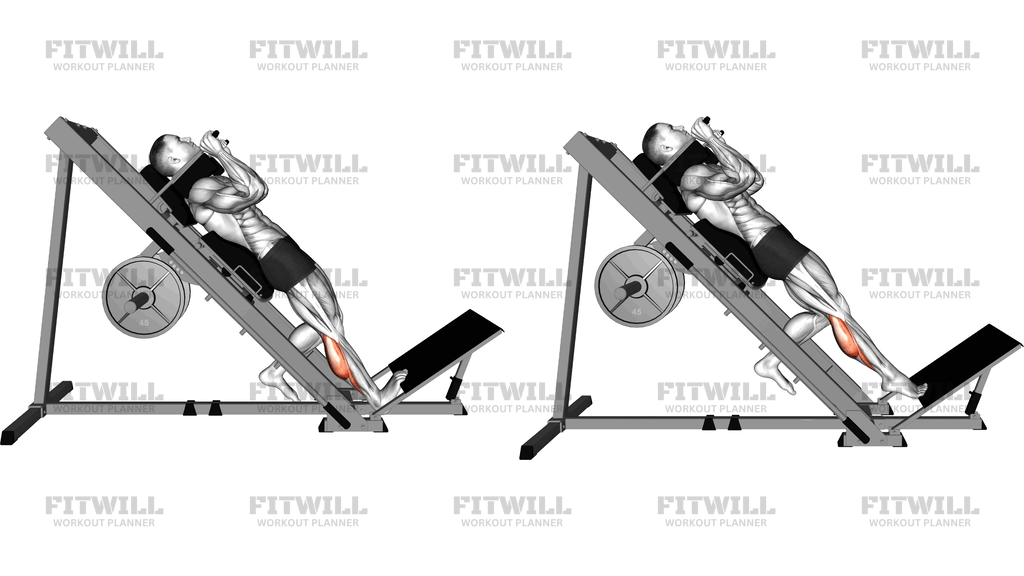
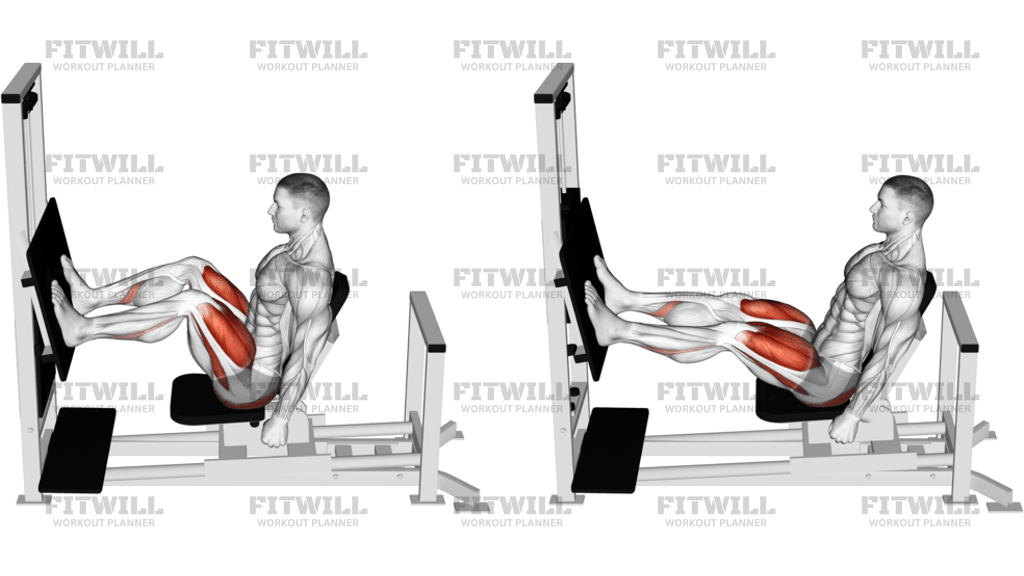
Lever Seated Single Leg Squat Calf Raise On Leg Press Machine
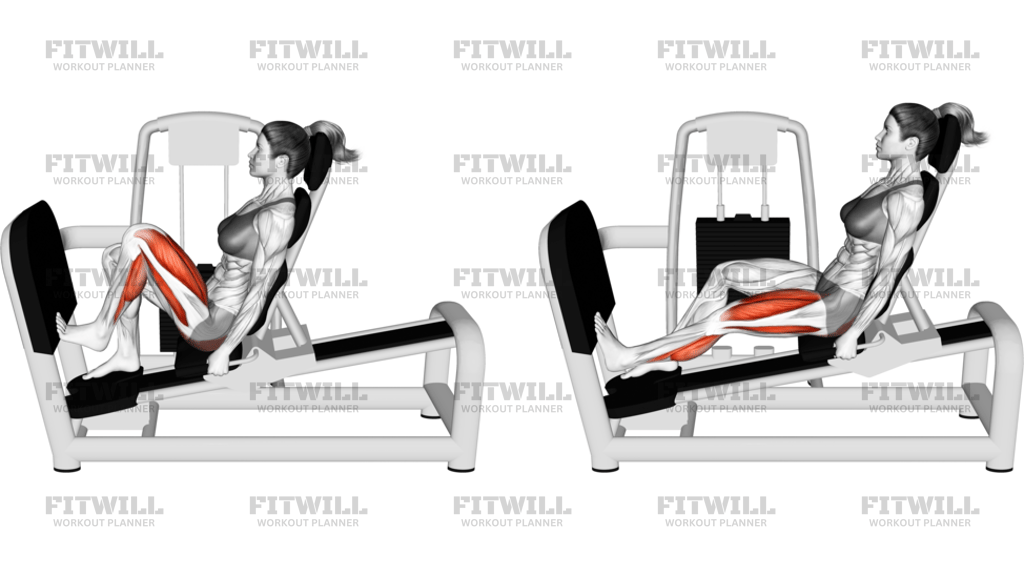
Lever Seated Single Leg Squat Calf Raise On Leg Press Machine is a seated single-leg calf exercise performed on a leg press machine. It isolates one ankle at a time while the knee stays bent and the torso is supported, which makes it a useful way to train the calf through a controlled, machine-guided range of motion. The visible work is at the ankle: the heel lowers into a stretch and then rises as you plantarflex the foot against the sled or footplate.
Because the knee stays flexed, this variation places a lot of emphasis on the soleus, while the gastrocnemius and the smaller muscles of the foot still help stabilize the ankle and keep the foot tracking cleanly. The machine support removes most balance demands, so setup matters more than in a standing calf raise. If the foot is too far forward, too high, or angled poorly, the calf can lose tension and the Achilles tendon can take more stress than necessary.
A good rep starts with a solid seat position and a foot placement that lets the ball of the foot press firmly while the heel hangs free. From there, the calf should lengthen under control before you drive the heel up as far as you can without bouncing the sled or shifting your hip. The movement should feel like an ankle hinge, not a squat or a leg press. The knee and hip should stay quiet while the ankle does the work.
This exercise fits well in lower-body accessory work, calf specialization blocks, or any session where you want direct calf tension without standing balance limits. It is also practical for lifters who want to load one side more directly and notice side-to-side differences in ankle strength, range, or control. The single-leg setup can expose asymmetries that two-leg calf raises hide.
Use a smooth tempo, a full stretch, and a brief squeeze at the top rather than chasing reps through partial range. Stop if the foot starts rolling inward or outward, if the heel cannot lower cleanly, or if the Achilles feels sharp instead of loaded. The goal is a repeatable calf contraction with the machine providing support, not a rushed movement that turns into bouncing or hip drive.
[ Workout Log & Planner ]
Put your next workout in Fitwill
Keep your plan and training log ready when you are.


Instructions
- Adjust the seat so your back is supported and your working foot can reach the platform with the heel free to drop off the edge.
- Place one foot on the lower part of the platform so the ball of the foot is planted firmly and the toes point straight ahead.
- Keep the non-working leg clear of the sled and hold the handles or seat edges lightly so your torso stays quiet.
- Start with the heel lowered until you feel a clear calf stretch, but do not let the foot collapse inward or outward.
- Press through the ball of the foot and big toe mound to raise the heel as high as you can without bouncing the machine.
- Keep the knee and hip of the working leg still so the motion comes from the ankle, not from a mini leg press.
- Pause briefly at the top and squeeze the calf before lowering back into a controlled stretch.
- Breathe out as you lift, breathe in as you lower, and switch legs after the planned reps are complete.
Tips & Tricks
- Set the foot low enough on the platform that the heel can drop below the edge; a short range turns this into a shallow ankle pulse.
- Keep pressure through the first and second toes, not just the outside edge of the forefoot, so the ankle stays centered.
- Use a slower lowering phase than lifting phase; the stretch at the bottom is a big part of the stimulus in this exercise.
- Do not let the sled bounce off the top of the movement, because the calf should be doing the work rather than the machine momentum.
- A bent knee shifts more work toward the soleus, so keep the knee angle steady instead of straightening the leg as you fatigue.
- Lightly holding the handles helps keep your pelvis from sliding on the seat and makes the ankle path cleaner.
- Choose a load that still lets you reach a full heel drop on every rep; if the heel stops halfway down, the set is too heavy.
- If one side cramps sooner, reduce the load and shorten the set before the foot starts twisting or the arch starts collapsing.
Frequently Asked Questions
What does this seated single-leg leg press calf raise train most?
It mainly targets the soleus because the knee stays bent, while the gastrocnemius and foot muscles help stabilize the ankle.
Why use one leg at a time on the leg press machine?
The single-leg setup makes left-to-right differences easier to notice and lets you focus on one ankle path without the stronger side taking over.
Where should my foot sit on the platform?
The ball of the foot should be planted on the lower part of the platform with the heel hanging free so it can lower into a stretch.
Should my knee stay bent during the whole rep?
Yes. Keep the knee angle mostly fixed so the movement stays at the ankle and does not turn into a leg press or a squat.
Can I hold the machine handles while I do this?
Yes, light hand support is fine if it helps keep your hips and torso still. Do not pull with the arms or rock back to make the calf raise easier.
What is the most common mistake on this exercise?
The biggest mistake is bouncing through a short range and never letting the heel drop fully, which removes tension from the calf.
Is this a good exercise for beginners?
Yes, as long as the load is light enough to control the heel drop and the top squeeze without cramping or sliding on the seat.
What if I feel the movement more in my foot than my calf?
Reduce the load, reset the foot so the pressure sits under the big toe mound, and make sure the heel is dropping through a clean stretch before each rep.