Trap Bar Overhead Press
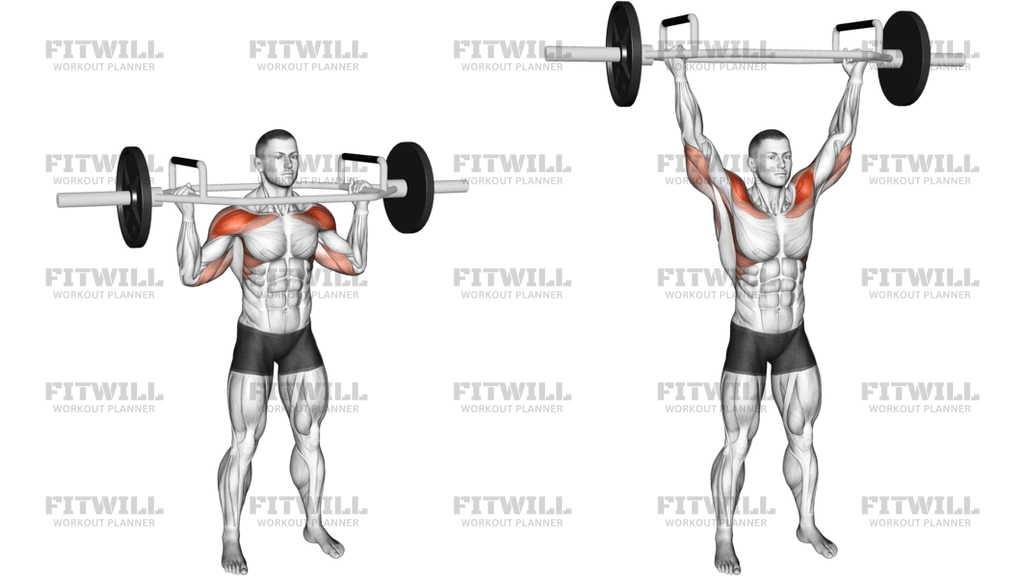
Trap Bar Overhead Press is a standing pressing exercise that uses the neutral-grip trap bar to train the shoulders with assistance from the triceps, upper back, and traps. The setup in the image shows the bar held at shoulder height and pressed straight overhead, which makes the lift feel more joint-friendly than a straight bar for many lifters because the wrists stay in a neutral position and the elbows can track naturally.
The main training effect comes from the deltoids, especially the front and middle portions, while the triceps finish the press and the upper back stabilizes the shoulder girdle. In anatomy terms, the primary work centers on the Deltoids, with support from the Triceps brachii, Trapezius, and Rhomboids. That mix makes the movement useful when you want vertical pressing strength without the fixed hand position of a barbell overhead press.
A clean rep starts before the bar moves. Stand tall with the feet set under the hips or slightly wider, keep the bar level across both handles, and stack the wrists over the elbows so the load sits evenly. From there, brace the torso, keep the ribs from flaring, and press the trap bar in a mostly vertical line. The bar should clear the face with a small head movement, then finish directly over the shoulders and midfoot.
At lockout, the arms should be straight, the shoulders active, and the bar stable overhead without leaning back to chase range. Lower the bar under control to the shoulders and reset before the next rep. That controlled return matters because the shoulders and trunk need to stay organized as much as the press itself. If the rep turns into a backbend, shrug, or leg drive, the set is usually too heavy or the starting position is off.
Use Trap Bar Overhead Press when you want a strong shoulder-focused press that still demands trunk stability and upper-back control. It works well in strength sessions, accessory blocks, or upper-body days where you want to build pressing capacity with a neutral grip. Keep the range pain-free, use a load you can control for every rep, and stop the set if the bar drifts forward or the lower back takes over.
[ Workout Log & Planner ]
Put your next workout in Fitwill
Keep your plan and training log ready when you are.


Instructions
- Stand with your feet about hip-width apart and hold the trap bar at shoulder height with a neutral grip on both handles.
- Stack your wrists over your elbows, keep the bar level, and let your elbows sit slightly in front of your torso instead of flaring wide.
- Brace your core, squeeze your glutes, and keep your ribs down before you start the press.
- Press the bar upward in a straight line, moving your head slightly back so it can clear your face.
- As the bar passes eye level, drive your head through so the bar finishes over your shoulders and midfoot.
- Lock out with your arms straight and your shoulders active, without leaning back to find the top position.
- Lower the bar slowly to shoulder height while keeping your torso tall and your wrists stacked.
- Reset your breath and posture before the next repetition.
Tips & Tricks
- Keep the handles and shoulders moving in one vertical line; if the bar drifts forward, the front delts and lower back usually end up doing extra work.
- Neutral grip should feel smooth on the wrists and elbows. If you have to twist the bar to make it comfortable, the setup is uneven.
- Treat rib flare as a warning sign. If your chest pops up to finish the rep, reduce the load and keep the pelvis and ribs stacked.
- A small head movement is normal so the bar can clear your face. Do not lean the whole torso back to create space.
- Think about pushing yourself away from the bar at the top instead of shrugging violently into lockout.
- Use a lighter load than you would for a push press. This lift is about controlled vertical pressing, not leg drive.
- Lower every rep under control. Dropping fast to the shoulders makes it harder to keep the scapulae and trunk organized.
- If one side climbs faster than the other, re-check hand placement on the trap bar and make sure the bar starts level.
Frequently Asked Questions
What muscle does Trap Bar Overhead Press target most?
The delts are the primary target, especially the front and middle heads. The triceps, traps, and upper back help stabilize and finish the press.
Why use a trap bar instead of a straight bar for overhead pressing?
The neutral grip often feels easier on the wrists and elbows, and it can help some lifters keep a more natural shoulder path while pressing overhead.
How should the trap bar sit at the start of each rep?
It should sit level at shoulder height with your wrists stacked over your elbows. If one side is higher, the press will usually drift or twist.
Should I lean back to get the bar overhead?
No. A little head movement is normal, but the torso should stay tall. Leaning back usually turns the press into a lower-back exercise.
What is the biggest setup mistake with this movement?
Starting with the elbows flared, the wrists bent back, or the bar uneven. Those issues make the first press less stable and harder on the shoulders.
Can beginners do Trap Bar Overhead Press?
Yes, as long as the load is light and the bar path stays controlled. Beginners should focus on stacked joints and a steady lockout before adding weight.
What should I feel at the top of the rep?
You should feel the shoulders working with the bar stable overhead, not the lower back arching or the hands fighting to keep the handles level.
Is this a strength or hypertrophy exercise?
It can be used for both. Heavier, lower-rep work builds pressing strength, while moderate reps are useful when you want more shoulder volume with a neutral grip.