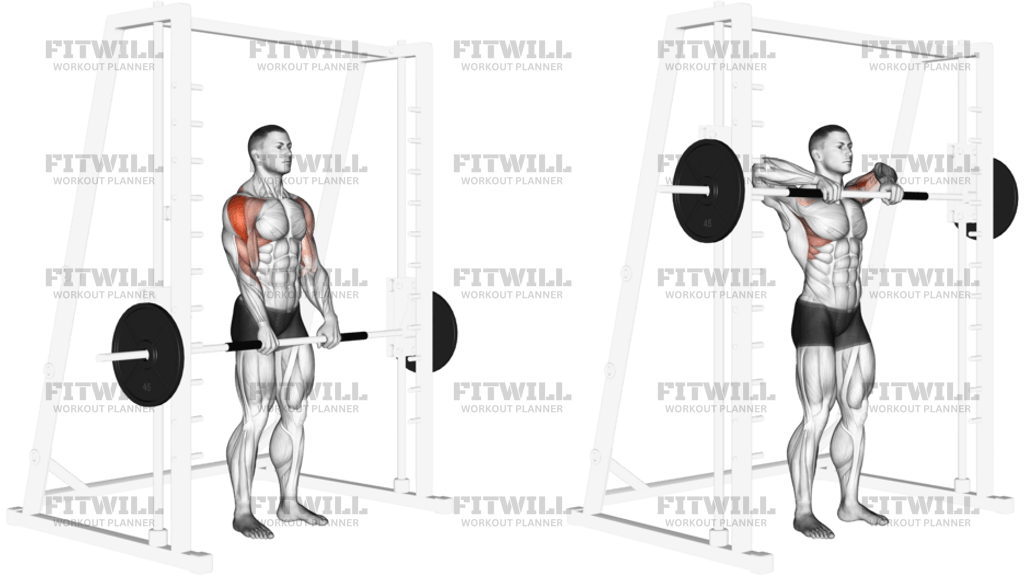
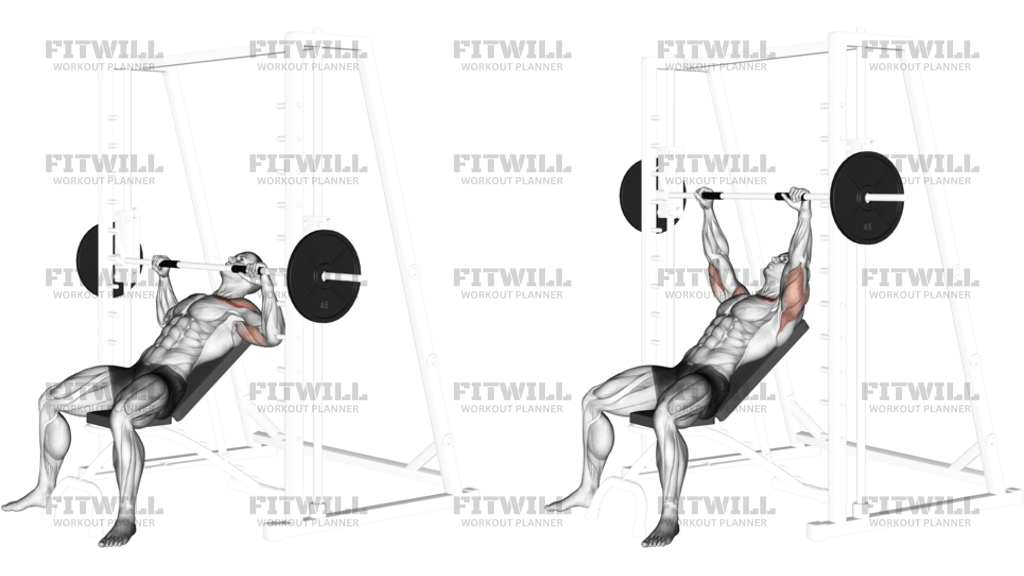
Smith Behind Neck Press
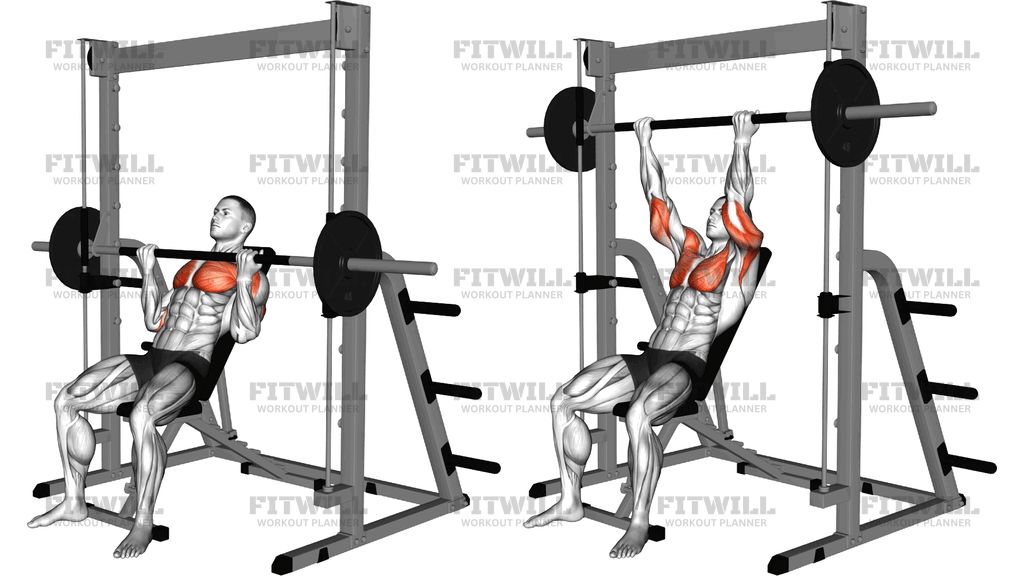
Smith Behind Neck Press is a seated shoulder press performed on a Smith machine with the bar traveling behind the head instead of in front of the face. The guided bar path makes it easier to keep the movement strict, but the setup still matters because the shoulders, neck, and upper back all have to stay organized while the bar moves overhead.
This variation places the main emphasis on the delts, especially the side and front portions, with the triceps helping finish the press and the upper back helping stabilize the torso and shoulder blades. In a well-executed Smith Behind Neck Press, the work should feel concentrated in the shoulders rather than turned into a backbend, shrug, or sloppy heave from the legs.
The seat height and grip width are the first things to get right. Sit tall with your back supported if the machine has a pad, place your feet flat, and take a wide overhand grip so your forearms can stay close to vertical when the bar is overhead and again when it is behind your head. A grip that is too narrow usually forces the elbows too far back and can make the bottom position feel cramped.
Lower the bar only as far as your shoulders allow without pinching or forcing the neck forward. The bar should travel in a controlled line to the area just behind the ears and upper traps, with the chest tall and the ribs kept from flaring. If you lose posture, shorten the range before you add load; the goal is smooth shoulder work, not touching an arbitrary depth.
This exercise is useful as a direct shoulder-strength builder or as accessory work when you want the machine to reduce balance demands and keep tension steady rep to rep. It can also expose weak overhead control because the path is fixed and the bar cannot drift around compensation. Use lighter loading than you would on a standard front press, especially if your shoulders are stiff, and stop the set if the bottom position feels sharp rather than muscular. For many lifters, the best reps are the ones that look almost identical from the first rep to the last.
[ Workout Log & Planner ]
Put your next workout in Fitwill
Keep your plan and training log ready when you are.


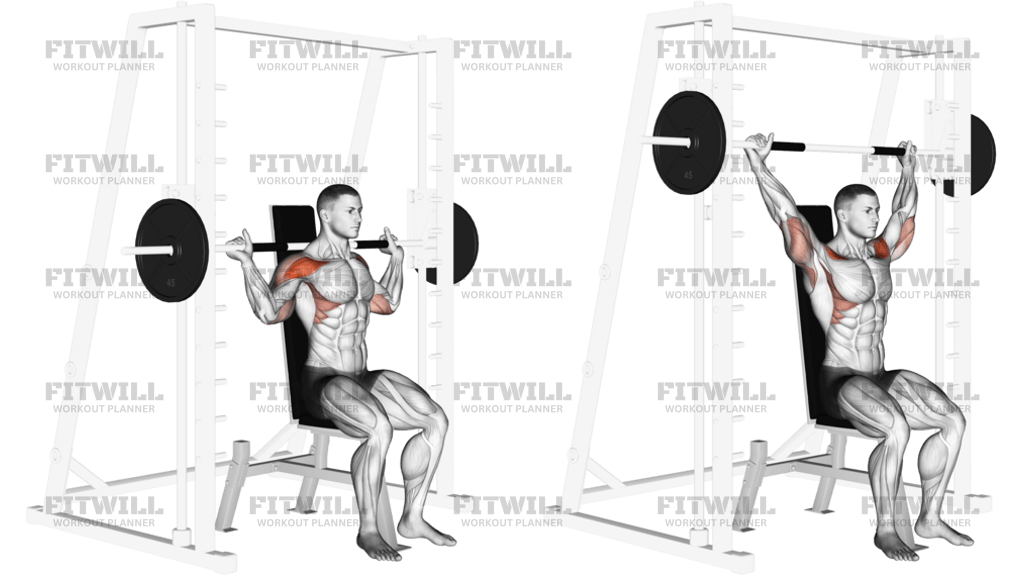
Instructions
- Set the Smith bar at a height that lets you sit upright with the bar starting just above shoulder level.
- Sit on the bench with your back against the pad if available, feet flat on the floor, and your head centered under the bar.
- Take a wide overhand grip so your hands are a little wider than shoulder width and your wrists stack over your forearms.
- Unrack the bar and hold it overhead with your elbows extended but not forcefully locked.
- Inhale, brace your torso, and keep your ribs down instead of leaning back to chase the bar.
- Lower the bar behind your head in a smooth line until it reaches the upper-trap area or the deepest shoulder-friendly depth you can control.
- Press the bar back up by driving through the shoulders and triceps while keeping your neck long and your torso still.
- Exhale as you press, then lower the next rep under control without bouncing out of the bottom.
- After the final rep, guide the bar back into the hooks before relaxing your grip.
Tips & Tricks
- Use a wider grip if the bottom position feels cramped at the shoulders or wrists.
- Keep the bar slightly behind the ears at the top instead of drifting far forward over the face.
- Do not crank the elbows straight back; let them stay a little forward of the bar path to keep the shoulders happier.
- Lower only until the upper arms are about level with the floor if deeper range starts to pinch.
- Avoid turning the rep into a lean-back press; the backrest should help you stay stacked, not help you cheat.
- Choose a lighter load than you would for a front Smith press because the behind-neck position is less forgiving.
- Keep your neck long and your chin neutral so the bar clears behind the head without you jutting forward.
- Pause briefly at the bottom to remove bounce and make each rep start from a dead, controlled position.
Frequently Asked Questions
What muscles does Smith Behind Neck Press work?
It mainly trains the delts, with the triceps and upper back helping stabilize and finish the press.
Is Smith Behind Neck Press good for beginners?
It can be used by beginners, but only with a light load and a shoulder-friendly range of motion. If the bottom position feels tight or pinchy, use a standard front press instead.
How low should the bar go on Smith Behind Neck Press?
Lower it only to the point where your shoulders stay comfortable and your torso remains upright. For many lifters that means the bar reaches around upper-trap height rather than forcing a deep drop.
What is the most common mistake on Smith Behind Neck Press?
People usually let the ribs flare and turn the lift into a back-leaning press. Keep the bench support doing the stabilizing and let the shoulders do the work.
Should my grip be wide on Smith Behind Neck Press?
Yes, a slightly wider-than-shoulder-width grip usually gives the shoulders more room and keeps the forearms closer to vertical under the bar.
Why is Smith Behind Neck Press done on a Smith machine?
The fixed bar path makes the press easier to repeat and can reduce balance demands, which helps you keep tension on the shoulders instead of stabilizing the bar.
Can I substitute another press if this bothers my shoulders?
Yes. A standard seated Smith shoulder press, dumbbell shoulder press, or machine shoulder press is usually a better choice if the behind-neck position feels uncomfortable.
Where should I feel Smith Behind Neck Press working?
You should feel the shoulders doing most of the work, with the triceps assisting near the top. If the neck or lower back becomes the main limiter, the setup or load is off.