Trap Bar Bent-Over Row
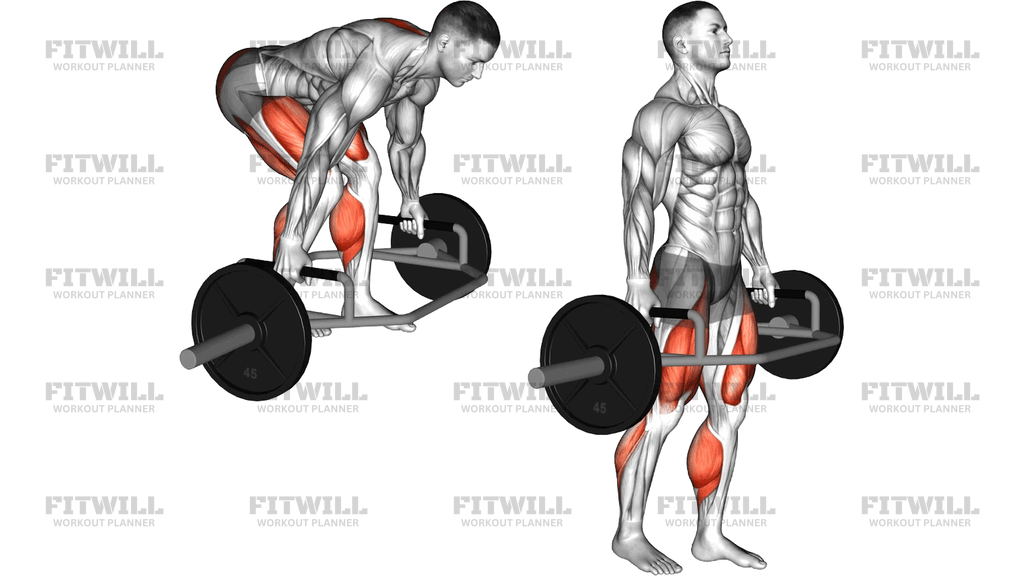
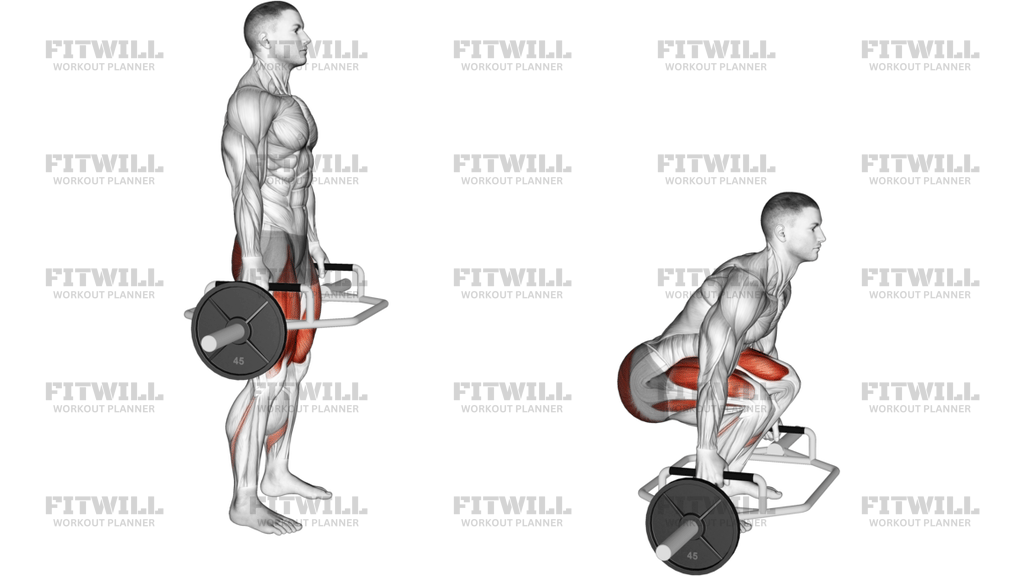
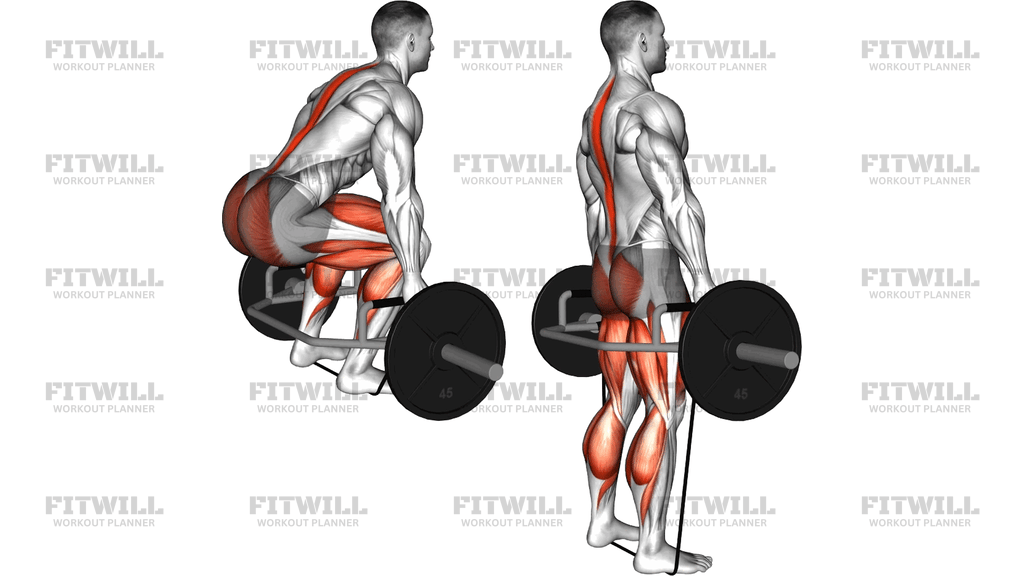
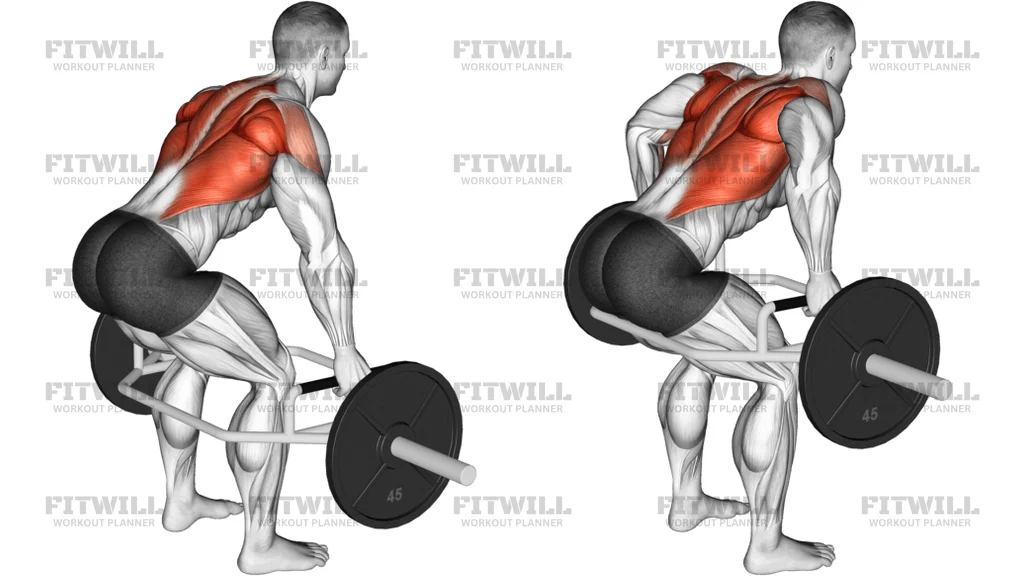
Trap Bar Bent-Over Row is a neutral-grip rowing exercise performed from a hip hinge with the trap bar hanging below the shoulders. The image shows the lifter set up with a strong forward lean, soft knees, and both hands on the neutral handles, pulling the elbows back beside the torso rather than standing upright or shrugging the bar.
This movement trains the upper back, lats, rear delts, biceps, grip, and the muscles that hold the spine steady in the hinge. The trap bar's neutral handles usually make the pull feel more natural on the wrists and shoulders than a straight-bar row, especially when you want to row hard without forcing an extreme shoulder angle.
The setup matters more than the load. Hinge at the hips until your torso is fixed in a strong bent-over position, keep your ribs down, and let the bar hang with your arms long before the first pull. If you start too tall, the exercise turns into a partial upright row. If you round your back or bend the knees too much, the lower back and legs begin doing the work that should stay on the back.
Each rep should look the same: brace, pull the elbows toward the lower ribs or back pockets, squeeze the shoulder blades without collapsing the neck, then lower the bar under control until the arms are straight again. Some lifters prefer dead-stop reps with the plates settling between pulls; others keep constant tension by stopping just short of the floor. Either approach is fine as long as the torso does not rise to finish the rep.
Use Trap Bar Bent-Over Row as an accessory lift when you want cleaner upper-back work after deadlifts, hinges, or pressing sessions. It is also useful in general strength programs because the neutral grip and balanced load make it easy to learn and easy to load gradually. Keep the motion smooth, choose a weight that does not jerk you out of position, and stop the set when your torso starts changing angle, your shoulders shrug, or the bar stops moving in a straight, controlled path.
[ Workout Log & Planner ]
Put your next workout in Fitwill
Keep your plan and training log ready when you are.


Instructions
- Stand inside the trap bar with your feet about hip-width apart and your shins close to the handles.
- Hinge at the hips, bend the knees slightly, and grip the neutral handles with your spine long and chest angled forward.
- Set your neck in line with your torso, draw your ribs down, and brace your core before the first pull.
- Take the slack out of the bar so the handles feel loaded, but keep your torso angle fixed.
- Pull your elbows back toward your lower ribs or back pockets and keep the bar close to your legs.
- Squeeze your shoulder blades together at the top without leaning back or shrugging your shoulders.
- Lower the bar slowly until your arms are straight and the shoulders reach a controlled stretch.
- If you are using dead-stop reps, let the plates settle on the floor before you reset and pull again.
- Exhale as you pull, inhale as you lower, and repeat for the planned number of reps.
Tips & Tricks
- Keep your torso angle fixed; the rep should come from the elbows and upper back, not from standing up taller.
- Pull the handles toward your pockets, not up toward your chest, to keep the elbows tracking in a rowing path.
- Let the trap bar hang close to your thighs and shins so the weight stays underneath you instead of drifting forward.
- A slightly wider-than-foot-width stance usually gives enough room for the plates without forcing your knees outward.
- Do not let your shoulders roll forward at the bottom; keep them set so the next pull starts from a stable position.
- If your lower back starts to take over, reduce the load or shorten the hinge angle before the set gets sloppy.
- Use a one-second squeeze at the top if you want more upper-back tension without adding weight.
- Dead-stop reps are useful when you want cleaner pulls; touch-and-go reps work only if the bar path stays strict.
- Straps can help if grip gives out before your back does, but they should not change your torso position.
Frequently Asked Questions
What muscles work hardest in Trap Bar Bent-Over Row?
The upper back, lats, rear delts, and biceps do most of the pulling, while the core and spinal erectors keep your torso fixed in the hinge.
Is the neutral trap bar grip easier on the shoulders?
Usually yes. The neutral handles keep the wrists and shoulders in a more natural position than a straight-bar row for many lifters.
How bent over should I be for this row?
A moderate hip hinge is ideal, usually enough that your torso stays angled forward without turning the rep into a squat or upright pull.
Where should I pull the handles?
Aim the elbows back toward your lower ribs or back pockets. That keeps the row in line with the torso instead of flaring the arms out.
Should the bar touch the floor every rep?
It can, if you are using dead-stop reps. Just make sure you reset the hinge and do not bounce the bar or stand up to finish the pull.
Can beginners learn this exercise safely?
Yes, as long as they start light and keep the hips back, spine neutral, and torso angle fixed throughout the set.
What should I do if my lower back gets tired first?
Lower the load, reduce the hinge angle slightly, and shorten the set. If your torso keeps rising, the weight is too heavy.
Can I use straps on Trap Bar Bent-Over Row?
Yes. Straps are helpful when grip limits back work, but keep the same hinge, bar path, and shoulder position.