Sprinter Skip
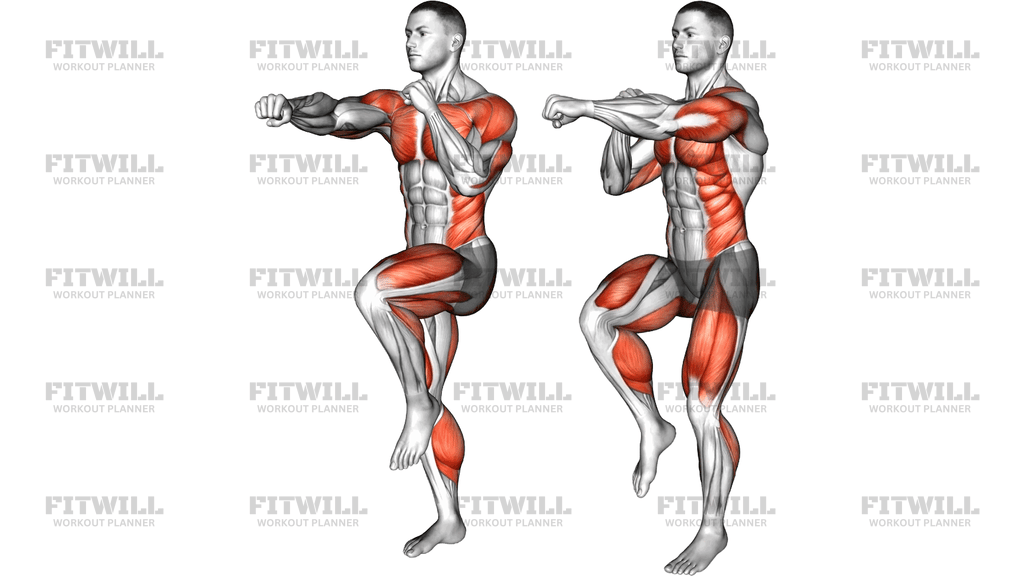
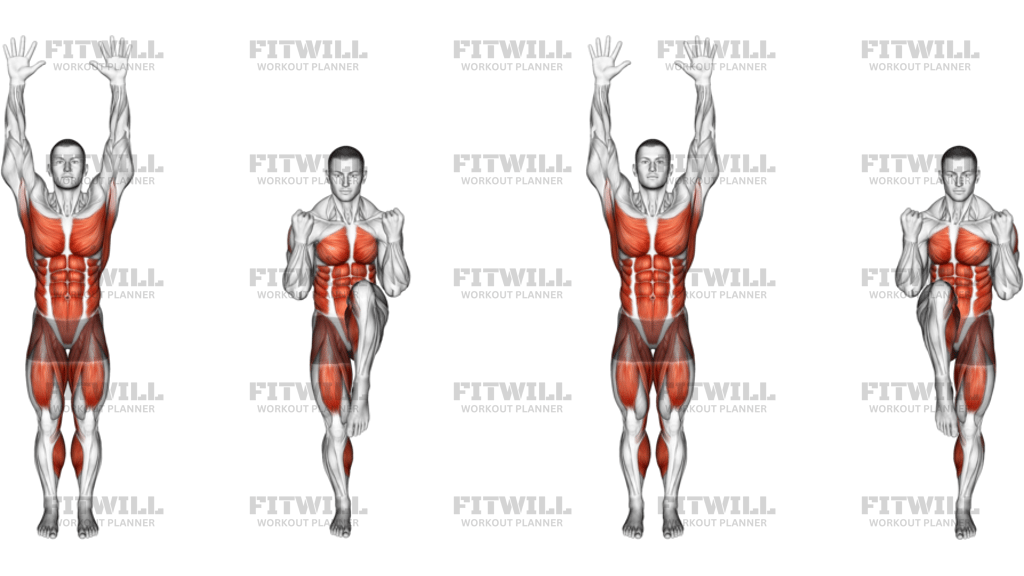
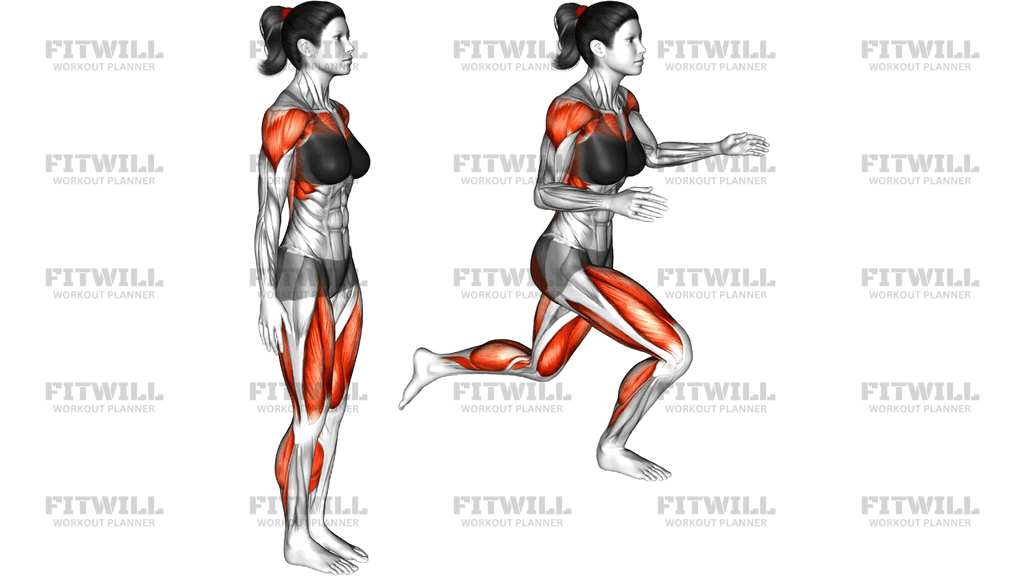
The Sprinter Skip is a dynamic skipping drill that mimics the stride pattern of a sprinter while adding an exaggerated, rhythmic skip. From a tall standing position, you drive one knee up toward hip height while the opposite arm punches forward, then push off the standing leg to hop briefly into the air before switching sides. The result looks like sprinting in slow motion with a bounce built into every step.
This drill is a staple in sprint warm-ups, speed training sessions, and athletic conditioning circuits. Sprinters, field sport athletes, and runners use it to groove the knee drive, arm action, and ground contact mechanics that transfer directly to acceleration and top-end running. It is equally useful for general trainees because it raises the heart rate quickly, coordinates the upper and lower body, and challenges single-leg balance without requiring any equipment or much space.
The main work comes from the quads and hip flexors, which power the knee drive, while the glutes and hamstrings extend the hip and propel each skip. The calves and ankle stabilizers handle takeoff and landing, and the core keeps your torso upright and connected as the arms and legs alternate. The exaggerated arm swing also lights up the shoulders, making this a genuine whole-body coordination drill rather than just a leg exercise.
Setup matters more than most people expect. Because the drill is performed on one leg at a time with a short flight phase, you need a firm, non-slip surface, enough ceiling clearance for the knee drive, and room to travel forward a few meters if you choose the moving version. A tall posture with the chest up and ribs stacked over the pelvis keeps the knee drive efficient; slouching or leaning back robs the drive of power and stresses the lower back.
To execute it well, stay tall, drive the knee sharply to at least hip height, and punch the opposite arm forward with a bent elbow around ninety degrees. Land softly on the ball of the foot under your hips, keep ground contacts quick and springy, and let the rhythm, not raw speed, dictate the pace. A common use case is 3 to 4 skips of 20 to 30 meters, or 20 to 40 seconds of skipping in place for conditioning. Start with a marching version if the bounce feels uncoordinated, and stop the set as soon as your rhythm or knee height breaks down, since sloppy, heavy landings are where this drill goes wrong.
[ Workout Log & Planner ]
Put your next workout in Fitwill
Keep your plan and training log ready when you are.


Instructions
- Stand tall with your feet hip-width apart on a firm, non-slip surface, arms relaxed at your sides.
- Brace your core lightly, lift your chest, and stack your ribs over your hips so your torso stays upright throughout the drill.
- Shift your weight onto your left leg and lift your right heel so you are balanced on the ball of the standing foot.
- Drive your right knee up toward hip height while punching your left arm forward with the elbow bent at about ninety degrees.
- Push forcefully through the ball of your left foot to hop slightly off the ground, keeping the right knee high at the top of the skip.
- Land softly on the ball of your left foot under your hips, then immediately switch: drive the left knee up and punch the right arm forward as you skip off the right foot.
- Continue alternating with quick, springy ground contacts, keeping the knee drive and arm punch synchronized on opposite sides.
- Exhale sharply on each knee drive and inhale during the brief recovery between skips, keeping the breathing rhythm steady.
- To finish a set, slow the skips down into a march, then step both feet together and stand tall before resting.
- Repeat for 20 to 40 seconds in place, or skip forward 20 to 30 meters per set, walking back to the start between reps.
Tips & Tricks
- Think tall, not forward. Leaning the torso ahead of the hips turns the skip into a lunging reach; imagine a string pulling the crown of your head up while the knee does the driving.
- If your knee height drops after the first few reps, the set is over even if the clock is not. Quality knee drives beat tired, low skips every time.
- Avoid slapping your feet down flat. Aim to strike and leave the ground on the ball of the foot, using the ankle like a spring rather than absorbing each landing with a stiff, heavy foot.
- Keep the arm punch crisp and opposite to the knee. Same-side arm and leg moving together is the most common coordination error and it flattens the whole rhythm.
- Do not let the hips rock side to side as you switch legs. If they do, narrow your focus to a fixed point ahead and slightly reduce the skip height until the pelvis stays level.
- Master the march first. If you cannot drive the knee to hip height in a slow, controlled march with balance, adding a hop will only amplify the wobble.
- Land under your hips, not out in front. Reaching the foot forward on landing turns the drill into braking with every contact and hammers the knees.
- Use short sets. Three or four crisp sets of 20 seconds produce better mechanics and a better training effect than one long, deteriorating set.
- Warm the calves and ankles first with a few easy ankle bounces or pogo hops; cold, stiff ankles are the usual reason the skip feels dead and heavy.
Frequently Asked Questions
What muscles does the Sprinter Skip work?
The quads and hip flexors drive each knee lift, while the glutes and hamstrings extend the hip to propel the skip. The calves, ankle stabilizers, core, and shoulders all contribute to takeoff, landing, posture, and the arm drive.
Is the Sprinter Skip suitable for beginners?
Yes, as long as you start with the marching version. March with high knees and opposite-arm punches until the coordination feels automatic, then add a small skip and build height gradually.
Should I perform the Sprinter Skip in place or moving forward?
Both work. Skipping in place is easier to learn and good for conditioning; skipping forward better mimics sprint mechanics and suits warm-ups before running or sprint sessions.
How high should I drive my knee during the Sprinter Skip?
Aim for at least hip height on every rep. If the knee starts dropping below that level, end the set, because reduced knee height usually means rhythm and power are fading.
Why do my arms matter in the Sprinter Skip?
The opposite-arm punch drives the rhythm and mirrors real sprint mechanics, so sloppy arms almost always mean sloppy legs. Keep the elbows bent around ninety degrees and punch forward crisply with each knee drive.
What is the most common mistake with the Sprinter Skip?
The most common errors are leaning the torso back or forward, landing flat-footed out in front of the hips, and pairing the arm with the same-side leg. Slow down, stay tall, and land on the ball of the foot under your hips to fix all three.
Can I use the Sprinter Skip as a warm-up?
Yes, it is an excellent dynamic warm-up before sprinting, running, or leg training because it raises the heart rate and rehearses the exact knee-drive and arm patterns used in sprinting. Two or three easy sets of 20 seconds are usually enough.
What can I substitute if skipping is too hard on my joints?
Use a high-knee march with the same exaggerated arm action, which keeps the coordination benefit without the impact. Low-impact step-ups with a knee drive are another reasonable alternative.
Is the Sprinter Skip safe for my knees?
When performed with soft ball-of-foot landings under the hips and a tall posture, the drill is generally well tolerated. If you have an existing knee issue or feel pain on landing, reduce the skip height or switch to the marching version and consult a qualified professional.