Kettlebell Suitcase Hold
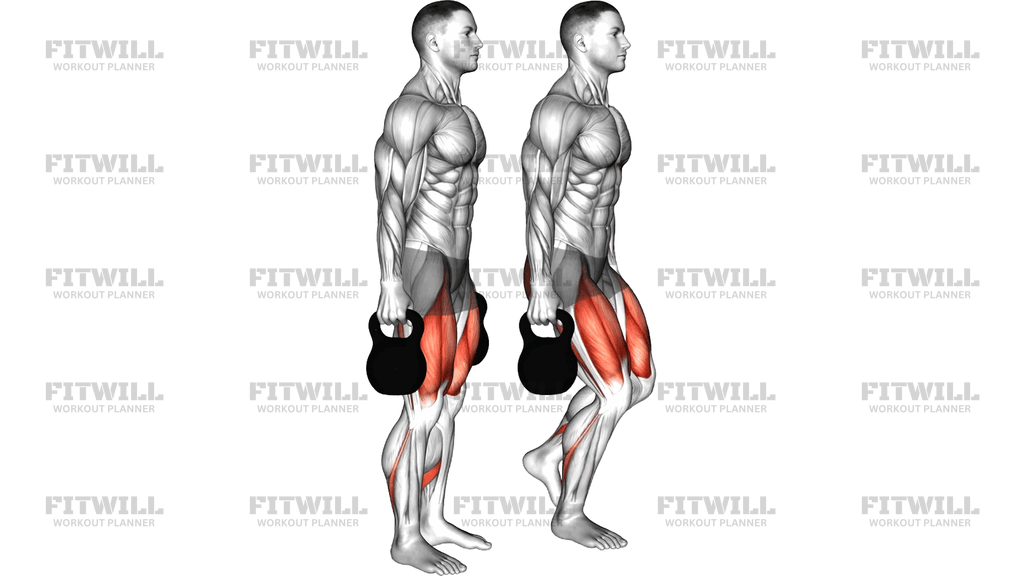
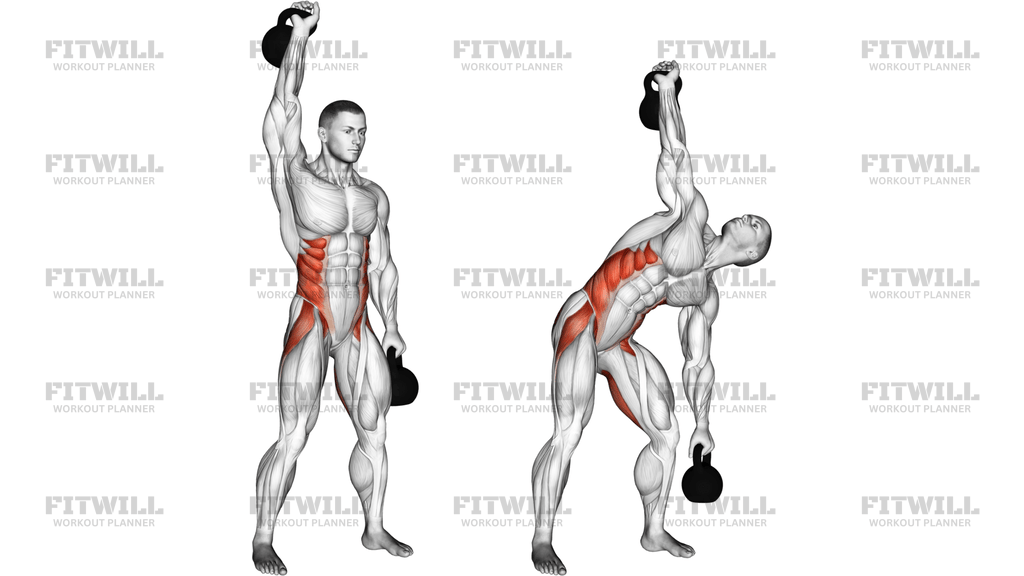
The Kettlebell Suitcase Hold is an anti-lateral flexion isometric: you stand tall with a kettlebell held in one hand at your side, exactly as if you were carrying a suitcase, and refuse to let the weight pull you sideways. There is no rep to count and no range of motion to travel. The entire challenge is staying perfectly vertical while a load on one side of your body constantly tries to bend you toward the floor.
The muscles doing the real work are the obliques on the side opposite the kettlebell, along with the deep core and the quadratus lumborum, which brace your spine and pelvis against the sideways pull. Your glute on the loaded side also fires to keep your hips level, and your grip and forearm get a straightforward endurance demand from simply hanging onto the handle. Because nothing moves, the tension is continuous from the first second to the last.
This drill is popular with anyone who carries things in real life: groceries, luggage, a child on one hip, a tool bag. It also transfers directly to barbell training, where a stable, level torso under load protects your squat and deadlift positions. Lifters with a history of lower back sensitivity often appreciate it precisely because the spine stays neutral and stacked the whole time.
Setup matters more than it looks. The kettlebell should sit directly beside your body, not out in front of your hip or kicked out to the side, so the line of pull stays vertical. Your feet are roughly hip width, weight spread evenly across both feet, and your shoulders level like a shelf that a glass of water would not spill from. If you start even slightly tilted toward or away from the bell, you have already lost the point of the exercise.
To execute it well, grip the handle, stand up fully, and then consciously level your shoulders and hips before the clock starts. Breathe shallow but steady through your ribs, keep your neck relaxed, and hold for a set time before switching hands. Common mistakes are leaning away from the weight, hiking the loaded shoulder toward your ear, and letting the torso quietly drift sideways as the set gets uncomfortable. All three are signals the load is too heavy or the hold is too long.
In practice, the Kettlebell Suitcase Hold works well as a finisher after main lifts, as a standalone core block of two to four holds per side, or as a warm-up drill that reminds your trunk how to stay square under asymmetrical load. Start light, master a clean thirty-second hold per side, and progress by adding time before adding weight.
[ Workout Log & Planner ]
Put your next workout in Fitwill
Keep your plan and training log ready when you are.


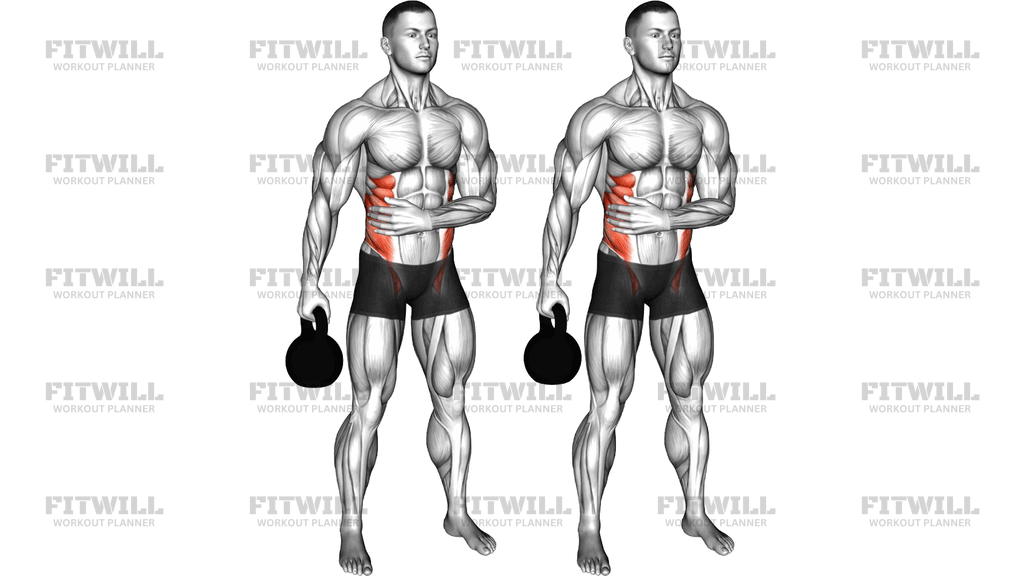
Instructions
- Place a kettlebell on the floor directly beside your right foot, handle turned so it is easy to grab.
- Stand with feet about hip width apart, weight balanced evenly across both feet, and set your gaze on a point straight ahead.
- Hinge down slightly, grip the kettlebell handle with your right hand in a firm suitcase grip, and stand up tall with the arm fully extended and relaxed at your side.
- Brace your trunk as if bracing for a light push, then deliberately level your shoulders and hips so your torso is perfectly vertical.
- Keep the kettlebell beside your thigh, close to your body, with the shoulder pulled neither up toward your ear nor rounded forward.
- Hold this position without letting your torso bend sideways toward the weight; imagine strings pulling the crown of your head toward the ceiling.
- Breathe steadily and shallowly through your ribs for the duration of the hold, typically 20 to 45 seconds.
- At the end of the hold, set the kettlebell down on the floor with a small hinge, keeping your torso upright rather than letting it drop sideways.
- Reset your posture, then repeat the hold on the left side so both directions of side-bending resistance are trained equally.
Tips & Tricks
- If you catch yourself leaning away from the kettlebell to lighten the load, that is the telltale sign the weight is too heavy; the anti-lean is the exercise.
- Check your shoulders in a mirror or with a free hand: a shrug on the loaded side means you are holding with the upper trap instead of letting the arm hang from a level shoulder.
- Keep the bell within a few inches of your thigh. Letting it swing or drift forward turns the hold into a shoulder and grip fight and dilutes the oblique demand.
- Start your timer only after your hips are level. Many people begin the hold while still shifting into position and count time they were not actually braced.
- If one hip drops on the unloaded side, squeeze the glute on the kettlebell side to square the pelvis before continuing.
- Grip failing early is normal at first; switch to a lighter bell rather than choking up or resting the bell on your leg, which changes the exercise.
- A useful cue is to make both sides of your waist feel equal in length. If the side holding the kettlebell feels short and compressed, you are already bending.
- Do this exercise barefoot or in flat shoes if possible; a stable, even base under your feet makes it much easier to sense when you start tilting.
- Progress time before load. Going from 30 to 45 seconds per side at the same weight builds far better trunk control than jumping to a heavier bell and leaning from rep one.
Frequently Asked Questions
Which muscles does the Kettlebell Suitcase Hold actually work?
The main work is done by the obliques on the side opposite the kettlebell, supported by the deep core and quadratus lumborum resisting side-bending. Your glute on the loaded side keeps the hips level, and your grip and forearms work to hold the handle.
How long should I hold the Kettlebell Suitcase Hold?
Start with 20 to 30 seconds per side and build toward 45 to 60 seconds with clean, level posture. Once you can hold a given weight for a minute per side without tilting, increase the load slightly and drop the time back down.
Is the Kettlebell Suitcase Hold good for beginners?
Yes, it is one of the friendliest core exercises for beginners because the spine stays neutral and the movement is simply holding still. Beginners should pick a kettlebell they could comfortably carry for a short walk and focus entirely on keeping shoulders and hips level.
How heavy should the kettlebell be for this exercise?
Choose a weight that challenges you within your target hold time but never pulls your torso sideways. If you notice leaning, shrugging, or a dropped hip before the time is up, the bell is too heavy for that day.
How is the Kettlebell Suitcase Hold different from a Kettlebell Suitcase Carry?
The carry has you walking with the kettlebell, adding a moving balance challenge with each step, while the hold keeps your feet planted and isolates pure anti-side-bend strength. The hold is a good starting point before progressing to the carry.
Why do I keep shrugging the shoulder holding the kettlebell?
Shrugging usually means the weight feels unstable or too heavy, so your upper trap takes over to secure the handle. Lower the weight slightly, let the arm hang long, and imagine the shoulder blade settling down and back while the shoulder stays level with the other side.
Can I substitute a dumbbell if I do not have a kettlebell?
A dumbbell works acceptably, though the kettlebell's handle and compact shape keep the load close to your side, which suits the exercise better. If you use a dumbbell, hold it at the head with a firm grip and keep it in the same position beside your thigh.
Should I hold the Kettlebell Suitcase Hold on both sides in the same set?
Yes, train both sides equally so the trunk resists side-bending in each direction. A simple approach is one hold on the right, rest briefly, one hold on the left, then repeat for your desired number of rounds.
Is it safe to do this exercise with lower back issues?
Because the spine stays stacked and nothing bends or rotates, many people with cranky lower backs tolerate it well compared with bending or twisting drills. That said, if a hold provokes pain rather than muscle effort, stop and get individual guidance from a qualified professional.