Cable High Row With Chest Support
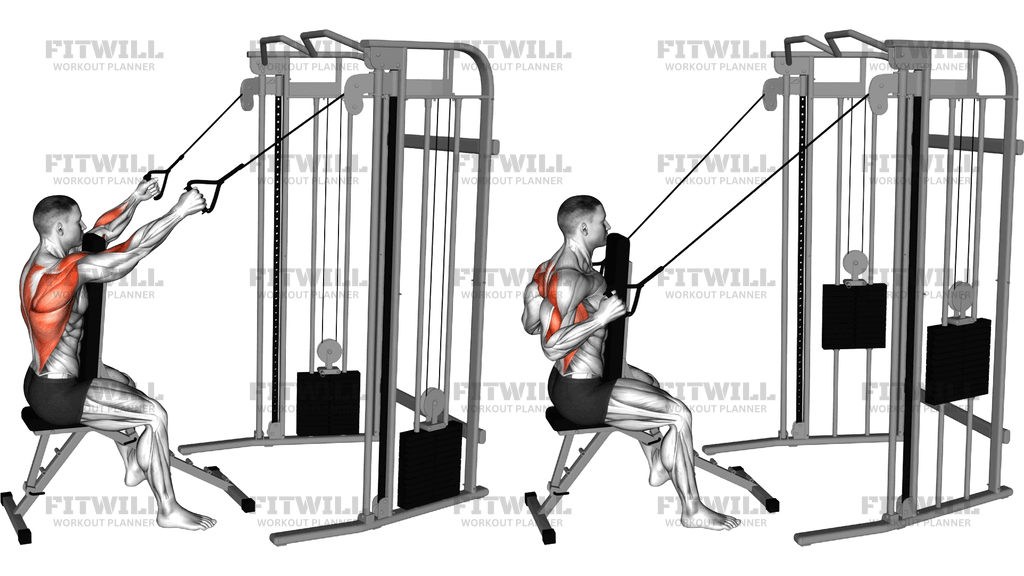
The Cable High Row With Chest Support is a seated row variation performed on a dual-cable machine with the pulleys set above shoulder height and a vertical pad braced against the front of your torso. Instead of pulling from a low pulley like a traditional seated row, you pull the handles down and back toward your upper chest, which shifts more of the work into the mid-back and rear shoulders while the chest pad keeps your torso honest.
The chest support is the defining feature of this setup. With your torso pressed against the pad, you cannot lean back and turn the row into a hip-driven heave, which is one of the most common problems with free-seated row variations. That makes this version especially useful for lifters who tend to use momentum, and for anyone who wants to isolate the rhomboids, mid traps, and rear delts without the lower back fatiguing first.
The high cable angle also matters. Because the line of pull comes from above, your arms travel in a slightly downward diagonal rather than straight back at waist height. This elbow path favors the upper and mid-back fibers and the rear shoulder muscles, while still involving the lats as the movement finishes. Grip the handles with a neutral or slightly pronated grip, whichever lets your wrists stay straight under load.
This exercise fits well as a secondary back movement on pull days, typically after heavier compound lifts like rows or pulldowns. It is also a smart choice for people who sit a lot and need dedicated work on scapular retraction, since the padded position makes it easy to focus purely on drawing the shoulder blades together.
Execution is simple but unforgiving of sloppiness. Sit with your chest firmly on the pad, pull the handles toward your upper chest with your elbows tracking down and back, squeeze briefly at the finish, then let the arms extend under control until you feel a full stretch across the upper back. Keep the weight honest; if you have to drive your chest off the pad to complete the rep, the load is too heavy for what this exercise is meant to train.
[ Workout Log & Planner ]
Put your next workout in Fitwill
Keep your plan and training log ready when you are.


Instructions
- Set both pulleys of the cable machine above shoulder height and attach a single handle to each cable.
- Adjust the seat height so that when you sit down, your chest rests squarely against the vertical support pad and the cables run just over your shoulders toward the handles.
- Grip one handle in each hand with a neutral grip, wrists straight, and plant your feet flat on the floor with your knees bent comfortably.
- Press your chest firmly into the pad, lift your ribs slightly, and brace your core before the first rep.
- Start with your arms extended up and out toward the pulleys, feeling a stretch across your upper back without letting your shoulders round forward completely.
- Pull the handles down and back toward your upper chest, keeping your elbows tracking outward and slightly down rather than tucked tight to your ribs.
- Squeeze your shoulder blades together at the end position and pause for a beat without leaning back off the pad.
- Slowly extend your arms back toward the starting position, resisting the weight stack as the cables return and your upper back stretches under load.
- Exhale as you pull the handles in, and inhale as you extend back out under control.
- Complete your set, then release one handle at a time and let the stack settle fully before standing up.
Tips & Tricks
- Chest glued to the pad is the whole point of this exercise; if your sternum leaves the pad mid-rep, the weight has exceeded what your back can move without help.
- Aim the handles at your upper chest or collarbone level, not your stomach. Pulling too low turns it into a lat-dominant row and reduces the mid-back emphasis the high angle provides.
- Keep your wrists neutral throughout. Bending the wrists back as you pull is a sign the grip attachment is awkward for you or the load is too high.
- Do not fully lock out and slump at full arm extension. Stop just short of letting the shoulder blades drift forward into a heavy passive stretch.
- If one side is doing more work than the other, slow the rep down and check that both hands are finishing at the same distance from the pad.
- A brief one-second squeeze at the contraction point does more for the mid-back here than adding another plate to the stack.
- Keep your neck in line with your spine; craning the chin forward to meet the handles is a common habit once fatigue sets in.
- Shorten the rest between heavy sets less than you would for a free seated row, since the chest pad removes lower back demand and recovery is usually faster.
Frequently Asked Questions
What muscles does the Cable High Row With Chest Support work?
The primary movers are the rhomboids and mid traps of the upper back, with strong contributions from the rear shoulders and lats. The biceps and forearms assist as the elbows bend and the handles are gripped.
Why is the chest pad pressed against my torso during this row?
The pad prevents you from leaning back and using body English to move the weight, which forces the upper back muscles to do the work. It also removes much of the lower back and hip demand found in a free seated row.
Is the high pulley position different from a normal seated row?
Yes. Pulling from above shoulder height makes your elbows travel down and back on a diagonal, which emphasizes the mid-back and rear shoulders more than a standard low-pulley row aimed at the waist.
Can beginners do the Cable High Row With Chest Support?
It is actually a good beginner row because the pad enforces good torso position and the machine path is stable. Start with a light weight and focus on feeling the shoulder blades pull together before adding load.
Should I use a neutral grip or an overhand grip on the handles?
Either works, but a neutral grip with palms facing each other is usually the most comfortable and keeps the wrists straight. Choose the grip that lets you keep your wrists neutral under load.
What is the most common mistake on this exercise?
Driving the chest off the pad and rocking backward to finish heavy reps. If you cannot keep your torso against the support through the entire set, reduce the weight until you can.
What can I substitute if my gym has no dual high-pulley machine?
A single-handle high row on a standard cable tower done one side at a time works, or a chest-supported machine row. A reverse pec deck set for rear delts covers part of the same territory but with less range of motion.
How does breathing work during this row?
Exhale as you pull the handles toward your chest and inhale as you extend your arms back out. The chest pad makes it harder to breathe shallowly under tension, so keep the breaths deliberate.
Is it safe for people with lower back sensitivity?
The chest support takes most of the load off the lower back compared to free seated rows, which is why many lifters with cranky backs prefer it. Keep the load moderate and stop if you feel any discomfort, and consult a professional if you have a specific concern.
Where should this exercise go in my back workout?
It works best after your heaviest rows or pulldowns, when you want targeted mid-back and rear delt volume without fatiguing the lower back. Two to four sets of 10 to 15 controlled reps is a typical range.