Lying Alternate Straight Leg Lift
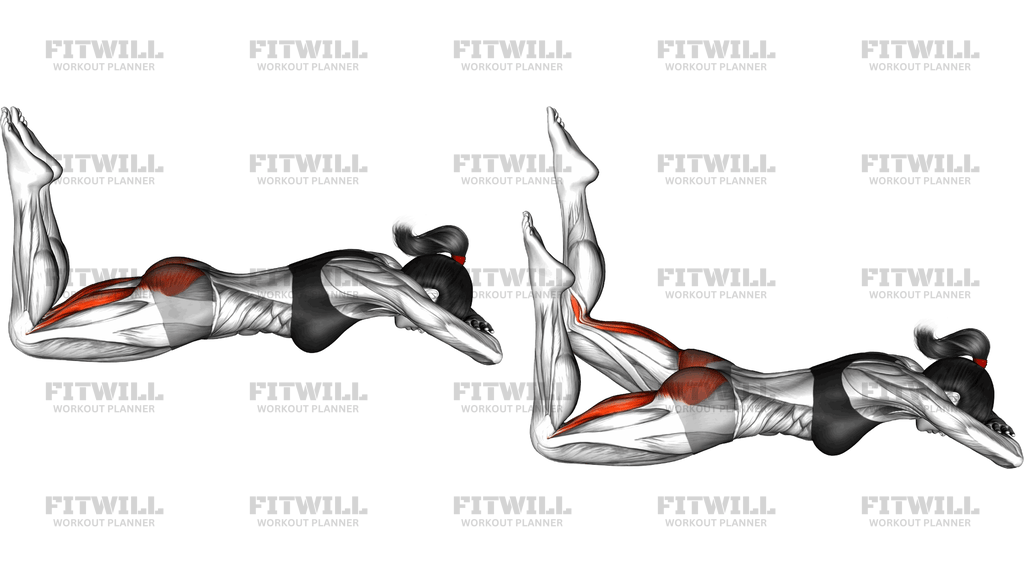
The Lying Alternate Straight Leg Lift is a prone body-weight exercise performed face down on a mat, with the hands folded under the forehead for head support. From this flat position, you lift one straight leg off the floor by extending at the hip, lower it under control, and repeat on the other side, alternating back and forth for the duration of the set. Because the knee stays extended throughout, the glutes and hamstrings work together to raise and lower the leg, while the muscles of the lower back stabilize the pelvis against the floor.
This movement is a gentle but effective way to train hip extension, which is the foundation of everyday actions like walking, climbing stairs, standing up from a chair, and running. It suits beginners learning to feel their glutes working, people rehabilitating toward more demanding hip exercises, and anyone building a warm-up for squats, deadlifts, or sprint work. It is also a useful option for those who find supine leg raises uncomfortable, since the prone position places no flexion load on the front of the body.
Setup matters more than it might seem. Lying flat with the forehead resting on the stacked hands keeps the neck neutral and discourages craning the head up, which can strain the neck and pull the chest into an awkward arch. Keeping both hip bones pressed toward the floor is what separates a clean glute-driven lift from an exaggerated back arch that shifts the work away from the hips and into the lumbar spine.
To execute it well, keep the working leg completely straight and think about driving the top of the thigh toward the ceiling rather than swinging the foot upward. The lift itself is modest: a few inches to perhaps a foot of clearance is plenty, and height should come from hip extension, not from tilting the pelvis. Exhale as the leg rises, inhale as it lowers, and pause briefly with the leg hovering just above the mat before switching sides.
The alternating rhythm gives the exercise a mild coordination component, as the trunk has to resist small rotational shifts each time the working side changes. Keeping the opposite leg relaxed but heavy on the floor helps, as does moving slowly enough that each rep looks deliberate rather than bouncy.
Practically, this exercise works best for higher-rep sets, typically 10 to 20 lifts per side, either as a glute activation drill before lower-body training or as a standalone finisher. Stop the set if you feel pinching in the low back or front of the hip, and reduce the range of motion before reducing the effort, since a shorter, cleaner lift is always more productive than a higher, sloppier one.
[ Workout Log & Planner ]
Put your next workout in Fitwill
Keep your plan and training log ready when you are.


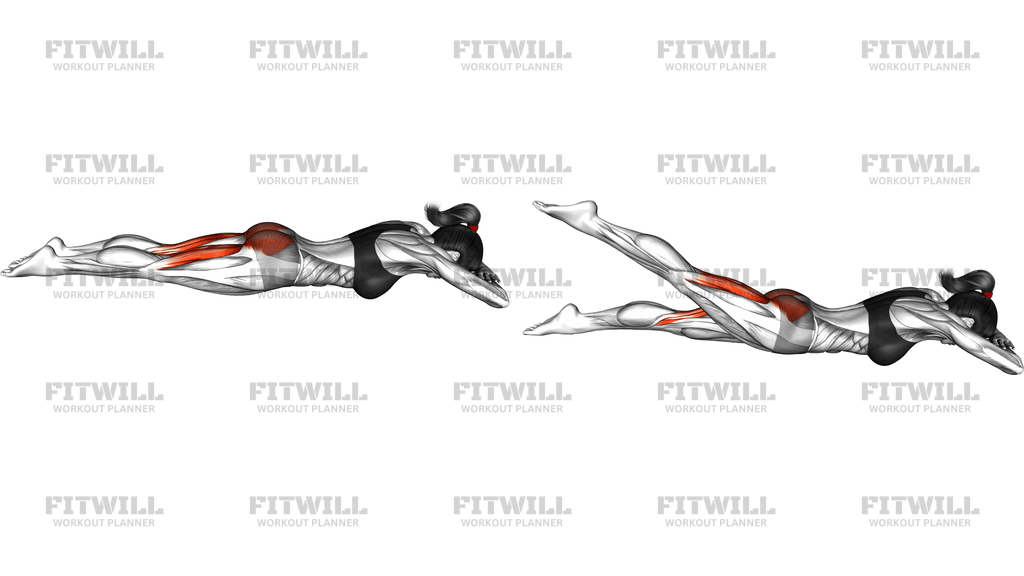
Instructions
- Lay an exercise mat on the floor and lie face down with both legs extended straight behind you and the tops of the feet resting on the mat.
- Stack your hands and place your forehead on them so your neck stays neutral and relaxed, with your shoulders down away from your ears.
- Draw your belly button slightly toward the spine and gently press both hip bones into the mat to set a stable, neutral pelvis.
- Point the toes of both legs away and keep both knees fully straight for the entire set.
- Exhale and lift one straight leg off the floor by squeezing the glute of that side, raising the thigh a few inches until you feel the glute and hamstring working, not the low back.
- Hold the top position for one to two seconds with the leg straight and the pelvis still flat against the mat.
- Inhale and lower the leg slowly until it hovers just above the mat without fully resting or touching down.
- Repeat the lift with the opposite leg, keeping the non-working leg heavy and relaxed on the floor.
- Continue alternating legs for equal reps on each side, then lower the final leg fully and release the brace before sitting up.
Tips & Tricks
- If your lower back arches or you feel pinching as the leg climbs, lift less high. A three-inch lift with the pelvis flat beats a big swing that tilts the hips.
- A common mistake is bending the knee to make the leg feel lighter, which steals work from the hamstring and glute. Keep the knee locked and accept a smaller range.
- Do not push off the mat with your hands to help the leg up; the hands should only cradle the forehead so the head and neck stay quiet.
- Keep the toes of the lifting leg pointed away and the thigh rotating slightly outward so the glute, not the front of the hip, drives the movement.
- If one side lifts noticeably higher than the other, match the height of the weaker side and work there until both sides feel even.
- Avoid bouncing the leg off the floor between reps. The brief hover just above the mat is what keeps the glute under tension.
- Feel the work in the buttock and back of the thigh. If you only feel your low back, shorten the range and refocus on squeezing the glute to start each lift.
- Rest the non-working leg fully relaxed rather than tensing it, so each side genuinely alternates instead of both hips staying braced.
- Breathe in a steady exhale-up, inhale-down rhythm; holding your breath usually coincides with arching the lower back.
Frequently Asked Questions
What muscles does the Lying Alternate Straight Leg Lift work?
The primary movers are the glutes and hamstrings, which extend the hip to raise the straight leg. The muscles of the lower back work isometrically to keep the pelvis stable against the mat.
Is the Lying Alternate Straight Leg Lift good for beginners?
Yes, it is a low-load body-weight movement that is easy to scale by adjusting lift height. Beginners should start with a small range, focusing on feeling the glute rather than chasing leg height.
How high should I lift my leg in the Lying Alternate Straight Leg Lift?
Only as high as you can go while both hip bones stay pressed toward the floor and your lower back stays comfortable. For most people this is a few inches to about a foot of clearance.
Why does my lower back work harder than my glutes during this exercise?
This usually means the pelvis is tilting and the lumbar spine is extending to lift the leg higher. Shorten the range, brace the abdominals lightly, and consciously squeeze the glute to initiate each lift.
Should I keep my knee straight during the Lying Alternate Straight Leg Lift?
Yes, the straight knee is what defines this exercise and keeps the hamstrings and glutes doing the work. Bending the knee shortens the lever and turns the movement into a different exercise.
What can I use if I do not have an exercise mat?
A carpeted floor, a folded towel, or any padded surface that lets you lie face down comfortably works fine. Only the comfort of the prone position depends on the surface.
How many reps of the Lying Alternate Straight Leg Lift should I do?
Because the resistance is only the weight of the leg, this exercise responds best to moderate-to-high reps, typically 10 to 20 controlled lifts per side for one to three sets.
Can I do the Lying Alternate Straight Leg Lift as a warm-up?
Yes, it works well before squats, deadlifts, or running because it activates the glutes and primes hip extension without fatigue. Use one lighter set of 10 reps per side beforehand.
What should I do if lifting one leg feels uncomfortable at the front of my hip?
Reduce the lift height and make sure the thigh is not forcing into a deep arch. If discomfort persists, stop the exercise and choose a variation like a standing or side-lying leg lift instead.