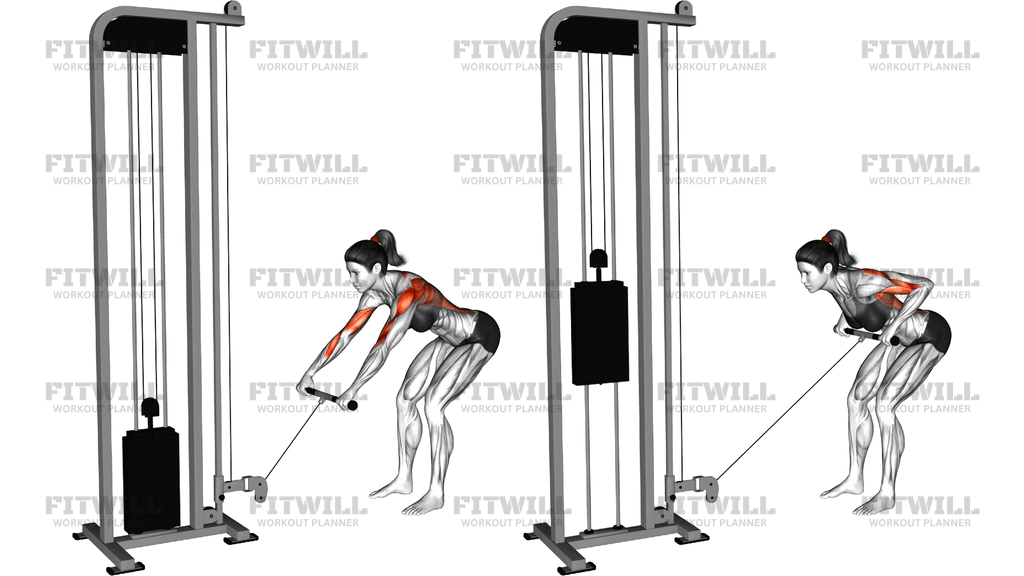
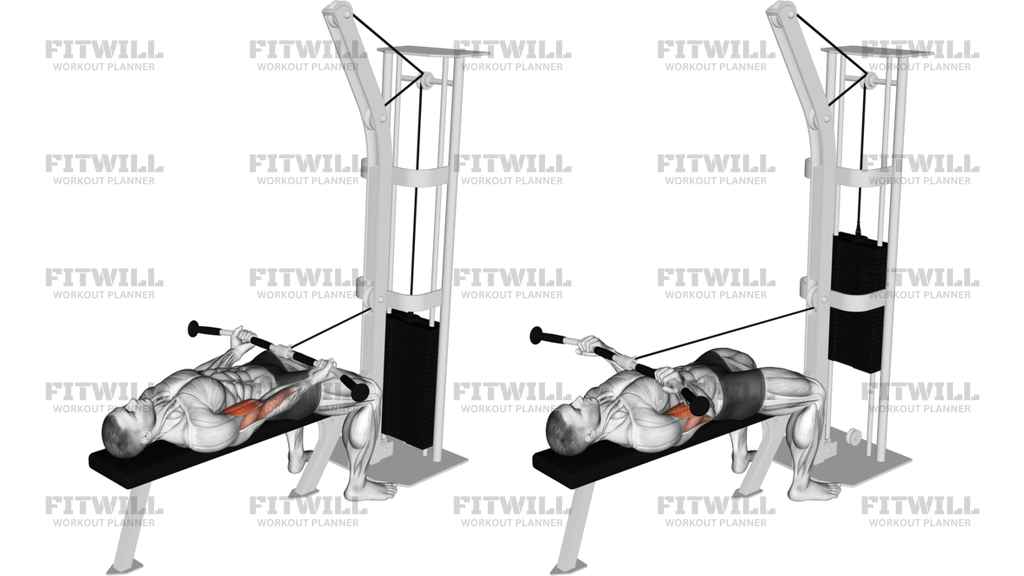
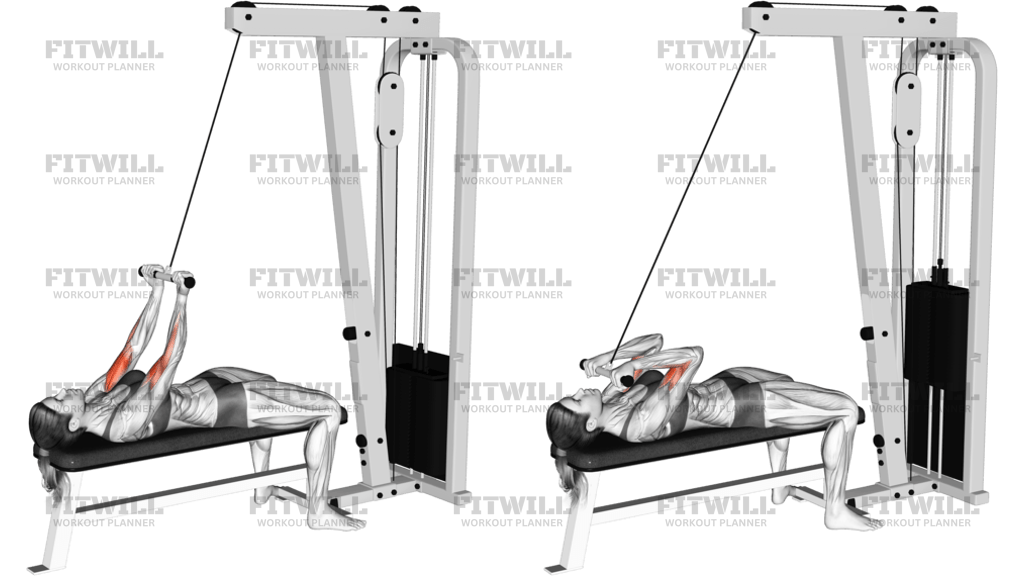
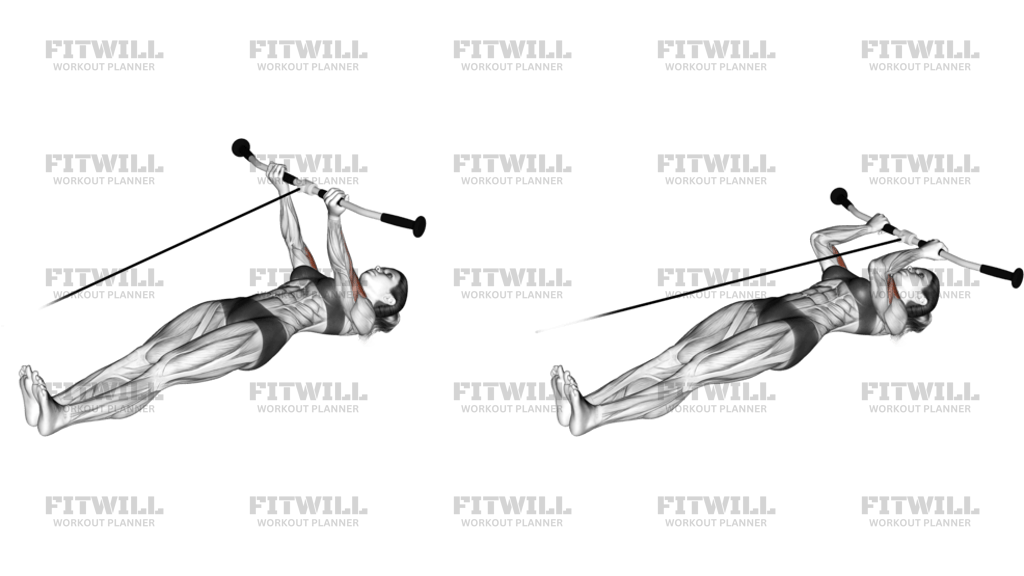
Cable Seated Single Arm Unilateral Bicep Curl
The Cable Seated Single Arm Unilateral Bicep Curl is a seated isolation movement for the biceps performed one arm at a time with a single handle attached to a low pulley. You sit upright on a bench positioned beside the cable station, grab the handle with one hand, and curl it up from your side while the cable's continuous tension keeps the muscle loaded through the entire range. Because the pulley pulls from behind and slightly below you, the resistance never disappears at the top the way it can with a dumbbell when your forearm turns vertical.
This setup is particularly useful for lifters who want honest, even development between left and right arms. Working one side at a time exposes any strength gap immediately, and the seated position with an upright torso removes most of the body English that lets you cheat on standing curls. If you find yourself swinging dumbbells up with a hip drive or leaning back at the top, this exercise is a straightforward fix because there is nothing to lean into — the cable pulls your arm slightly back, so the only way to complete the rep is with actual elbow flexion strength.
The primary target is the biceps brachii, with strong contributions from the brachialis underneath it and the brachioradialis and forearm flexors working to hold the handle. Since your upper arm hangs at your side and the cable runs behind you, the resistance path also tends to bias a slightly stronger stretch in the lengthened position, which many lifters find harder and more productive than a free-weight curl at the same weight.
Setup matters more here than with a dumbbell curl. Sit close enough to the pulley that the cable clears your body, keep your torso tall against the bench, and let the working arm hang straight down at your side before you start. If you sit too far away, the cable angle drags your shoulder forward and turns it into a messy front-delt exercise.
Execution is simple but unforgiving: curl the handle up toward your shoulder without letting your elbow drift forward, squeeze at the top, then lower slowly until the arm is fully extended and the biceps is stretched under load. One set per side at a time, matching reps on both arms. It slots well into an arm-focused day, works as a finisher after heavier barbell or dumbbell curls, and suits anyone rehabbing around elbow discomfort who benefits from smooth, joint-friendly resistance without momentum.
[ Workout Log & Planner ]
Put your next workout in Fitwill
Keep your plan and training log ready when you are.


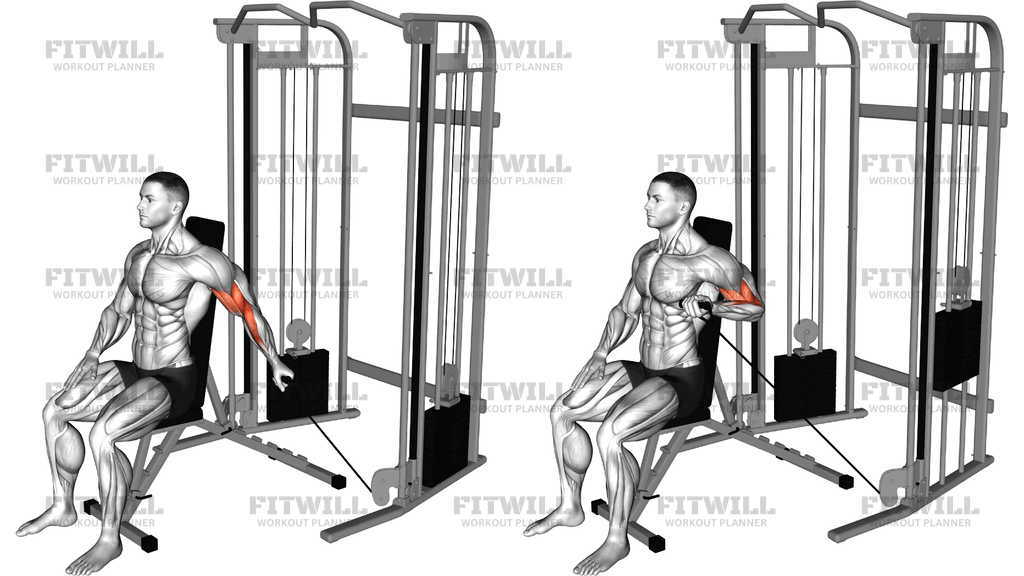
Instructions
- Attach a single handle to the low pulley of a cable station and set a flat bench alongside it so the handle sits just behind and below your working shoulder.
- Sit upright on the bench with your feet flat on the floor, your back tall against the pad, and grab the handle with one hand using an underhand grip, palm facing up.
- Let your working arm hang straight down at your side with a slight soft bend in the elbow, and keep the cable clear of your torso and thigh.
- Brace your core lightly and pull your shoulder down and back so the cable does not roll your upper body toward the pulley.
- Curl the handle up and slightly forward by bending only at the elbow, keeping your upper arm pinned against your side until your forearm is near your shoulder.
- Squeeze the biceps briefly at the top without letting your elbow slide forward toward your ribs.
- Lower the handle under control over two to three seconds until your arm is nearly straight and you feel a stretch along the biceps.
- Exhale as you curl up and inhale as you lower the weight back down.
- Complete all reps on one arm, then reposition the handle or your seat and match the reps on the other side.
- Rest the non-working hand on your thigh or the bench for balance and keep your torso still between reps.
Tips & Tricks
- If your shoulder gets pulled forward at the top of each rep, you are sitting too close to the pulley — shift the bench back a few centimeters until the cable angle lets your upper arm stay vertical.
- Do not let the cable slack at the bottom; keep a small bend in the elbow at full extension so tension stays on the biceps instead of dumping into the joint.
- A common mistake on this setup is driving the elbow forward as the handle rises, which shortens the curl and shifts work to the front delts — imagine your upper arm glued to your ribs.
- Use a slower lowering phase than you think you need. The eccentric with cable resistance from behind is where most of the growth stimulus and most of the cheating live.
- Start with your weaker or smaller arm first and match its reps with the stronger side to close any asymmetry.
- If your wrist bends back at the top, the weight is too heavy or your grip is too loose; curl with the handle resting along your fingers and keep the wrist neutral.
- Keep your torso against the bench pad the whole time. If you catch yourself rocking off the bench, drop the weight by one plate increment.
- Squeeze the handle firmly throughout the set — a loose grip lets the forearm take over and reduces biceps tension.
Frequently Asked Questions
Which muscles does the Cable Seated Single Arm Unilateral Bicep Curl work?
The biceps brachii is the primary mover, supported by the brachialis and brachioradialis, while the forearm flexors work to hold the handle. Because the cable pulls from behind, the biceps is also loaded in a stretched position at the bottom.
Why is the cable set to the low pulley behind me instead of in front?
The low pulley behind your side keeps tension on the biceps even when your arm is hanging down and at the top of the curl, whereas front-loaded free-weight resistance fades once your forearm turns vertical. It also makes momentum cheating nearly impossible.
Is the Cable Seated Single Arm Unilateral Bicep Curl good for beginners?
Yes. The seated position and single handle make it easy to learn, the weight stack allows small incremental jumps, and the cable path guides the arm. Beginners should start light and prioritize the full stretch at the bottom over heavy loads.
How is this different from a regular seated dumbbell curl?
The cable provides constant resistance from a fixed angle and eliminates rest at the top of the rep, while a dumbbell's resistance drops off as the forearm approaches vertical. Training one arm at a time also reveals and corrects side-to-side strength differences.
Should my elbow move forward as I curl the handle up?
No. The upper arm should stay close to your side with the elbow fixed; driving it forward turns the movement into more of a front raise and reduces biceps work. If you cannot keep the elbow still, the weight is too heavy.
What can I substitute if my gym has no low pulley or free handle?
A seated single-arm dumbbell curl on a bench is the closest substitute, or you can use a resistance band anchored low behind you. Both keep the arm at your side and seated torso upright, though neither matches the cable's constant tension exactly.
How do I know if I am sitting at the right distance from the cable machine?
When your arm hangs at your side, the cable should run roughly straight from the pulley to your hand without dragging your shoulder backward or pulling your torso toward the machine. Adjust the bench position before you start your set.
Is it safe for the elbows and wrists?
For most people, yes — the cable's smooth resistance is generally easier on the joints than swinging heavy free weights. Keep the wrist neutral, avoid fully locking or hyperextending the elbow hard at the bottom, and stop if you feel sharp pain rather than muscle fatigue.
Where should this exercise fit into my arm training?
It works well as a second or third biceps exercise after heavier barbell or dumbbell curls, when the constant tension and unilateral setup can be used for quality reps rather than max load. One to three sets of ten to fifteen reps per arm is a typical range.