Lying Crossed Legs Pelvic Twist
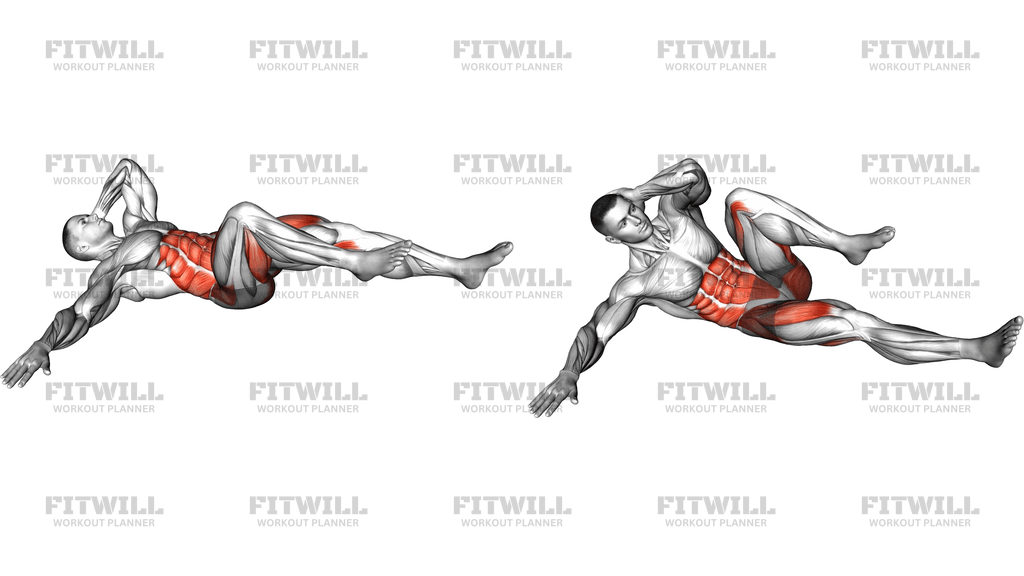
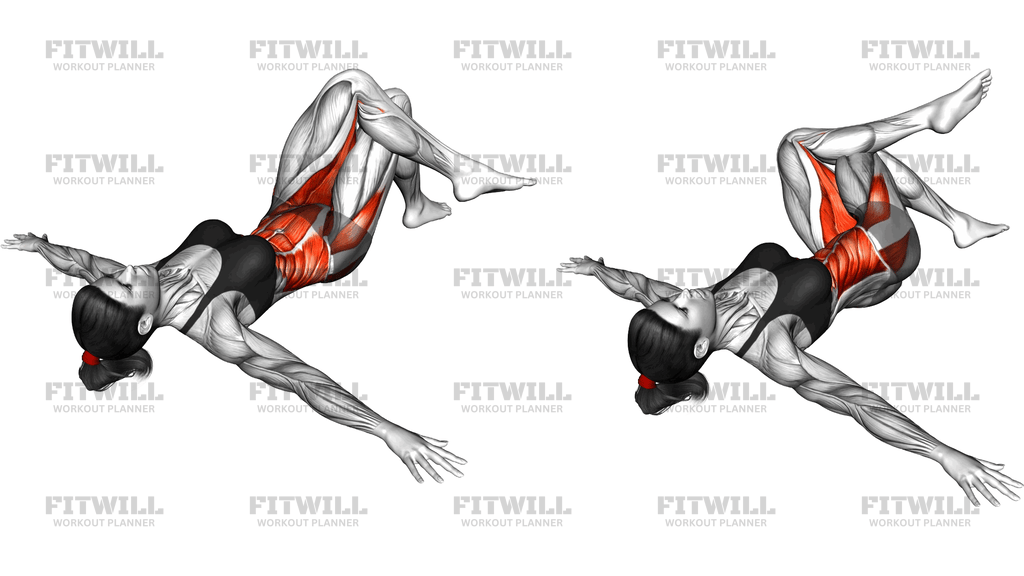
The Lying Crossed Legs Pelvic Twist is a floor-based rotational exercise where you lie on your back with the legs crossed and sweep the pelvis slowly from side to side while the shoulders stay pinned to the floor. The crossed-leg position lengthens the outer hip of the top leg and loads the rotation through the obliques and lower back, which makes the twist feel deeper than a standard legs-together rotation. It sits somewhere between a stretch and a gentle core exercise, and it works well in both roles depending on how much control you apply.
This movement is especially useful for people whose lower back or hips feel stiff after long sitting, or who want a low-load way to reintroduce rotation after heavy training days. Because the spine is fully supported by the floor and there is no external load, it is one of the safest ways to train trunk rotation. Desk workers, runners with tight outer hips, and lifters looking for a cool-down or warm-up drill all get good mileage out of it.
The main areas worked are the obliques on both sides of the waist, the lower abdominal region that controls the position of the pelvis, and the muscles of the lower back and outer hips that lengthen as the legs rotate. The arms-out position acts as a brake: pressing the shoulders and hands into the floor keeps the upper body quiet so the movement genuinely comes from the pelvis rather than from the shoulders dragging along.
Setup matters more here than in most floor exercises. Lying flat on your back with the lower back heavy on the mat, arms out in a T, and one leg crossed over the other at the knee or ankle creates a fixed starting shape. If the shoulders lift or the low back arches away from the floor as you twist, the stretch leaks into the neck and chest and the intended rotational work is lost. Keep the knees stacked high toward the chest rather than drifting out, because the height of the knees determines how much rotation reaches the lumbar spine.
Execution should be slow and quiet. Lower the crossed legs a few inches toward the floor on one side, let the pelvis roll rather than the knees doing all the moving, pause briefly at your end range, then bring the legs back through center and go the other way. The mat stays under the shoulders at all times; only the legs and pelvis travel. Two to three sets of eight to ten slow rotations per side, or holding each side for twenty to thirty seconds as a stretch, covers most needs.
Treat this as a controlled mobility drill, not a rep-race. If you feel pinching in the front of the hip, reduce how far the legs drop. If you feel neck tension, soften the shoulders down and turn your gaze toward the ceiling or the opposite direction of the twist. Done with patience, the Lying Crossed Legs Pelvic Twist is a reliable way to keep the waist and hips moving freely with almost no recovery cost.
[ Workout Log & Planner ]
Put your next workout in Fitwill
Keep your plan and training log ready when you are.


Instructions
- Lie on your back on an exercise mat with your legs extended and your arms spread out to the sides at shoulder height, palms down, forming a T shape.
- Draw both knees up toward your chest, then cross one leg over the other at the knee or stack the ankles so the legs are locked together.
- Let your lower back settle heavy into the mat and take a breath in, keeping the shoulders and backs of the arms pressed into the floor.
- Exhale and slowly rotate the pelvis, lowering the crossed legs a few inches toward the floor on one side while keeping both shoulders down.
- Stop when you feel a comfortable pull through the outer hip, waist, or lower back, and hold the end position for one or two slow breaths.
- Lift the legs back through center under control without letting them flop past the middle, then rotate toward the opposite side.
- Continue alternating sides in a smooth pendulum rhythm, keeping the knees high and stacked so the movement comes from the pelvis.
- Breathe steadily throughout, exhaling as the legs lower and inhaling as they return through center.
- After your final rep, uncross the legs, hug both knees into the chest for a moment, then switch the crossing of the legs before the next set if you want to even out the stretch.
Tips & Tricks
- The most common fault is the top shoulder peeling off the floor as the legs drop. Fix it by actively pressing the opposite palm into the mat for the entire rep.
- If the knees drift out toward the elbow, the rotation loses its effect on the lower back and waist. Keep the knees drawn up near the chest so the pelvis does the twisting.
- Do not let momentum swing the legs from side to side. The crossed-leg position only lengthens the outer hip properly when the legs lower slowly under control.
- If pinching occurs at the front of the hip, reduce the range rather than forcing depth. Even a few inches of pelvis rotation is enough when the hips are tight.
- Keep the neck relaxed and the head still. If twisting makes you want to lift the head, rest it on the mat and let the eyes follow the hands or the ceiling instead.
- Switch which leg is crossed between sets. The top leg's outer hip takes most of the lengthening, so always crossing the same leg builds an imbalance.
- For more of a stretch, hold each side for twenty to thirty seconds with calm breathing; for more of a core control drill, keep the reps moving slowly with brief pauses.
- On a slippery or hard surface, place the mat under the shoulders and upper back, not just the hips, so the arms can grip and anchor the upper body.
Frequently Asked Questions
What muscles does the Lying Crossed Legs Pelvic Twist work?
The obliques and lower abdominals control the rotation, while the lower back and outer hips, especially on the side of the crossed top leg, receive the lengthening. The shoulders and arms work lightly as anchors.
Why cross the legs instead of keeping them together?
Crossing the legs adds rotation to the pelvis and lengthens the outer hip of the top leg, so each side of the twist reaches deeper than a legs-together version would.
Is the Lying Crossed Legs Pelvic Twist suitable for beginners?
Yes. The floor supports the spine completely and there is no load, so beginners can start with a small range and gradually let the legs drop lower as the hips and waist loosen.
How far should my legs drop toward the floor?
Only as far as you can go while both shoulders stay flat on the mat and you feel a comfortable pull, not a strain. The moment a shoulder lifts, you have passed your useful range.
Should I hold the twist or move through repetitions?
Both work. For mobility and lower back stiffness, hold each side for twenty to thirty seconds. For gentle core activation, perform slow alternating reps of eight to ten per side.
What is the most common mistake with this exercise?
Letting the shoulders and arms roll with the legs. Keep the arms out in a T with palms pressed down, and make the pelvis do all of the rotating.
Can I use the Lying Crossed Legs Pelvic Twist as a warm-up?
Yes, it works well before lower body or core training because it takes the hips and waist through rotation without fatigue. Keep the reps brisk but controlled when using it as a warm-up.
What can I do if crossing my knees is uncomfortable?
Try crossing at the ankles instead, or rest the top leg's foot on the opposite knee. If crossing still bothers you, a legs-together lying pelvic twist is a reasonable substitute with less hip involvement.
Is it safe for my lower back?
For most people, yes, because the floor supports the spine and the movement is unloaded. Move within a pain-free range, avoid forcing the legs to the floor, and stop if you feel sharp or radiating sensations rather than a simple stretch.