Dumbbell Wood Chop
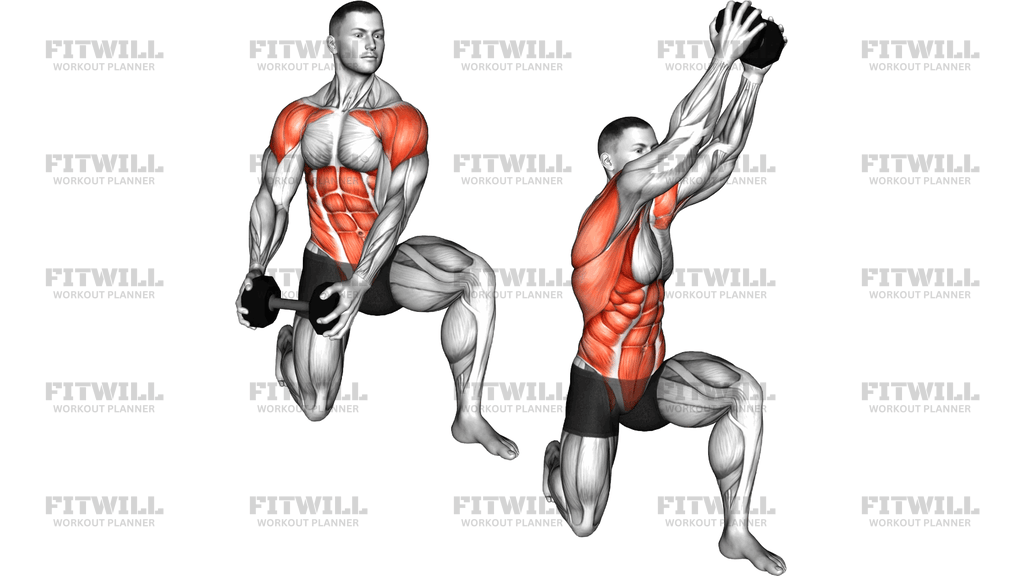
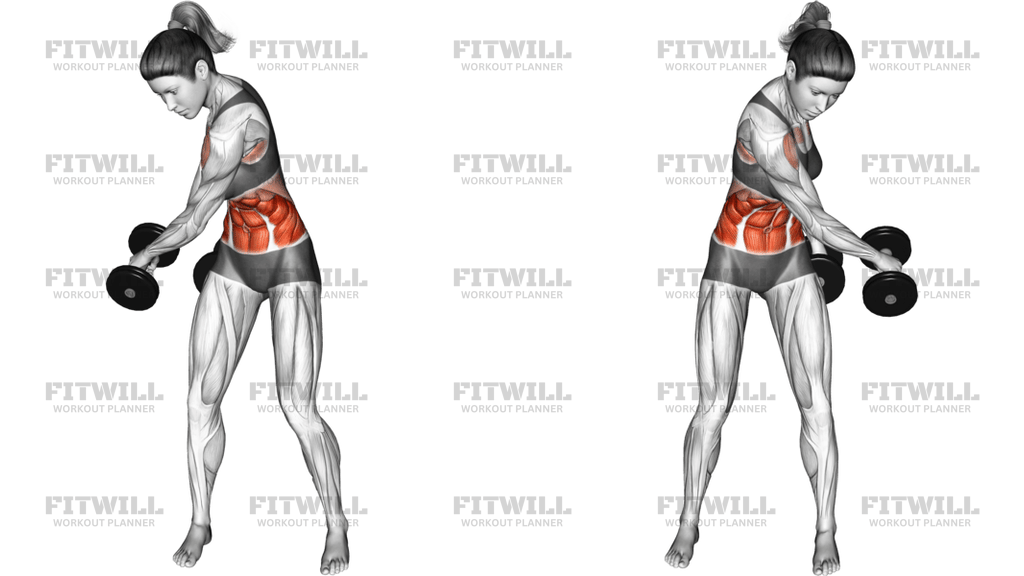
The Dumbbell Wood Chop is a rotational, diagonal movement that mimics chopping wood: you hold a dumbbell with both hands, sweep it across your body from a low position near one hip up to a high position above the opposite shoulder, or from high to low depending on the variation you choose. The power comes primarily from your hips and torso rotating as one unit, with your arms simply acting as levers that carry the weight along the diagonal path. Because the load travels diagonally across the midsection, the obliques on the side you are rotating toward do a large share of the work, supported by the deep core musculature that stabilizes your spine through the turn.
This movement is especially useful for anyone whose sport or daily life involves twisting, reaching, or transferring force from the ground upward. Tennis, baseball, golf, hockey, and lacrosse all rely on the same high-to-low or low-to-high rotational pattern, so the Dumbbell Wood Chop carries over directly to athletic performance. It is also practical for everyday tasks like lifting a bag off the floor and setting it on a counter, where force travels diagonally through the trunk rather than in a straight line.
Setup matters more than most people expect. A split stance with one foot forward gives you a stable base and lets the back hip rotate freely; a shoulder-width stance works too, but you must allow the rear heel to turn so the knee is never forced into a twist it cannot follow. Your spine should stay long and neutral throughout the chop. If you round your lower back or let your shoulders collapse forward, the rotation gets dumped into the spine instead of being driven by the hips, which reduces the training effect and increases strain on the lumbar area.
To execute the chop well, start with the dumbbell held firmly in both hands at one hip or shoulder, brace your abdominal wall as if bracing for a light push, and initiate the movement by turning your hips and chest together. The dumbbell should stay at a consistent distance from your body, roughly a forearm's length away, so the weight stays manageable and the rotation stays in the trunk. Sweep it along the diagonal, finish with full rotation so your chest faces the direction of the chop, then control the weight back along the same path without letting it swing or drop.
A moderate weight is almost always the right call. Because the dumbbell travels a long arc, momentum builds quickly, and a load that is too heavy tends to pull you off balance or force your arms to do the rotating. Choose a weight you can decelerate smoothly at the end of each rep, complete sets on both sides to keep your development even, and expect your grip and shoulders to work harder than you might anticipate since they hold and guide the weight through the entire arc.
Fitwill
Log Workouts, Track Progress & Build Strength.
Achieve more with Fitwill: explore over 9600 exercises with images and videos, access built-in and custom workouts, perfect for both gym and home sessions, and see real results.
Start your journey. Download today!




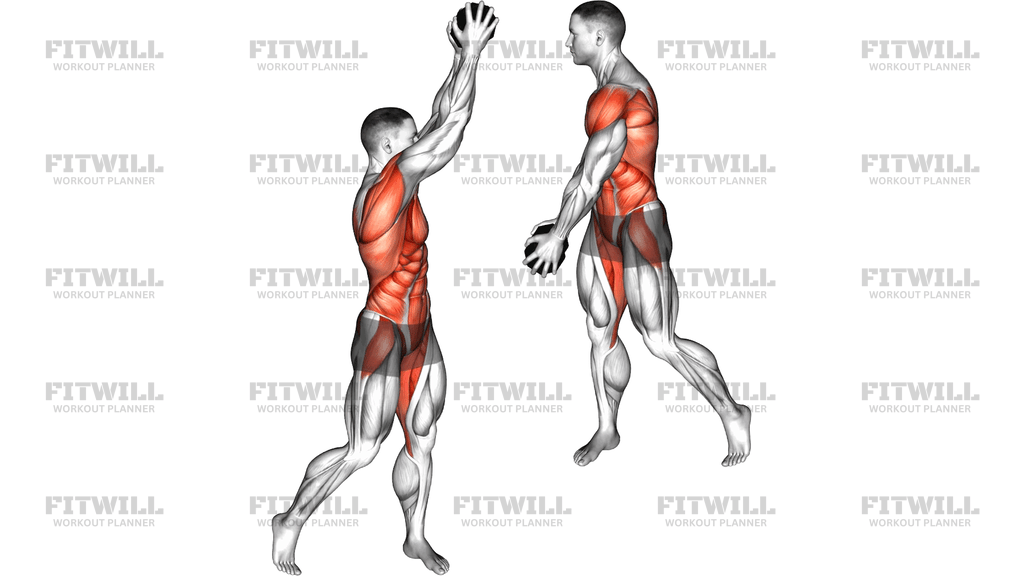
Instructions
- Stand with one foot forward in a split stance, toes pointing forward, weight distributed evenly, or use a shoulder-width stance if that feels more stable.
- Hold a dumbbell with both hands, fingers interlocked around the handle, and let your arms extend toward one side of your body at hip or shoulder height depending on the direction of your chop.
- Brace your abdominal wall, pull your shoulder blades back slightly, and keep your chest tall before you begin moving.
- Rotate your hips, torso, and shoulders together as one unit to start the chop, letting your back heel pivot naturally so the hip can turn.
- Sweep the dumbbell along a diagonal path across the front of your body, keeping it about a forearm's length away from your torso rather than pulled tight or swung wide.
- Finish with the dumbbell above the opposite shoulder for an upward chop, or beside the opposite hip for a downward chop, with your chest fully rotated toward the finish direction.
- Pause briefly at the end position, then lower the dumbbell back along the same diagonal under control, resisting the pull of the weight rather than letting it fall.
- Exhale as you chop through the rotation and inhale as you return to the start.
- Complete all repetitions on one side, then switch your stance and chop from the opposite side to train both directions.
Tips & Tricks
- A common mistake is turning only the arms while the hips stay square. If you feel the work only in your shoulders, deliberately drive the rotation from your back foot and hip so the trunk leads and the arms follow.
- If the dumbbell swings and crashes at the end of each rep, the weight is too heavy or you are rushing. Cut the load and decelerate the last third of the arc so your core, not momentum, finishes the movement.
- Watch your front knee during the chop. It should stay stacked over the ankle and track forward, not cave inward as your torso rotates past it.
- Keep the arc symmetrical on both sides. If your upward chop travels noticeably higher or smoother on one side, that asymmetry is worth addressing before adding load.
- Let the back heel lift and pivot on the upward chop; pinning the heel flat forces the knee to absorb the rotation and can cause discomfort over time.
- Hold the dumbbell securely with both hands wrapped fully around the handle rather than cradling it loosely in open palms, since a loose grip gets risky as fatigue sets in.
- Start with a light dumbbell, even 5 to 10 pounds, until the diagonal pattern feels natural, then progress gradually in small jumps.
- Avoid twisting from a rounded lower back. If you cannot keep your spine tall through the full range, reduce the arc and build the rotation back in as mobility improves.
Frequently Asked Questions
Which muscles does the Dumbbell Wood Chop target the most?
The obliques on the side you rotate toward do the largest share of the work, with support from the rectus abdominis, glutes, and front shoulders. The legs contribute as stabilizers, especially in a split stance.
Should I chop from low to high or high to low?
Both directions are valuable and slightly different: the upward chop emphasizes driving force from the ground through the hips, while the downward chop emphasizes controlling a descending load. Many lifters alternate between the two across training blocks.
Is the Dumbbell Wood Chop suitable for beginners?
Yes, as long as the weight stays light and the rotation is learned before load is added. Practicing the diagonal hip-and-torso turn with no weight or a very light dumbbell is a smart first session.
Why do my shoulders fatigue before my core during this exercise?
That usually means your arms are leading the rotation instead of your hips and trunk. Slow the tempo, lighten the load, and focus on turning your back foot and hip so the shoulders only guide the dumbbell along the path.
Can I use a medicine ball or cable instead of a dumbbell?
Yes, the same diagonal pattern works with a medicine ball held in both hands or a cable handle at high or low pulley height. Cables add constant tension through the arc, while the dumbbell version relies more on your own control of the weight.
How far should the dumbbell be from my body during the chop?
Keep it roughly a forearm's length away. Holding it too close crowds the rotation and turns it into an arm curl pattern, while letting it drift too far out strains the shoulders and pulls you off balance.
How many repetitions should I do per side?
Eight to twelve controlled reps per side works well for strength, and higher reps with a lighter weight are fine for conditioning. Always match the volume on both sides to keep rotational development balanced.
Is the Dumbbell Wood Chop hard on the lower back?
It can be if you round your spine or let the weight yank you through the turn. Keep your torso tall, brace before each rep, pivot the back heel so the hips absorb the rotation, and use a weight you can decelerate cleanly.
Should my feet stay flat or can the back heel lift?
The back heel should lift and pivot naturally on an upward chop so the hip can rotate fully. Forcing that heel flat pushes the rotational stress into the knee instead.