Power Up Jump
Power Up Jump is a bodyweight plyometric exercise that starts from a deep squat position and explodes upward into a vertical jump. You sink into a full-depth squat with your feet flat, clasp your hands in front of your chest, and then drive violently through the floor to leave the ground before landing softly and resetting. Because the jump begins from such a low position, it removes the help of a fast countermovement and forces your thighs and glutes to generate force from a mechanical disadvantage, which is exactly why it builds so much usable power.
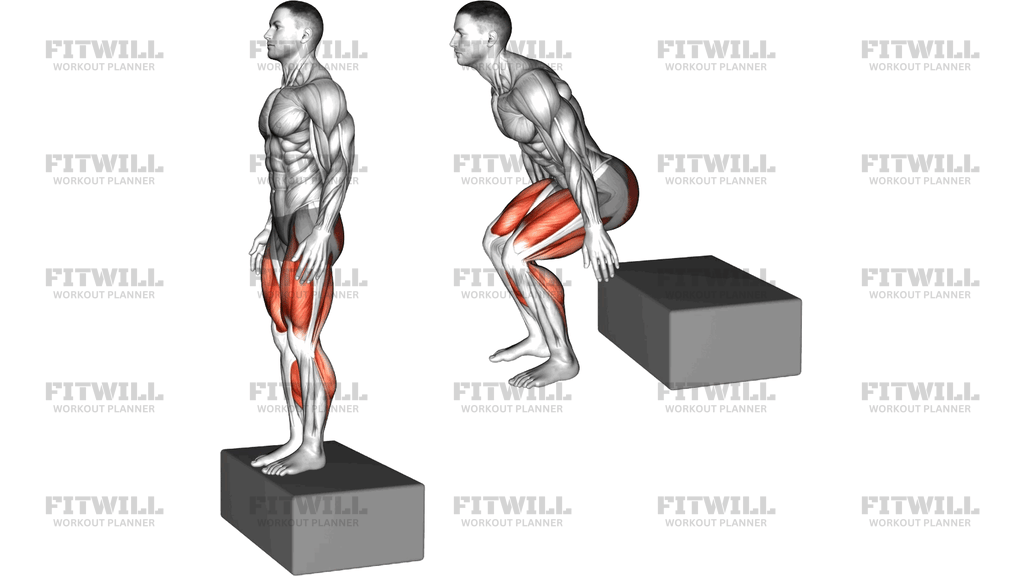
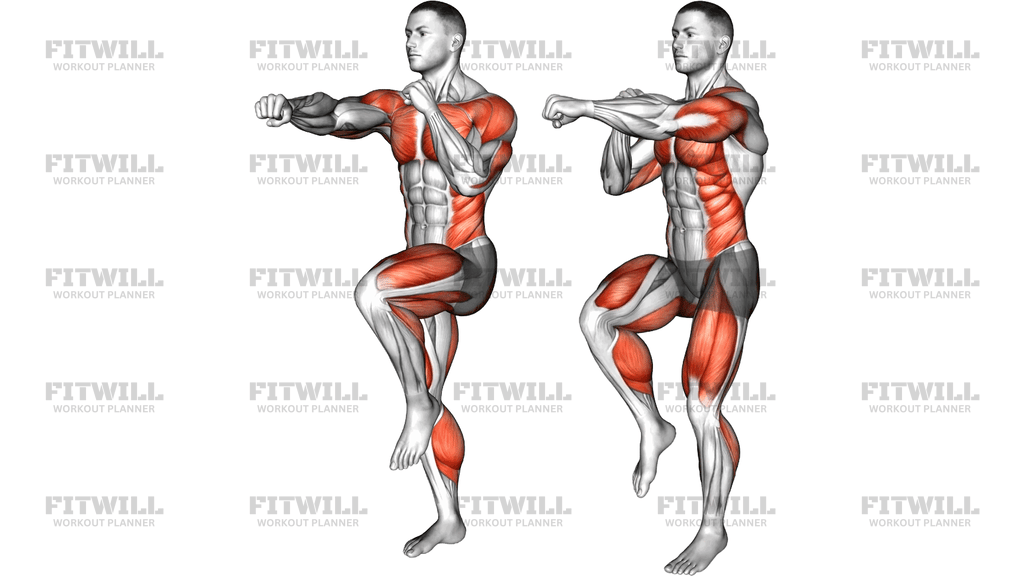
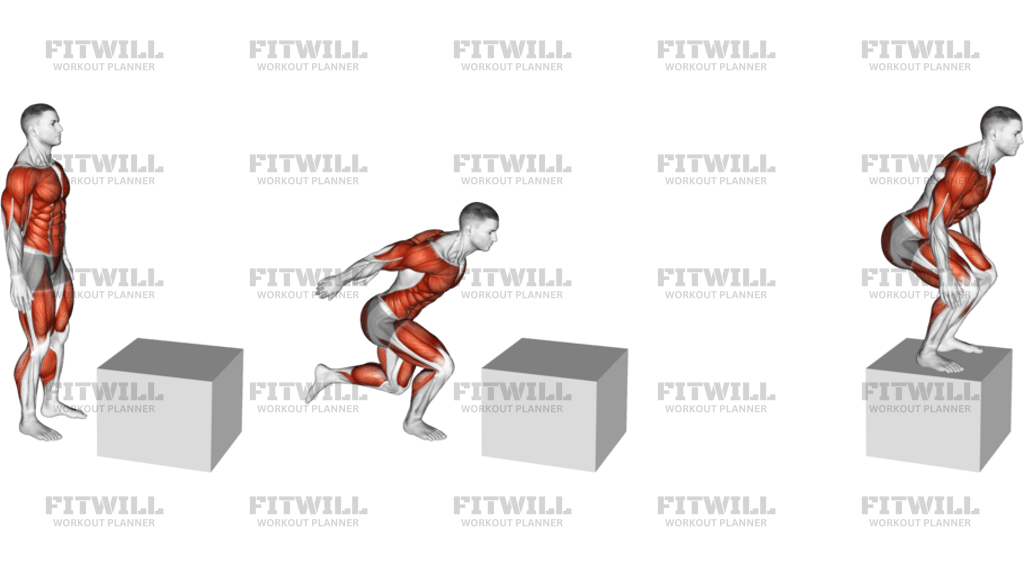
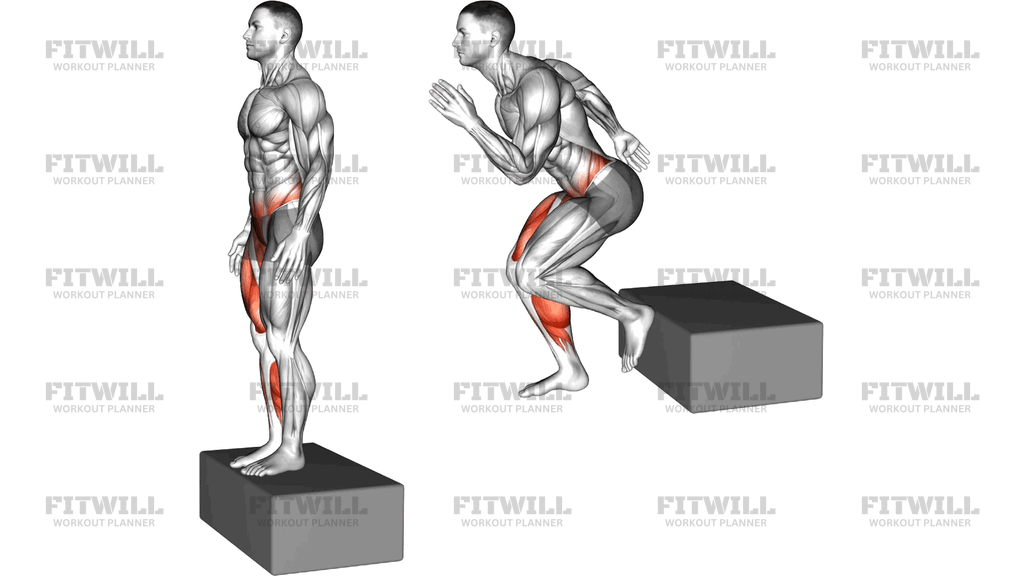
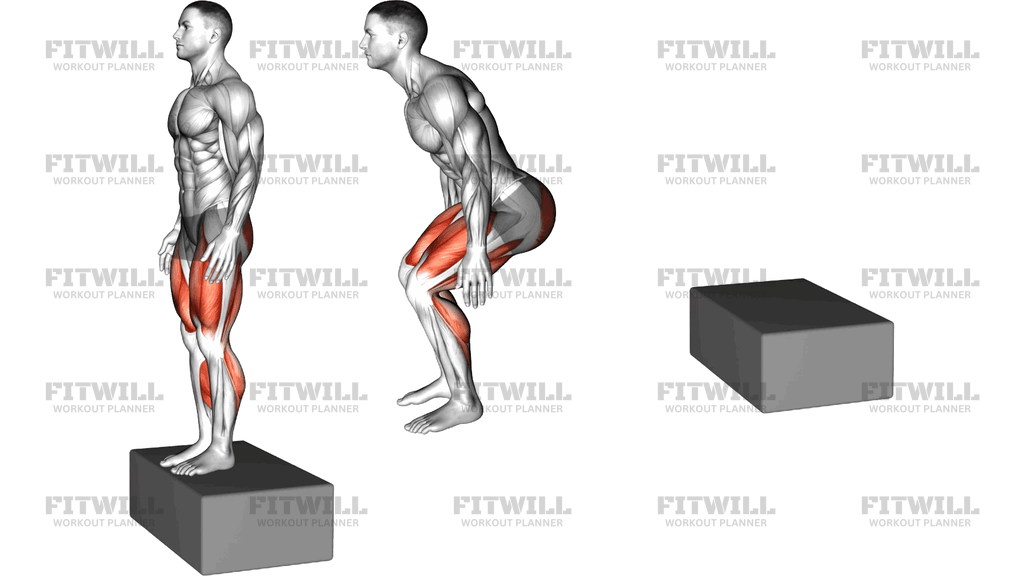
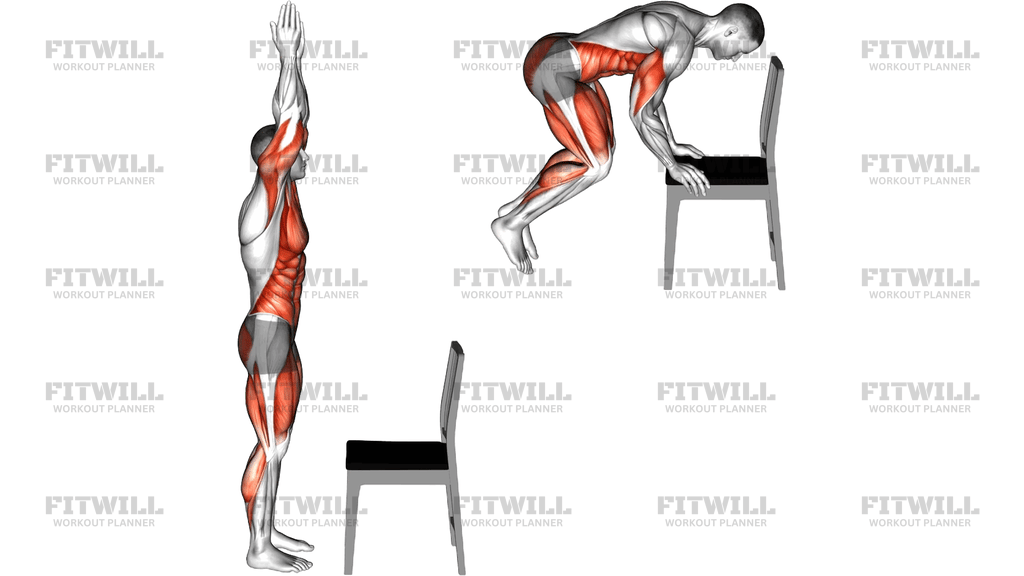
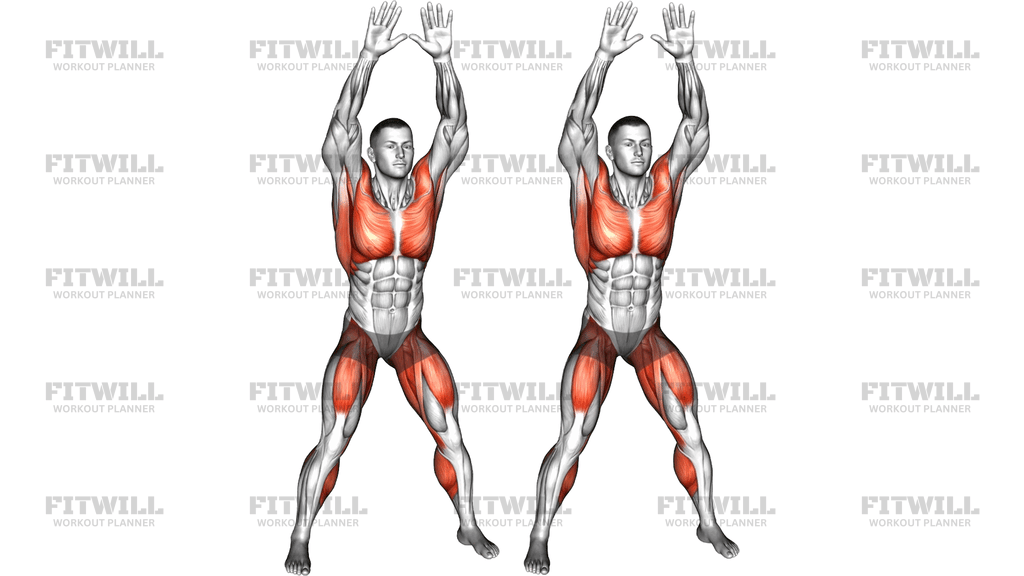
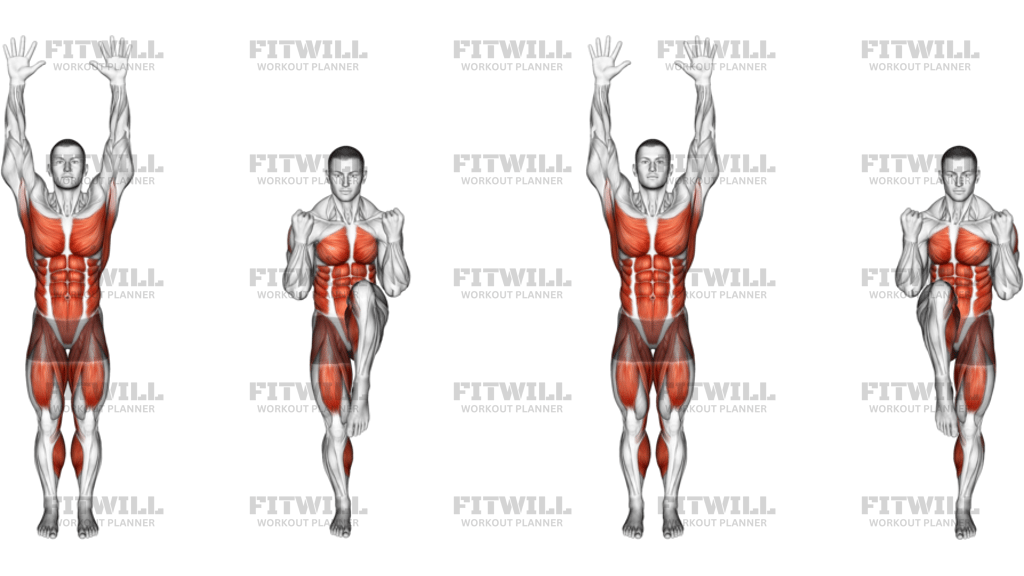
The main work is done by the quadriceps and glutes, with the hamstrings stabilizing the hips, the calves finishing the push-off at the ankle, and the core bracing to keep your torso upright through the launch. The highlighted musculature in the movement reflects that emphasis: deep squat depth loads the quads and glutes heavily, and the jump phase demands a fast, coordinated triple extension of the hips, knees, and ankles.
This movement suits athletes who need explosive leg power for sprinting, jumping, or changing direction, and it also works well as a conditioning tool in circuit or HIIT training. Martial artists, basketball and volleyball players, and lifters looking to improve their squat drive all benefit from practicing force production out of the hole. Beginners can use it too, as long as they first own a comfortable, controlled bodyweight deep squat.
Setup matters more than most people expect. Your stance width should let you squat deep with your heels down and knees tracking over your toes, and your hands clasped at chest height keep your torso from collapsing forward. Starting each rep from a dead stop in the deep squat means every jump is pure concentric effort, which trains explosiveness rather than relying on the stretch reflex you would use in a normal countermovement jump.
To execute it well, sink slowly into the bottom position, pause briefly so momentum does not do the work for you, then extend everything at once, hips, knees, and ankles, and reach full extension in the air. Land on the balls of your feet, absorb the impact by sitting back into the squat, and take a breath before the next rep. Quality of drive matters far more than jump height or rep count.
The biggest practical points are depth and control. If your heels lift at the bottom or your knees cave inward under fatigue, the jump loses its training effect and your joints take the stress instead. Keep sets short, rest enough between reps to stay explosive, and stop the set the moment your jumps become visibly lower or your landings get heavy.
[ Workout Log & Planner ]
Put your next workout in Fitwill
Keep your plan and training log ready when you are.


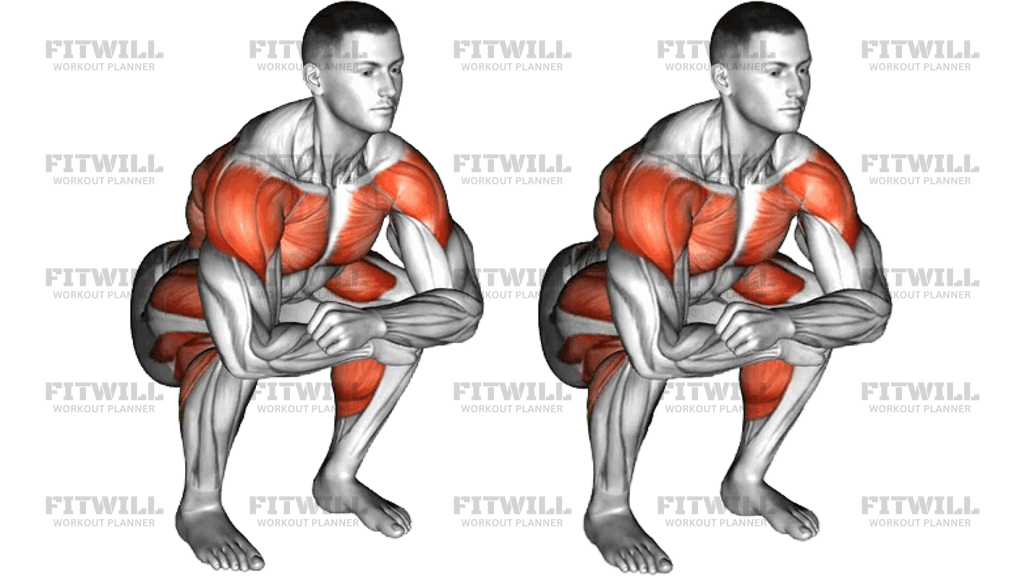
Instructions
- Stand with your feet roughly shoulder-width apart or slightly wider, toes turned out a few degrees, so you can reach a full squat with your heels flat.
- Clasp your hands together in front of your chest with your elbows tucked between your knees as you descend, and keep your chest lifted.
- Sink down into a deep squat until your thighs sit against or near your calves, holding the bottom with your weight spread across your whole foot.
- Pause for one to two seconds in the bottom position to kill any bounce, and brace your core while keeping your spine neutral.
- Explode upward by driving your hips and knees to full extension and pushing through the balls of your feet so both feet leave the ground.
- Keep your hands clasped at your chest during the jump and reach tall at the top of the extension rather than reaching forward.
- Land on the balls of your feet with soft knees, immediately absorbing the impact by sitting your hips back into the squat.
- Exhale sharply as you explode up, and inhale while you settle back into the bottom position before the next rep.
- Reset your stance and bottom position fully between reps; perform each jump from a dead stop for maximum power output.
- Stop the set when your jump height drops noticeably or your landing becomes loud and stiff.
Tips & Tricks
- Knees caving inward at the bottom is the most common fault; think about spreading the floor with your feet and keeping your knees stacked over your toes.
- If your heels rise in the deep squat, widen your stance slightly and turn your toes out more, or spend time on static deep squat holds before adding jumps.
- Bouncing out of the bottom turns this into a normal jump squat; hold the pause so your quads and glutes generate the power from a standstill.
- Leaning too far forward with your chest defeats the purpose; keep your hands clasped at your sternum and your elbows driving between your knees.
- Land quietly. A loud, flat-footed slap means you are stiff, so aim for a toe-first landing that rolls back toward the heel as you descend.
- Rest 30 to 60 seconds between sets because plyometric quality collapses fast under fatigue, and sloppy landings are where injuries happen.
- Use short sets of 5 to 8 reps rather than grinding out high numbers, since jump height, not exhaustion, is the signal you are training.
- Warm up with bodyweight squats and a few submaximal low jumps first so your ankles, knees, and hips are ready for full-depth takeoff.
- If deep jumps feel harsh on your knees, do the same drill jumping from a parallel squat depth or jump onto a low step to reduce landing force while you build capacity.
Frequently Asked Questions
What muscles does the Power Up Jump work?
The quadriceps and glutes do most of the work during the deep-squat takeoff, while the calves finish the push-off and the hamstrings and core stabilize your hips and spine throughout.
Why does the Power Up Jump start from a deep squat instead of a normal quarter squat?
Starting from full depth removes the rebound from a countermovement, so your legs must produce force from a standstill at a mechanical disadvantage. This builds starting strength and explosiveness that shallower jump squats do not target as directly.
Is the Power Up Jump suitable for beginners?
Yes, but only after you can sit into a controlled bodyweight deep squat with flat heels and no knee discomfort. Beginners should practice the deep squat hold and low submaximal jumps before jumping with full effort.
How many reps of the Power Up Jump should I do?
Aim for sets of 5 to 8 jumps with full rest between sets. Once your jump height clearly drops or your landings get stiff, the set is over, because training tired, low-quality jumps defeats the purpose.
Should my heels stay down during the Power Up Jump?
Your heels stay flat while you hold the deep squat, then you drive through the whole foot and finish the jump on the balls of your feet. If your heels lift before you start pushing, your stance or ankle mobility needs work first.
What is the most common mistake in the Power Up Jump?
Rushing the bottom position and bouncing straight out, which turns it into a regular jump squat. Hold the deep squat for a second or two so your muscles, not momentum, launch you.
Can I do the Power Up Jump every day?
No. Plyometric work stresses your joints and nervous system, so two to three sessions per week with at least a day of recovery in between is a smarter schedule for consistent progress.
What can I use instead of the Power Up Jump?
Standard jump squats from parallel, box jumps, or kettlebell swings all train explosive hip and leg extension. If deep landings bother your knees, jumping onto a box keeps the explosive benefit with far less impact.
How should I land after a Power Up Jump?
Land toe-first with soft knees and immediately sink your hips back into the squat to absorb the force. Quiet landings are a good sign that your mechanics are holding up.
Do I need any equipment for the Power Up Jump?
No, it is fully bodyweight. Just use a non-slip surface with clear space above your head and enough room around you to land safely.