Kettlebell Wood Chop
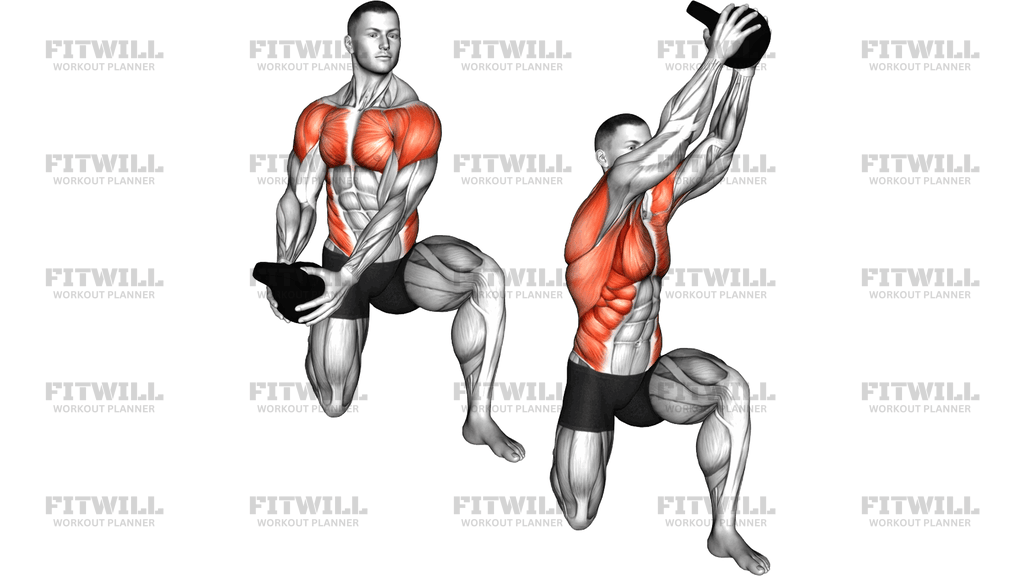
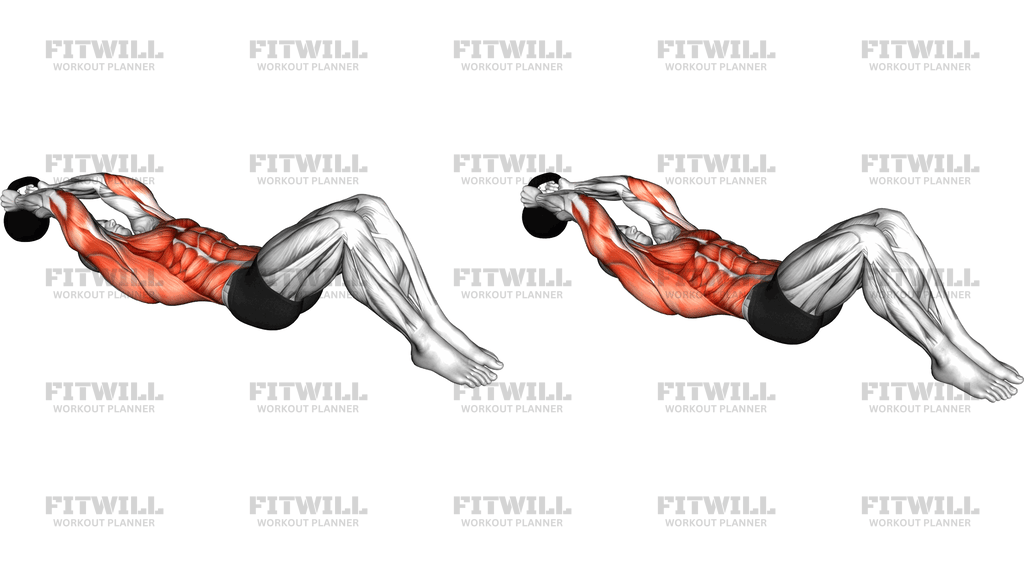
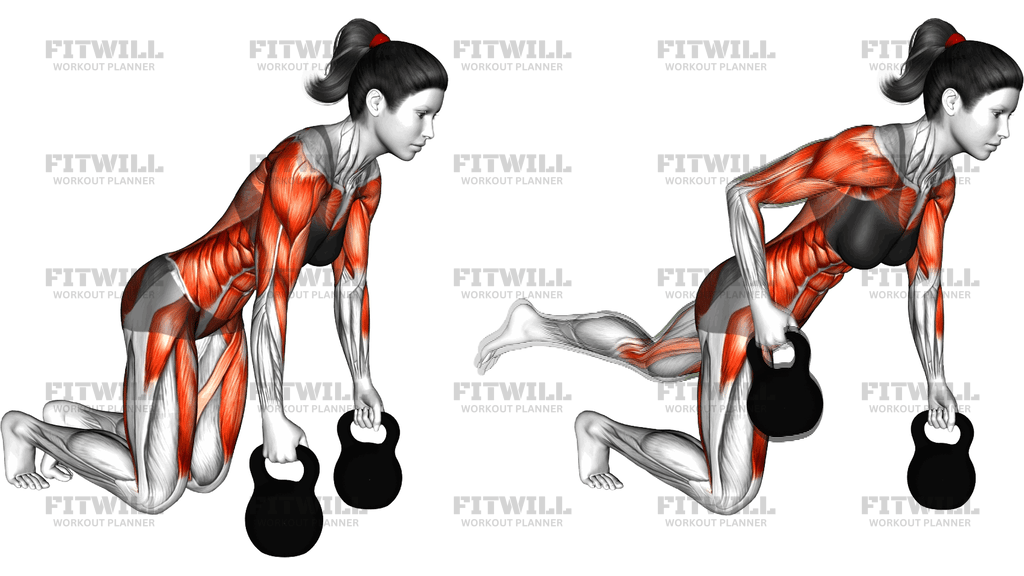
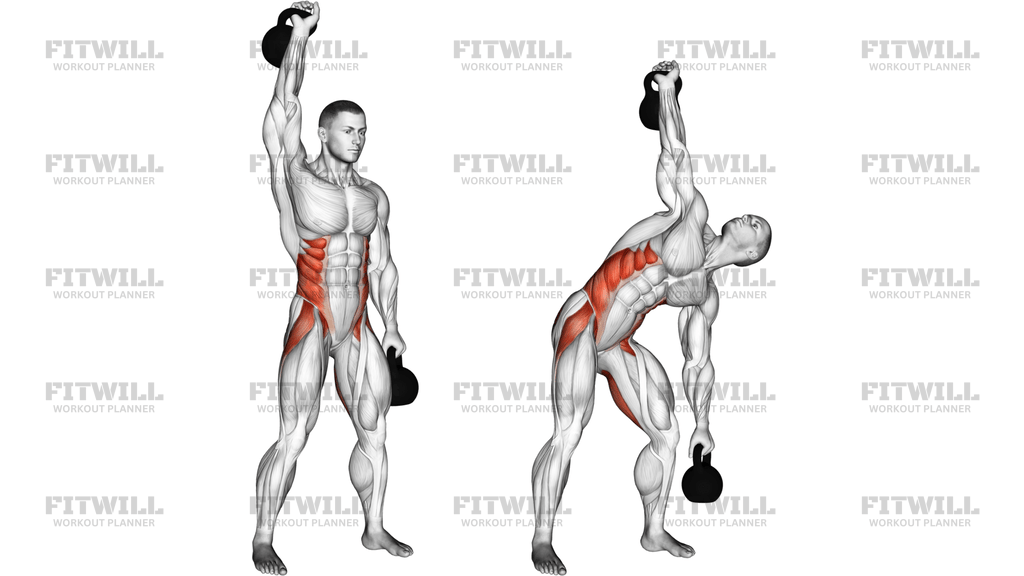
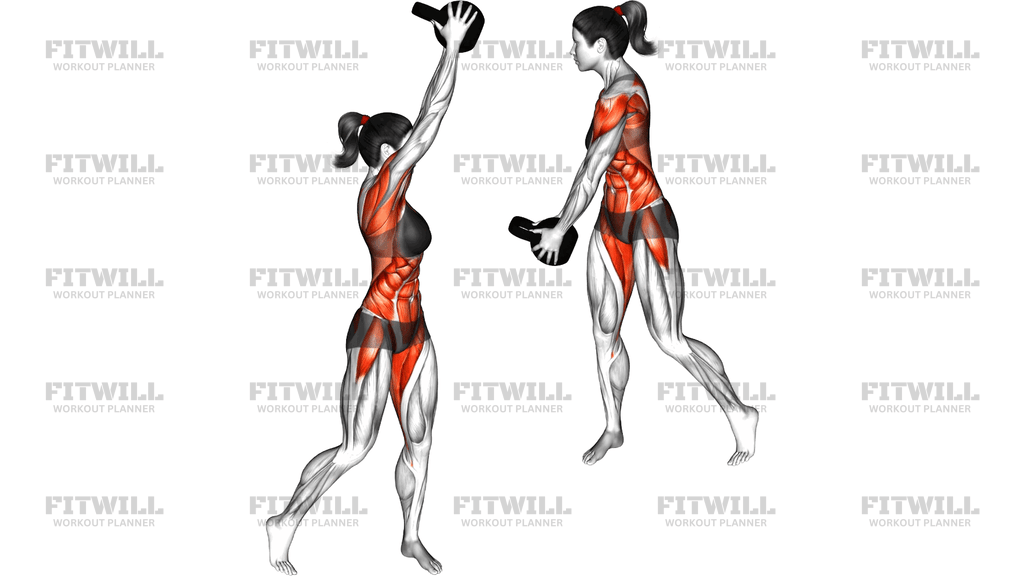
The Kettlebell Wood Chop is a rotational, full-body movement that mimics swinging an axe: you pull a kettlebell diagonally from a low position beside one hip all the way up and across your body until your arms finish overhead on the opposite side. Because the load travels on a diagonal while your torso rotates, it trains your midsection the way it actually works in real life and in sport, rather than in isolation.
The primary drivers are the obliques, which rotate and control your trunk, but the lift is genuinely a chain effort. The legs load on the way down and drive on the way up, the glutes and hips power the turn, and the shoulders, lats, and forearms steer and decelerate the kettlebell at both ends of the arc. This makes it one of the most time-efficient core exercises you can do with a single kettlebell.
It suits a wide range of lifters. Athletes in rotational sports such as tennis, baseball, golf, and martial arts use it to transfer force from the ground through the hips into the arms. General trainees benefit from the anti-slip and hip-hinge mechanics that carry over to lifting groceries, shoveling, and carrying loads on one side. Even beginners can use a light kettlebell to learn how to brace and rotate safely.
Setup matters more than most people expect. Your stance width, foot pivot, and grip on the handle determine whether the rotation comes from your hips or gets dumped into your lower back. Keep the kettlebell close to your body through the low portion of the swing, and let your back heel lift and rotate naturally so the hip can turn without twisting the knee.
Execution should feel like one connected snap, not a slow arm drag. Exhale as you drive the weight up and across, reach tall at the top without leaning back, then control the descent along the same diagonal path. The lowering phase is where most of the core control is built, so resist the urge to simply drop the kettlebell back down.
A common mistake is going too heavy too soon. The chop rewards speed and coordination, and a weight you cannot decelerate will pull you off balance or strain your shoulders and spine. Start light, master the diagonal path on both sides, and progress the load only when the movement looks identical left to right.
[ Workout Log & Planner ]
Put your next workout in Fitwill
Keep your plan and training log ready when you are.


Instructions
- Stand with your feet roughly shoulder-width apart, knees slightly bent, holding a kettlebell by the handle with both hands using an overhand grip.
- Angle your feet slightly and be ready to let the heel on the side you're rotating toward lift and pivot as you turn, so the rotation comes from your hip rather than your knee.
- Brace your core by tightening your abdominal wall as if bracing for a light punch, and pull your shoulders back and down.
- Swing the kettlebell down and across your body toward the outside of one hip, hinging at the hips and bending both knees as the weight lowers.
- Keep the kettlebell close to your thigh and hip on the way down; your arms stay relatively straight but not locked.
- Drive through the floor, extend your legs, and rotate your torso forcefully as you swing the kettlebell diagonally up and across your chest.
- Finish with the kettlebell overhead on the opposite side, arms extended, torso turned, and hips facing mostly forward without hyperextending your lower back.
- Pause briefly at the top, then lower the kettlebell with control along the same diagonal path back to the starting position beside your hip.
- Exhale forcefully as you chop upward and inhale as you return the weight down.
- Complete all repetitions on one side, then reset your grip and stance and repeat the same number on the opposite side.
Tips & Tricks
- The most common error is turning the swing into an arm raise. If your shoulders are burning but your midsection isn't, lighten the load and focus on snapping your torso through the turn.
- Let the heel on your leading side pivot off the floor. Forcing it flat pins your hip and sends rotational stress straight into your knee and lower back.
- Keep the kettlebell within a few inches of your body through the low portion of the chop. Letting it drift away turns the movement into a lever that strains your shoulders and lumbar spine.
- Don't arch backward at the top to 'finish' the rep. Reaching tall with stacked ribs is the real end position; leaning back only loads your lumbar spine.
- Count the lowering phase as part of the rep. The chop builds core control on the deceleration, so guide the kettlebell down instead of letting gravity yank it back.
- Your two sides will feel noticeably different, especially if you play a one-sided sport. Match your weaker side's rep count rather than your stronger side.
- If your grip gives out before your core does, use a lighter kettlebell or a two-hand placement where one hand overlaps the other instead of ditching the movement.
- Keep your knees tracking over your toes as you hinge. If they cave inward during the lower portion, widen your stance slightly and re-brace before the next rep.
Frequently Asked Questions
What muscles does the Kettlebell Wood Chop work?
The obliques do most of the rotational work, supported by the glutes, quads, and hips during the drive, and by the shoulders, lats, and forearms as they control the kettlebell through the arc.
How heavy should my kettlebell be for Wood Chops?
Choose a weight you can decelerate smoothly at the bottom of the swing without being pulled forward. For most beginners that's somewhere between 8 and 12 kilograms, but control matters more than load.
Should I do the Kettlebell Wood Chop with straight arms or bent arms?
Keep your arms mostly straight with soft elbows. Bending the arms turns it into an upper-body pull and reduces the rotational demand on your trunk.
Can beginners do the Kettlebell Wood Chop?
Yes. Start with a very light kettlebell or even no weight, and move slowly through the diagonal path until you can rotate from the hips while keeping your ribs stacked over your pelvis.
Why does my lower back ache after Wood Chops?
That usually means your lower back is absorbing rotation that should come from your hips. Check that your feet can pivot, your back heel lifts during the turn, and the kettlebell stays close to your body on the way down.
How is the Kettlebell Wood Chop different from a kettlebell swing?
A kettlebell swing is a pure hip hinge that moves the bell straight forward, while the chop adds a diagonal, rotational path that puts far more emphasis on the obliques and hip turn.
Can I substitute the Kettlebell Wood Chop with a cable wood chop?
Yes, a cable machine with a single handle set high or low replicates the same diagonal pattern and keeps constant tension. The kettlebell version adds more balance and deceleration demand because the load is free-moving.
How many reps and sets should I do?
For conditioning and core endurance, 8 to 12 controlled reps per side for 2 to 4 sets works well. Always balance the workload evenly between both sides.
Is it safe to do the Kettlebell Wood Chop if I have knee problems?
The knee stays relatively safe as long as your feet can pivot and your knees track over your toes during the hinge. If rotation still causes discomfort, reduce your stance width and range, or work with a qualified coach to adjust the setup.