Sideward Shuffle
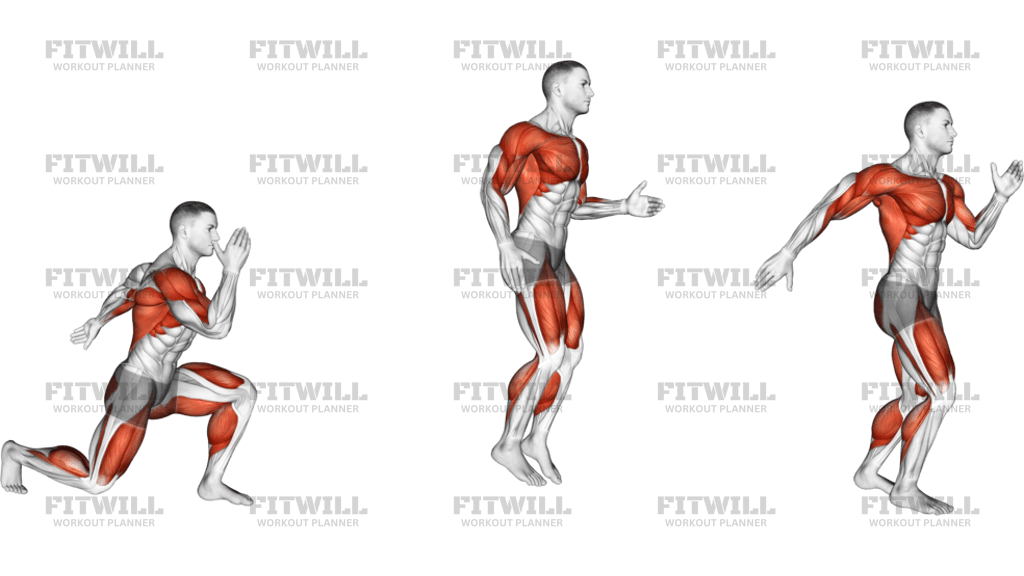
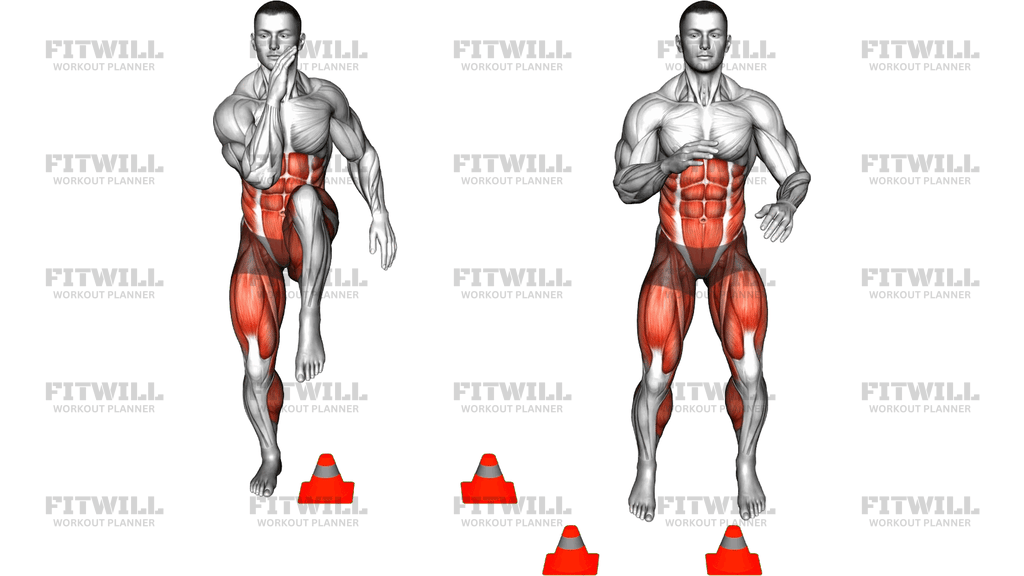
The Sideward Shuffle is an agility drill where you move laterally between two points—usually marked by cones or floor lines—using quick, controlled side steps while staying in an athletic stance. Unlike a casual side-step, the drill is performed with intent: knees bent, hips low, chest up, and feet fast. Each push-off comes from the outside leg driving the body sideways, and the trailing leg snaps in to reset the stance so you can keep moving in the same direction.
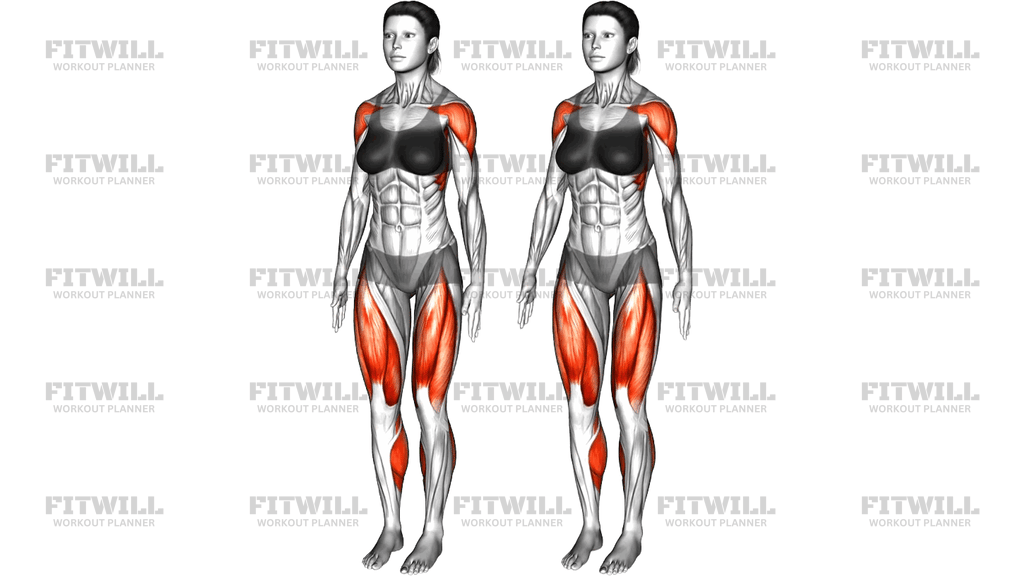
This drill shows up constantly in sports preparation because nearly every field and court sport demands quick lateral movement—cutting to defend, closing distance on an opponent, or recovering position. It trains the quads, glutes, and calves as the prime movers, while the hip stabilizers on the outside of the hip work hard to control each landing. The core, especially the obliques, has to hold your torso square and stop you from twisting as your legs move sideways underneath you.
Because the drill keeps you in a semi-squat position with continuous foot contact, it doubles as a solid conditioning tool. A 20-30 second bout at high intensity raises the heart rate quickly and builds local muscular endurance in the legs, which is exactly what you need late in a game when footwork starts to break down. Longer, slower shuffles work as a warm-up; shorter, faster reps develop speed and reaction.
Setup matters more than most people expect. Mark your lane with two cones roughly 5-10 yards apart so you have a clear start and finish. Stay low throughout—if you rise up out of the athletic stance, your steps get long, your hips sway, and you lose the ankle and hip control the drill is meant to build. Keep your arms loose and reactive to help with balance and rhythm.
The movement should feel like a controlled slide rather than a hop: feet stay close to the ground, one foot leads and the other follows, and they should never click together in the middle. Push the floor away with the outside leg rather than reaching with the lead leg. If your trail foot drags or your torso leans back, slow down until the pattern is clean, then build speed.
The Sideward Shuffle fits well into warm-ups, speed and agility sessions, and conditioning circuits. Beginners can start with slow, deliberate steps over a short distance to learn the stance and rhythm. More advanced trainees can add change-of-direction reps—shuffling down and shuffling back immediately—or touch each cone to practice lowering and exploding out of position, which closely mimics game situations.
[ Workout Log & Planner ]
Put your next workout in Fitwill
Keep your plan and training log ready when you are.


Instructions
- Place two cones about 5-10 yards apart on a flat, non-slip surface to mark the start and end of your shuffle lane.
- Stand beside one cone in an athletic stance: feet hip-width apart, knees bent, hips pushed back slightly, chest tall, and weight on the balls of your feet.
- Brace your core and keep your shoulders stacked over your hips so your torso stays square and does not twist toward the direction of travel.
- Push off with the outside leg to drive your body sideways, stepping the lead foot out toward the far cone.
- Bring the trail foot in quickly to re-establish your shoulder-width stance, keeping both feet close to the ground rather than hopping.
- Stay low in the semi-squat position the entire way—do not stand up between steps or let your hips sway with each push-off.
- Keep your arms bent and moving naturally at your sides to maintain balance and rhythm without crossing them in front of your body.
- Continue shuffling until you reach the far cone, then decelerate by shortening your steps and sinking slightly into your stance to stop cleanly.
- Breathe steadily throughout the rep—in through the nose, out through the mouth—rather than holding your breath as the pace increases.
- Reset at the far cone, then shuffle back in the opposite direction, or rest between reps depending on whether you are training footwork or conditioning.
Tips & Tricks
- The most common mistake is standing up tall as you tire, which turns the drill into a lazy side-step. Check your knee bend every few reps—if you can see your feet without leaning forward, you are probably too upright.
- Avoid letting your trail foot click against your lead foot in the middle. If your feet come together, your stance is collapsing; push the floor wider and keep the gap between steps.
- Do not reach sideways with your lead leg to cover more distance. The power should come from the outside leg pushing; reaching places stress on the inner thigh and knee.
- Keep your weight on the balls of your feet. Heels planted flat make the shuffle slow and stiff, and they reduce your ability to absorb each landing.
- If your torso twists or leans toward the direction you are moving, slow the pace down. A square chest is what forces the obliques and hip stabilizers to do their job.
- For conditioning, work in 20-30 second bouts at high effort with equal rest. For footwork quality, use shorter lanes and prioritize clean steps over speed.
- Warm up your ankles and hips beforehand with a few slow bodyweight side-steps; going straight into a fast shuffle on cold ankles is a common cause of a rolled foot.
- On the change of direction at the far cone, drop your hips slightly and take an extra short step rather than trying to stop and reverse in one motion—this keeps your knees safe and your momentum controlled.
Frequently Asked Questions
What muscles does the Sideward Shuffle work?
The quads, glutes, and calves drive the sideways steps, while the outer hip muscles stabilize each landing. The obliques and deep core work to keep your torso square as your legs move laterally beneath you.
Is the Sideward Shuffle good for beginners?
Yes. Beginners should start with a short lane, slow deliberate steps, and focus purely on staying low and keeping the feet from clicking together. Once the pattern feels natural, increase the distance and speed.
How far apart should I set the cones for the Sideward Shuffle?
About 5-10 yards works well for most training. Shorter distances emphasize quick footwork and direction changes, while longer distances lean more toward conditioning and rhythm.
Why do my feet keep coming together during the shuffle?
That usually means your stance is collapsing and your push-off is weak. Focus on driving sideways with the outside leg and bringing the trail foot only far enough to re-establish a shoulder-width stance.
Can I do the Sideward Shuffle without cones?
Yes. Two floor lines, marks on a court, or even two imaginary points work fine. Cones are just a convenient visual target that makes your start, finish, and any touches consistent.
How is the Sideward Shuffle different from a carioca or grapevine?
In the Sideward Shuffle your hips always face forward and your feet never cross. The carioca involves rotating the hips and crossing one leg over the other, which trains hip rotation instead of pure lateral foot speed.
Should my knees be bent the whole time?
Yes, staying in a semi-squat position is central to the drill. Rising up between steps lengthens your ground contact time and removes the hip and ankle stability work that makes the shuffle valuable.
How do I use the Sideward Shuffle in a workout?
Use slow shuffles as part of a warm-up, fast 20-30 second bouts for conditioning, or short reps with a touch at each cone for agility and change-of-direction practice. It pairs well with other lateral drills like side lunges and skater hops.
Is the Sideward Shuffle hard on the knees?
When done with bent knees, controlled steps, and a proper deceleration at each cone, it is generally joint-friendly. Trouble usually comes from reaching with the lead leg, locking the knees, or cutting hard while fatigued, so keep the technique clean and progress the speed gradually.