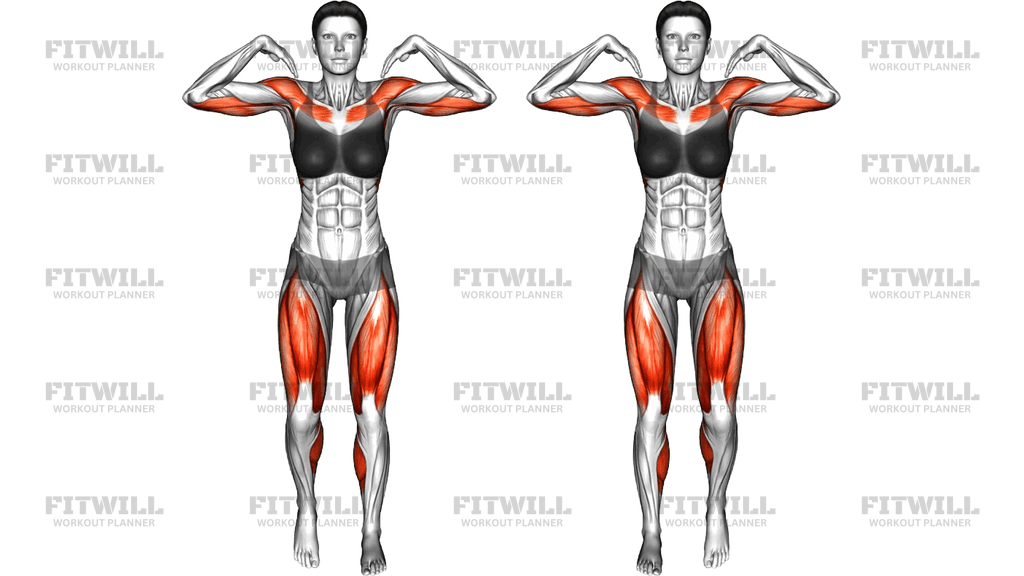
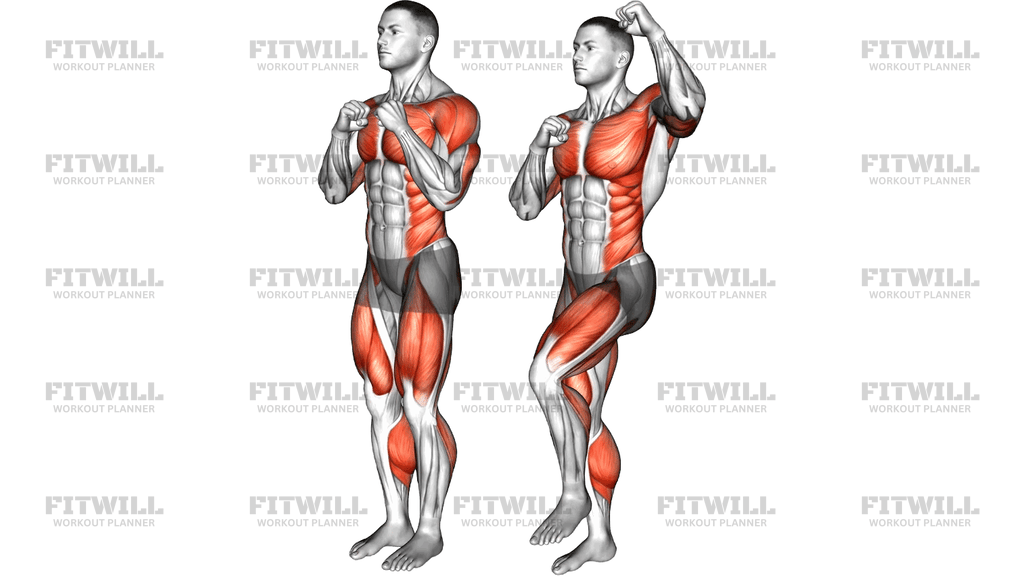
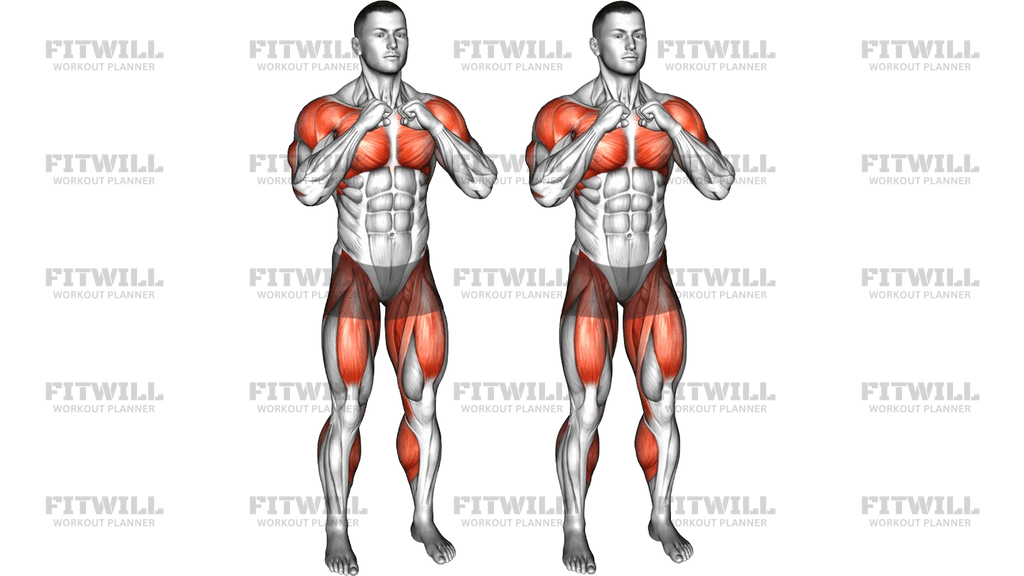
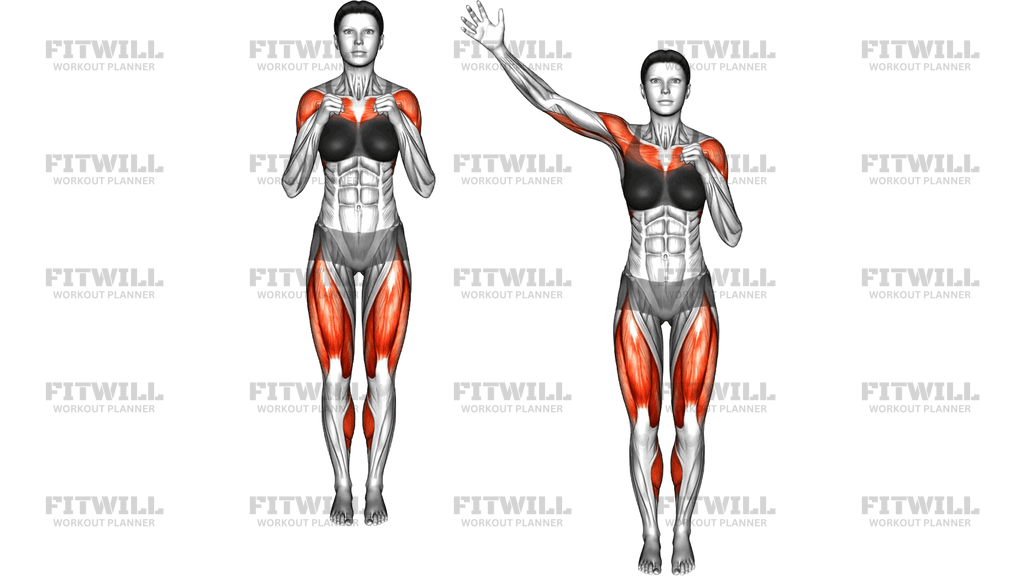
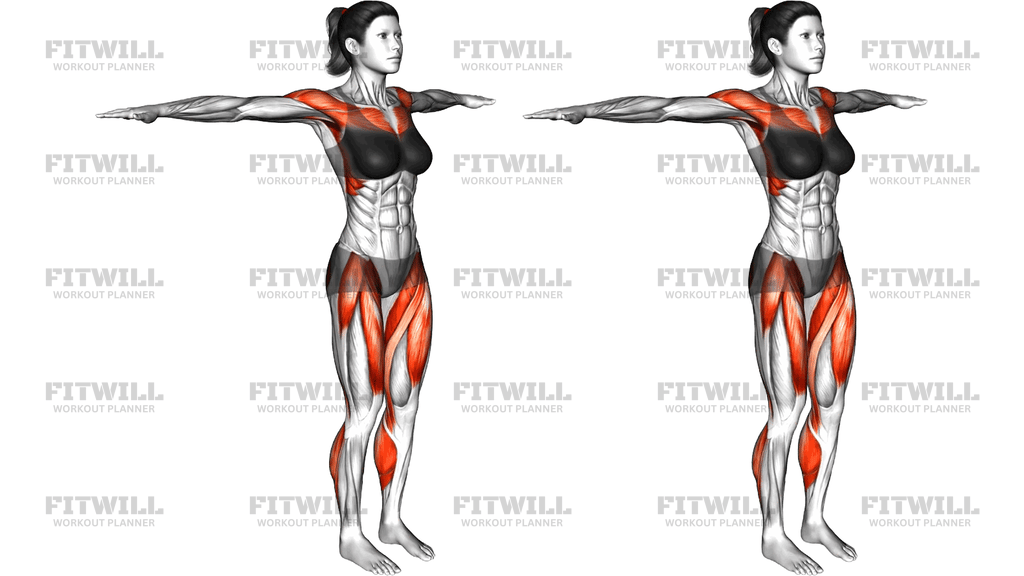
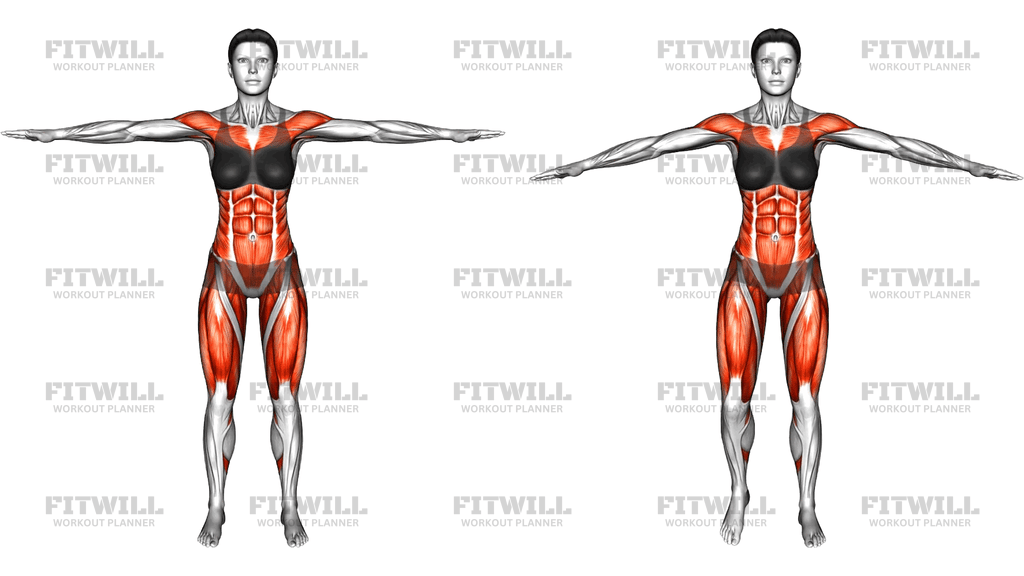
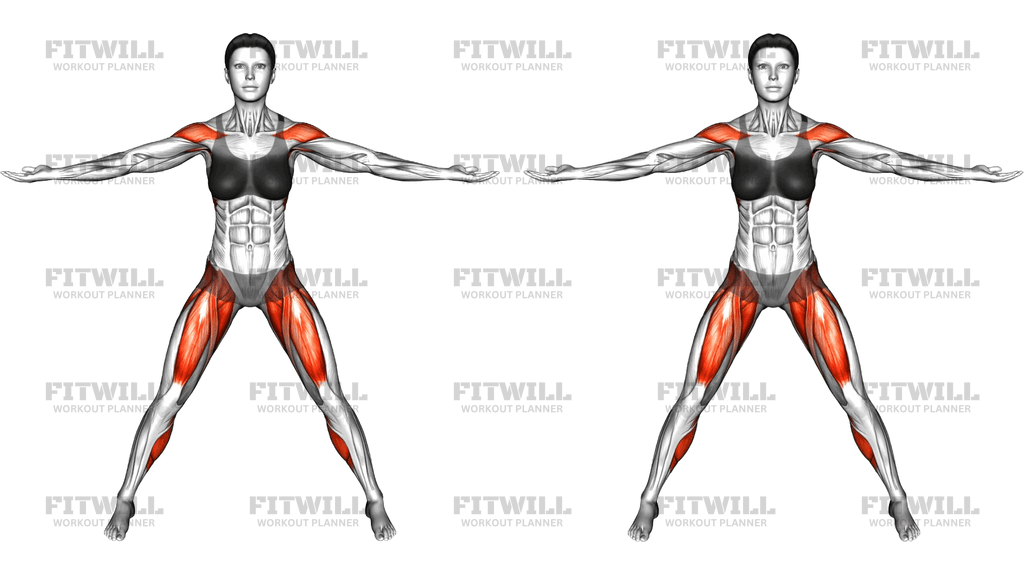
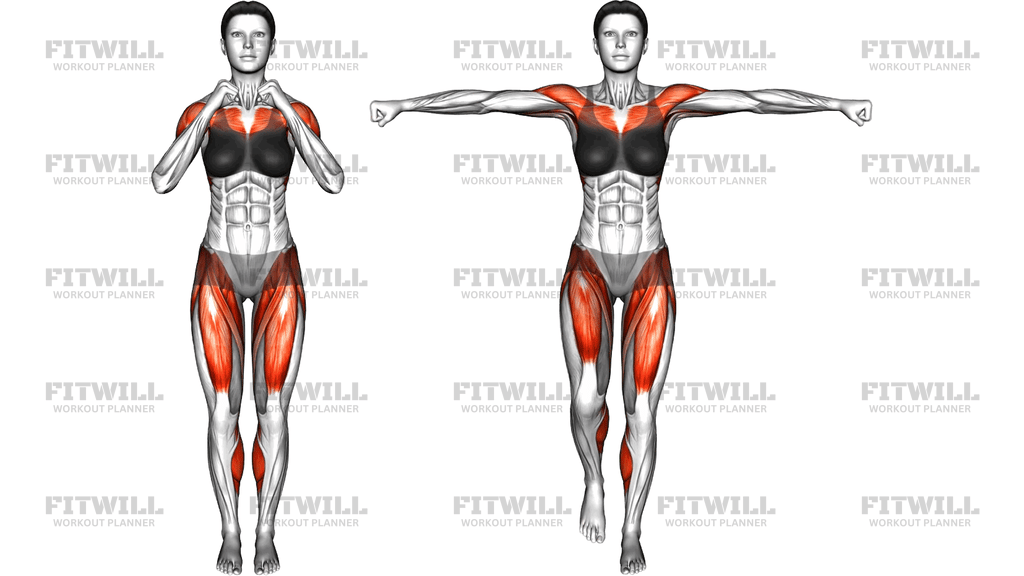
Overhead Clap March
The Overhead Clap March is a low-impact, full-body rhythm drill where you march in place while holding both arms straight overhead, pressing your hands together in a clap with each knee lift or on each step. It combines the knee-driving action of a high-knee march with the shoulder and upper-back engagement of holding your arms overhead, so your heart rate climbs quickly without any jumping or equipment. Because it asks your arms and legs to work on the same beat, it also sharpens coordination and posture under fatigue.
This movement is a staple for warm-ups, low-impact cardio intervals, and active recovery days. It suits beginners who need an accessible way to raise their heart rate, as well as more experienced trainees who want a shoulder-friendly conditioning move between strength sets. Office workers and anyone who spends long hours sitting benefit particularly from the overhead arm position, which opens the chest and wakes up the upper back after prolonged hunching.
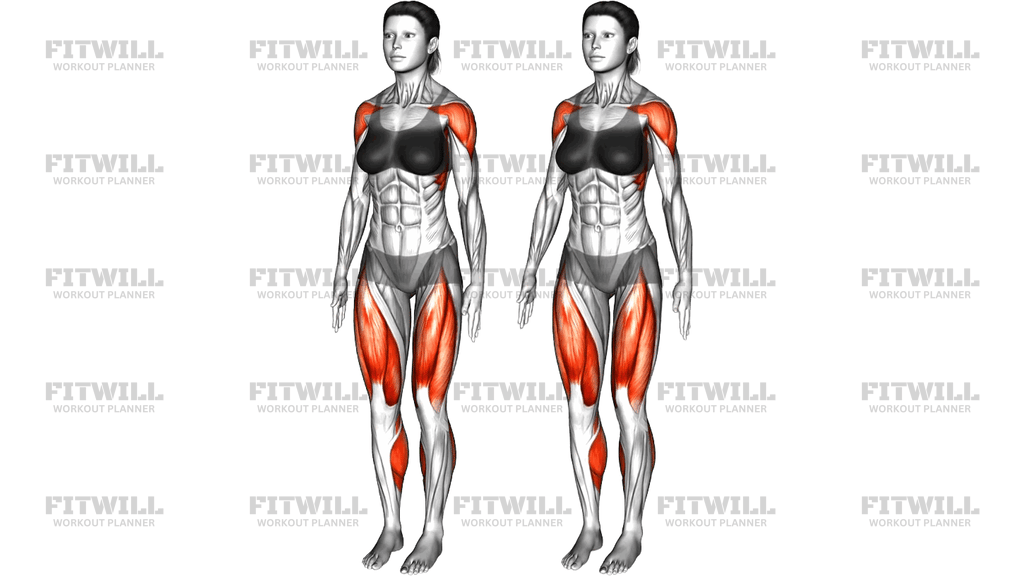
The main work comes from the shoulders, which hold and repeatedly clap the arms overhead, and the hip flexors and quads, which drive each knee lift. The calves and ankles handle the repeated push-off, while the core stays braced to keep your ribs stacked over your pelvis and stop your lower back from arching as your arms rise. Your upper traps and mid-back muscles stabilize the shoulder blades throughout.
Setup matters more than it looks. Stand tall with feet hip-width apart, ribs down, and gaze forward before you lift anything. If you start with your arms half-raised or your back already arched, the claps become sloppy shoulder shrugs and you lose the postural benefit. Keep the march controlled rather than rushing the tempo, since the goal is clean knee lifts and honest claps, not speed.
To execute well, raise both arms fully overhead with elbows straight, then march in place, lifting each knee to roughly hip height while clapping your palms together at the top on every step or every other step. Land softly on the ball of each foot, keep your torso upright, and pull your shoulders down away from your ears even though your arms are elevated.
A practical safety note: if overhead shoulder mobility is limited or clapping overhead causes pinching, clap at forehead height instead or reduce the range of the knee lift. Stop if you feel joint pain rather than muscle effort, and build duration gradually so your shoulders and calves adapt to the sustained overhead work.
[ Workout Log & Planner ]
Put your next workout in Fitwill
Keep your plan and training log ready when you are.


Instructions
- Stand tall with your feet hip-width apart, arms relaxed at your sides, and your weight spread evenly across both feet.
- Draw your shoulders back and down, brace your core lightly, and tuck your ribs so your lower back is not arched before you begin.
- Raise both arms straight overhead until your elbows are fully extended and your hands are a few inches apart, palms facing each other.
- Shift your weight onto your left foot and drive your right knee up toward hip height while bringing your palms together in a controlled clap overhead.
- Lower your right foot back to the floor with a soft landing and let your hands separate slightly, keeping your arms extended the whole time.
- Immediately lift your left knee and clap again, alternating legs at a steady, even rhythm.
- Breathe continuously throughout, inhaling through your nose and exhaling through your mouth rather than holding your breath as you clap.
- Keep your torso upright and your gaze forward; avoid leaning back as your knees rise.
- Continue for your target time or repetitions, then stop marching, lower your arms slowly to your sides, and shake out your shoulders before resetting.
Tips & Tricks
- If your shoulders creep up toward your ears during the claps, pause, lower your arms, reset your shoulder blades down, and restart at a slower tempo.
- A common mistake is slapping the hands together with loose elbows; keep your arms straight and make the clap deliberate so the shoulders, not momentum, do the work.
- If your lower back arches as each knee lifts, shorten the knee lift to a height you can hold without your ribs flaring up.
- Clap at forehead height instead of full overhead if overhead reaching causes shoulder pinching, and gradually raise the clap point as mobility improves.
- March on a mat or a forgiving surface if you are doing long sets, since repeated soft landings on hard floors can fatigue the calves and ankles quickly.
- Count knee lifts rather than claps to keep your leg rhythm honest; it is easy for the arms to keep going while the knees get lazy.
- Use this as a warm-up finisher with slow knee lifts, or as an interval with faster marches, adjusting tempo instead of adding equipment.
- Watch yourself sideways in a mirror occasionally: your torso should stay stacked over your hips, not tip backward as the knees drive up.
Frequently Asked Questions
What muscles does the Overhead Clap March work?
The shoulders do most of the upper-body work holding and clapping the arms overhead, while the hip flexors and quads power each knee lift. The calves, core, and upper back stabilize and support the movement throughout.
Is the Overhead Clap March good for beginners?
Yes, it is one of the most beginner-friendly cardio drills because it is low-impact and needs no equipment. Beginners can start with shorter knee lifts and claps at forehead height, then progress to full overhead claps and higher knees.
Should I clap on every knee lift or every other step?
Clapping on every knee lift gives the shoulders more work and a stronger cardio response, while clapping every other step lets you march faster with less shoulder fatigue. Choose one pattern and keep it consistent for the set.
Why do my shoulders tire before my legs during the Overhead Clap March?
Holding your arms fully overhead is an isometric challenge for the shoulders and upper traps that most people rarely train. Lower your arms for a few seconds when needed, or clap at chest height until your shoulder endurance builds.
How high should I lift my knees?
Aim for roughly hip height, but only as high as you can go without leaning back or arching your lower back. A controlled knee lift to mid-thigh is better than a high, sloppy lift.
Can I use the Overhead Clap March in a warm-up?
Absolutely. Performed slowly with moderate knee lifts, it raises your heart rate, mobilizes the shoulders and hips, and primes your core before strength work or running.
What can I substitute if clapping overhead bothers my shoulders?
Try a standard high-knee march with relaxed arm swings, or press your hands together at chest or forehead height instead of full overhead. Both keep the cardio and leg benefits while reducing overhead shoulder demand.
How long should I perform the Overhead Clap March?
Start with 20 to 30 seconds per set and build toward 60 seconds or more as your shoulders and calves adapt. It also works well as an interval move, such as 30 seconds of work with 30 seconds of rest.
Is the Overhead Clap March safe for people with lower back issues?
It can be, provided you keep your ribs down and core braced so the lower back does not arch as the knees lift. If you have an existing back condition, use a smaller knee lift and stop if any discomfort appears.