Resistance Band Overhead Shoulder Press
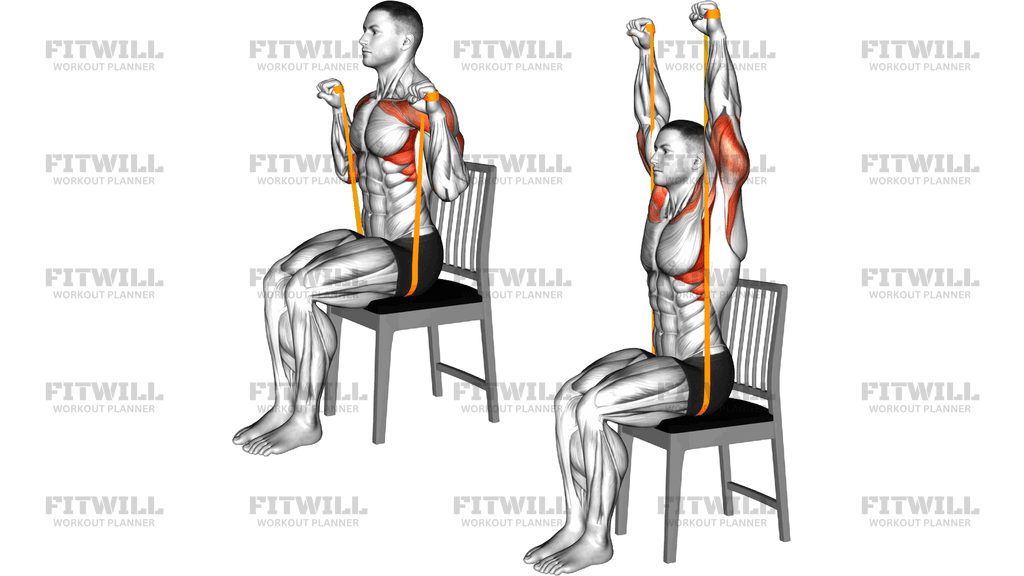
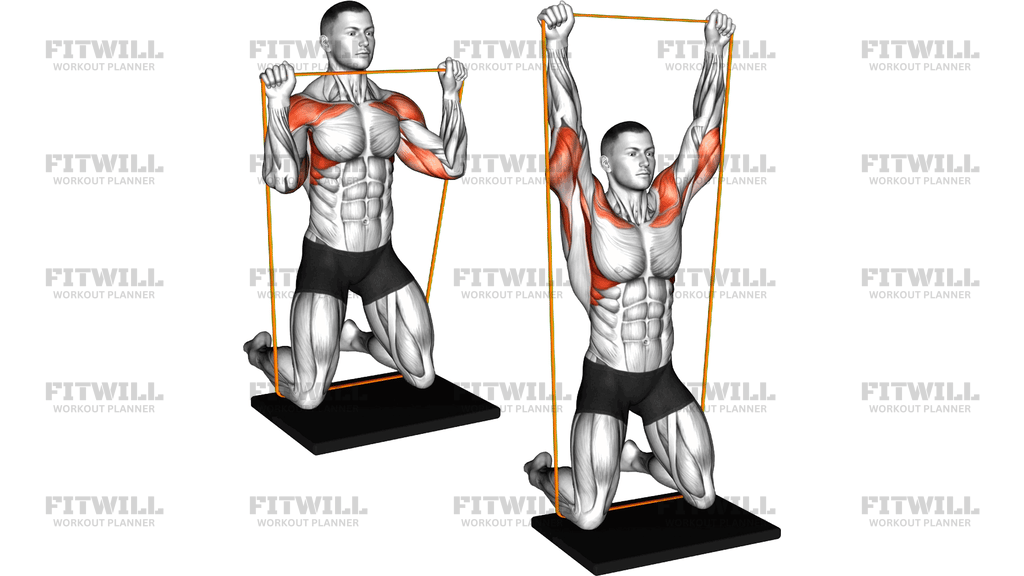
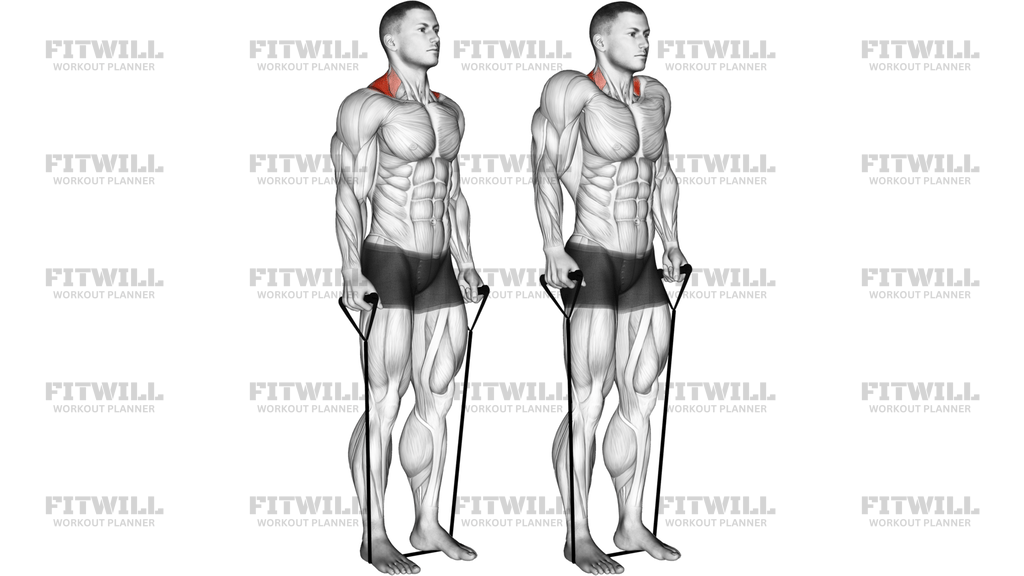
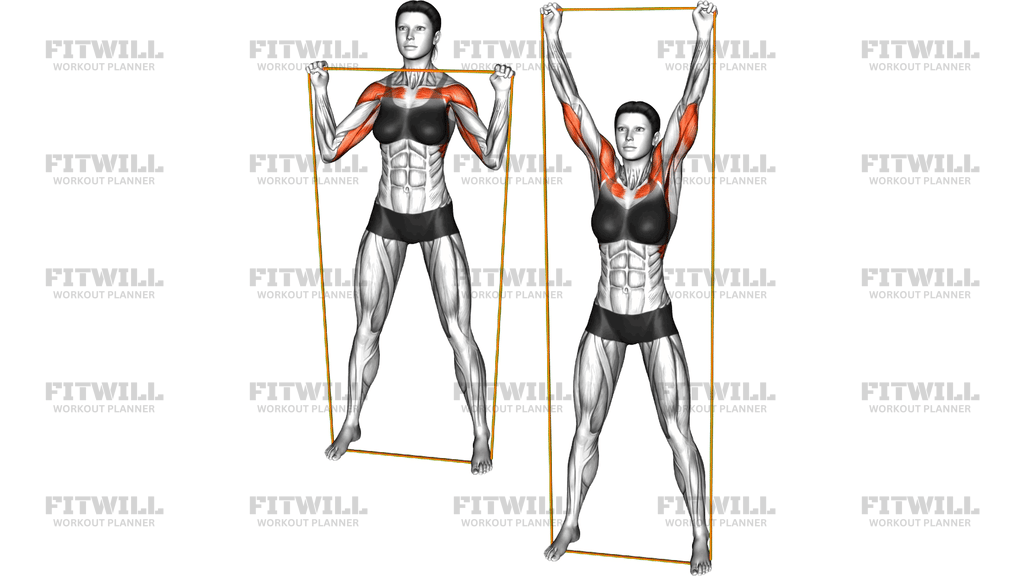
The Resistance Band Overhead Shoulder Press is a standing press performed with a long resistance band anchored under both feet. You grip the band at shoulder height with hands just outside your shoulders, then press straight up until your arms are fully extended overhead before lowering back under control. Because the band is stretched between the floor and your hands, the resistance builds as you press upward, which gives the movement a slightly different feel than pressing dumbbells or a barbell.
This exercise primarily trains the shoulders, with the front and side portions of the deltoids doing most of the work. The triceps extend the elbows to finish each rep, the upper traps and upper back stabilize the shoulder girdle overhead, and the core works continuously to keep your ribs down and your torso upright while the band pulls against you. It is a genuine full-upper-body pressing movement, not just an isolation exercise.
It suits a wide range of lifters. Beginners can learn the overhead press pattern with light, forgiving tension, while more experienced trainees use it as a supplemental press, a warm-up activation, or a travel and home-gym option when heavy equipment is unavailable. It is also a common choice in rehab and return-to-lifting settings because the band load is easy to scale and does not create the same compressive joint stress as heavy free weights.
Setup matters more than most people expect. The amount of tension at the start depends on where you stand on the band and where you grip it, so take a moment to get both hands even and the band length equal on each side. Standing with feet roughly hip-width apart on the band, core braced and glutes engaged, gives you a stable base and prevents the lower back from arching excessively as the band pulls downward.
To execute the press well, drive the hands up in a straight line, slightly widening the band as you ascend, and finish with the arms extended and biceps near the ears rather than stopping short. Lower slowly back to the shoulder position, keeping constant tension in the band. The most common errors are pressing with flared ribs and an arched spine, letting the wrists bend backward, and half-repping the top range where the band resistance is highest.
As with any overhead movement, stop if you feel pinching at the shoulder and consider a slightly narrower grip or less tension. Because the band cannot drop or roll onto you, this is one of the safer ways to train the overhead press, but controlled tempo and honest shoulder range of motion still matter.
[ Workout Log & Planner ]
Put your next workout in Fitwill
Keep your plan and training log ready when you are.


Instructions
- Stand on the middle of a long resistance band with both feet, set about hip-width apart, so an equal length of band runs up each side of your body.
- Grip the band with an overhand grip, hands just outside shoulder-width, and bring your hands up to shoulder height with elbows bent and slightly in front of your torso.
- Stand tall, brace your abs, squeeze your glutes lightly, and pull your ribs down so your lower back stays in a neutral position.
- Press both hands straight up overhead, letting the band stretch as your arms extend, keeping the band path close to the front of your body.
- Finish each rep with arms fully extended, hands roughly over your shoulders, and biceps near your ears rather than drifting forward.
- Pause briefly at the top, then lower your hands in a controlled manner back to shoulder height, maintaining tension in the band the whole way down.
- Exhale as you press up and inhale as you lower, keeping your breathing steady and your torso still throughout.
- Keep your wrists straight and stacked over your elbows at all times instead of letting them bend backward under the band's pull.
- Complete all reps, then release the tension by lowering one hand at a time before stepping off the band.
- Adjust your grip lower on the band or switch to a lighter band if you cannot reach full lockout without leaning back.
Tips & Tricks
- If the band feels slack at the bottom, choke up on it an inch or two on each side so tension exists even at shoulder height.
- A common mistake is letting the band pull you forward at the start; keep your hands slightly in front of your shoulders, not behind your head.
- If you notice your lower back arching as you press, reduce the band tension or press one arm at a time to make the core demand manageable.
- Avoid pressing with your elbows flared straight out to the sides; keep them around 30-45 degrees from your torso for a smoother shoulder path.
- Do not rush the lowering phase. The band wants to snap your hands back down, and controlling the descent is where much of the triceps and shoulder work happens.
- Your head should move slightly back as the hands pass it, not your whole torso leaning back. Watch yourself sideways in a mirror to catch this.
- If one side feels stronger, check that your grip position is identical on both sides of the band before assuming an imbalance.
- Stand on the band with both feet rather than one to keep the load even and prevent the band from slipping mid-set.
- For a harder set, widen your stance slightly and grip lower on the band; for an easier set, use a thinner band rather than shortening your range of motion.
Frequently Asked Questions
Which muscles does the Resistance Band Overhead Shoulder Press work?
The front and side delts are the primary movers, with the triceps extending the elbows to lockout. The traps, upper back, and core stabilize your torso and shoulder girdle throughout the press.
Is the Resistance Band Overhead Shoulder Press good for beginners?
Yes, it is one of the most beginner-friendly overhead press variations because the band is light at the start of each rep and easy to scale. Beginners should start with a thin band and focus on keeping the ribs down and wrists straight.
Why does the band feel easier at the bottom and harder at the top?
Elastic resistance increases as the band stretches, so tension is lowest with hands at shoulder height and highest at lockout. This differs from dumbbells, where the load is constant, and it challenges the top range of the press more.
How do I set my stance when standing on the band?
Place both feet on the band about hip-width apart with even lengths of band on each side. A narrower or staggered stance makes the band harder to secure and can let it slip during the press.
Can I do the Resistance Band Overhead Shoulder Press one arm at a time?
Yes, a single-arm version is a useful regression and also challenges your core to resist leaning. Anchor the band under both feet as usual and press with one hand while the other arm stabilizes.
What is the most common mistake in this exercise?
Arching the lower back and flaring the ribs as the press gets hard at the top. This usually means the band tension is too high, so switch to a lighter band or adjust your grip before letting your spine compensate.
Can I replace dumbbell shoulder presses with the Resistance Band Overhead Shoulder Press?
For general shoulder strength and muscle, it works well as a substitute, especially at home or while traveling. Heavy barbell or dumbbell pressing still allows easier small load jumps, so competitive strength athletes may want both.
How many reps and sets should I do?
For muscle and strength, 3 sets of 8-15 reps works well, choosing a band tension that makes the last two reps challenging without form breakdown. Because the top of the rep is the hardest, stop a rep or two before your press path starts to drift backward.
Is it safe to press overhead with a band if my shoulders are sensitive?
The band's rising resistance is often gentler on the shoulder joint than heavy free weights, but you should still stay within a pain-free range and keep the press path close to your body. If pressing overhead consistently causes pinching, use a lighter band, press at a slight incline, or check with a qualified professional.
How do I check my band for safety before pressing?
Inspect the band for small tears or thin spots before every session, since a snapped band under tension can snap toward your face. Anchor it fully under both feet and keep your grip firm so it cannot slide out from under you mid-rep.