Bridge Yoga Pose Setu Bandha Sarvangasana
Bridge Yoga Pose, known in traditional practice as Setu Bandha Sarvangasana, is a supine backbend where you lift your hips toward the ceiling while your shoulders and feet stay grounded. The name translates roughly to "bridge lock for all limbs," which fits the shape well: your body forms an arch from shoulders to knees, with the chest, hips, and thighs all sharing the work. It sits at the intersection of mobility and strength, opening the front of the body while asking the back side to hold you up.
This pose is useful for almost anyone who spends long hours sitting. A desk-bound day tends to leave the hip flexors shortened, the glutes sleepy, and the mid-back rounded, and a bridge directly addresses all three. It is a staple in yoga classes, warm-ups, and rehabilitation settings because the load is modest and the position is easy to modify. People easing back into training after a layoff often start here before progressing to hip thrusts or single-leg variations.
The main muscles working are the glutes and hamstrings, which extend the hips and hold the pelvis lifted. The erector spinae and deep core stabilize the spine so the arch stays smooth rather than hinging at one segment, and the adductors on the inner thighs help keep the knees from drifting outward. Because the arms press into the mat beside you, the shoulders and upper back also get gentle work as the chest lifts toward the chin.
Setup matters more than height. Feet placed too far from the hips turn the pose into a hamstring-dominant effort with the knees sliding forward, while feet tucked too close can dump stress into the knees. A neutral neck, relaxed jaw, and even weight across both feet keep the backbend distributed instead of concentrated in the lower spine.
To perform it well, think of peeling the spine off the floor one vertebra at a time and pressing the hips up by squeezing the glutes, not by pushing the belly toward the ceiling. At the top, the knees stay stacked over the ankles, the thighs stay parallel, and the chest moves gently toward the chin to lengthen the back of the neck. Lower with the same control, exhaling as you roll down from the upper back to the tailbone.
Beyond yoga, Bridge Yoga Pose works well as a glute activation drill before squats or deadlifts, as a counter-pose after long runs or cycling, and as a low-impact way to keep the hips and spine moving on recovery days. Hold the top position for a few breaths for a stretch, or move in and out with the breath for a more dynamic repetition-based set.
[ Workout Log & Planner ]
Put your next workout in Fitwill
Keep your plan and training log ready when you are.


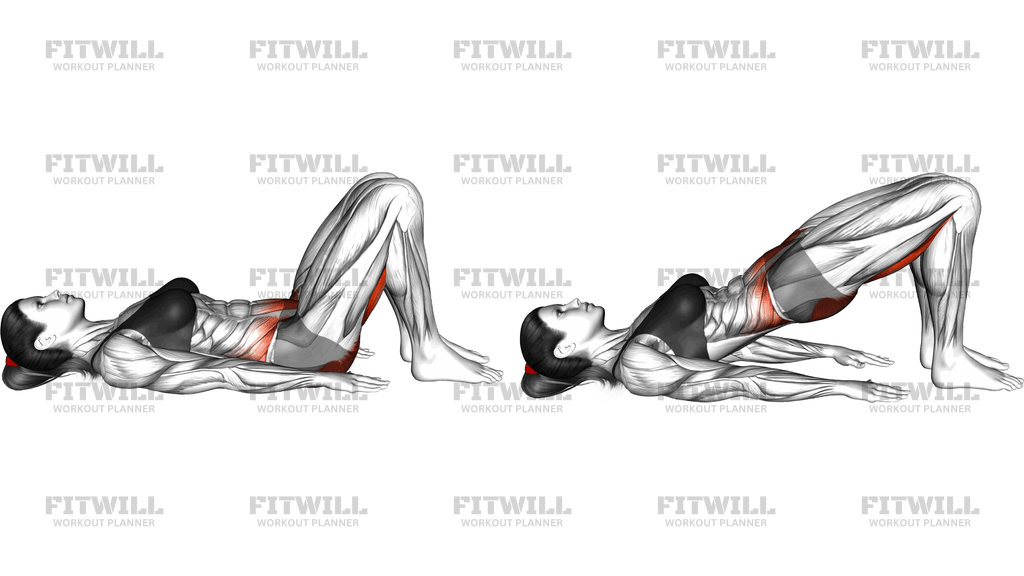
Instructions
- Lie on your back on an exercise mat with your knees bent and your feet flat on the floor, hip-width apart.
- Walk your heels back until your fingertips can just barely graze them when your arms rest beside your hips; keep the knees stacked over the ankles.
- Place your arms alongside your body with the palms facing down, and let the backs of the shoulders and the head rest comfortably on the mat.
- Inhale, then press through the feet and arms as you tuck the tailbone slightly and begin lifting the hips off the floor.
- Continue peeling the spine up vertebra by vertebra until you rest on the tops of the shoulders, with the thighs roughly parallel to the floor and the knees over the ankles.
- At the top, squeeze the glutes, keep the thighs and feet parallel, and let the chest drift gently toward the chin to lengthen the back of the neck.
- Breathe slowly and evenly through the nose, holding the position for 3 to 5 breaths or as long as the hips stay lifted and comfortable.
- Exhale as you lower the spine back down one vertebra at a time, finishing by settling the tailbone on the mat.
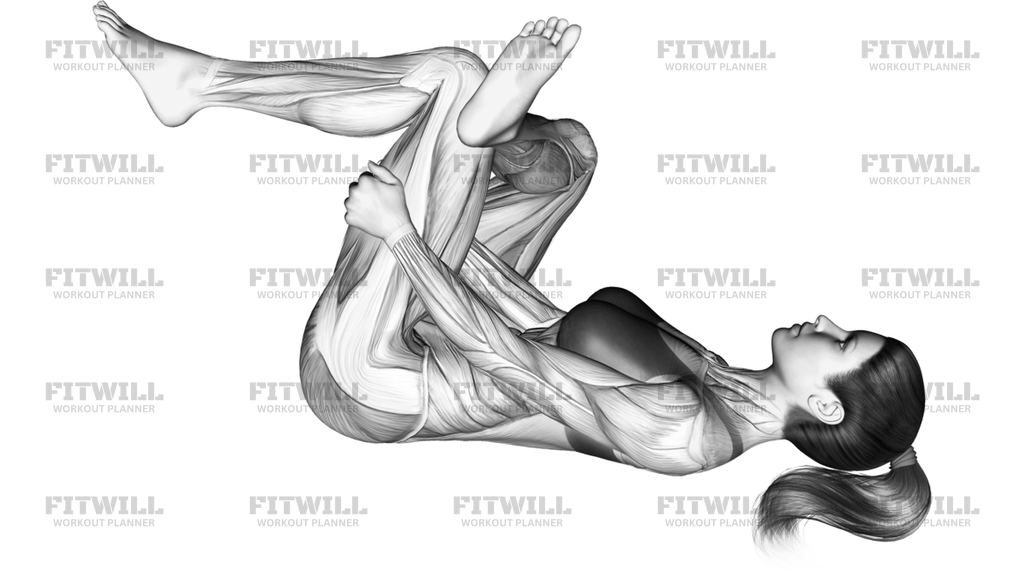
- Rest for a breath with the knees bent and feet flat, letting the lower back release, then repeat or move into a knees-to-chest hug to reset.
Tips & Tricks
- If the knees splay outward as you lift, place a block or folded towel between the thighs and squeeze it lightly; this wakes up the adductors and keeps the hips square.
- Do not crane the head or turn the neck mid-hold; the weight should sit on the backs of the shoulders and the head should stay neutral until you come down.
- If you feel the pose only in your hamstrings, your feet are probably too far away; inch the heels closer so the knees sit directly above the ankles at the top.
- Avoid pushing the ribs and belly high toward the ceiling, which arches the lower spine excessively; lift only as high as the glutes can maintain without the back taking over.
- Keep pressure even across both feet; rolling onto the outer edges of the feet is a common habit that lets the hips drift apart.
- Interlace your fingers under your back and press the arms down if you want a deeper chest opening, but only once the basic version feels steady.
- Come down if you feel sharp sensation in the knees, neck, or lower back; the pose should feel like effort and lengthening, not pinching.
- On days when the lower back feels sensitive, place a folded blanket under the shoulders to reduce the depth of the backbend.
- Skip deep backbends like this one late in pregnancy or with recent neck or spinal injury unless a qualified instructor has cleared the modification for you.
Frequently Asked Questions
Which muscles does Bridge Yoga Pose work the most?
The glutes and hamstrings do the primary work of extending the hips, while the erector spinae and deep core stabilize the lifted position. The inner thighs and shoulders play supporting roles.
Is Bridge Yoga Pose suitable for complete beginners?
Yes, it is one of the most accessible backbends. Beginners can start with short holds of two or three breaths and keep the hips a little lower until the glutes and hamstrings adapt.
How far should my heels be from my hips in Setu Bandha Sarvangasana?
A good check is that your fingertips can just graze your heels when your arms lie beside your hips. This puts the knees directly over the ankles at the top of the pose.
Why do I feel Bridge Yoga Pose in my lower back instead of my glutes?
This usually means the glutes are not leading the lift, so the lumbar spine is arching to gain height. Initiate by tucking the tailbone and squeezing the glutes, and lift only to a height you can hold without the back gripping.
Can I practice Bridge Yoga Pose if I have neck issues?
The neck stays neutral and unweighted apart from light resting contact, but turns or tilts during the hold should be avoided. If you have a known neck condition, use a folded blanket under the shoulders or consult an instructor first.
How does Bridge Yoga Pose differ from a glute bridge in the gym?
The shape is similar, but the yoga version emphasizes slow spinal articulation, breath control, and a chest-opening stretch, while a gym glute bridge typically focuses on loaded hip extension with the spine moving as one block.
What can I use instead of Bridge Yoga Pose if it bothers my knees?
A supported bridge with a yoga block or low cushion under the sacrum takes the effort out of the legs entirely. Keep the feet a bit closer to the hips as well to reduce knee bend strain.
How long should I hold the pose?
Three to five slow breaths is a solid starting point. For a deeper stretch, hold up to a minute, but come down early the moment the hips start to sag or the lower back takes over.
What should I do right after coming out of the pose?
Hug the knees toward the chest or gently rock side to side for a few breaths. This counter-movement releases the lower back and neutralizes the spine after the backbend.