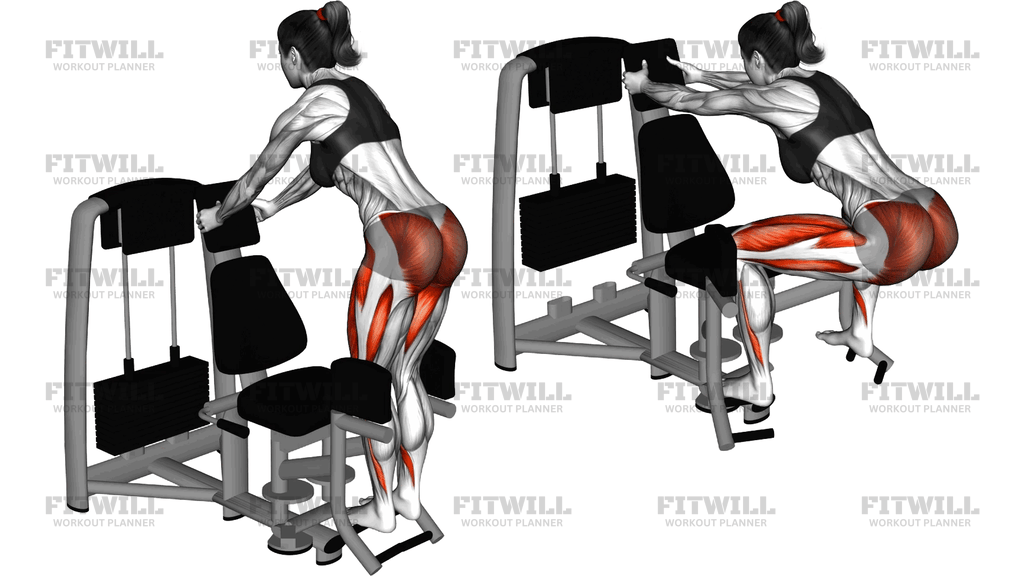
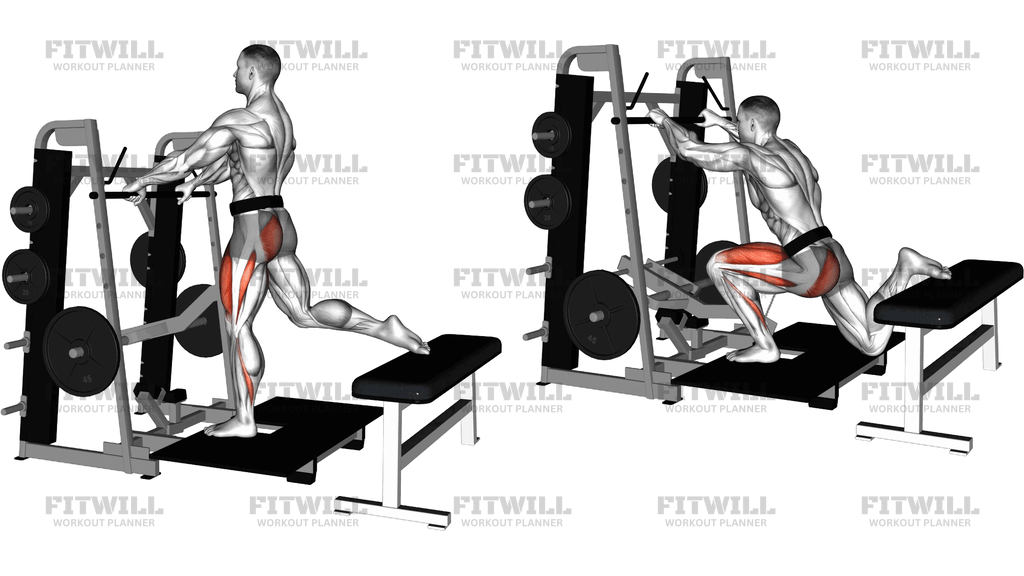
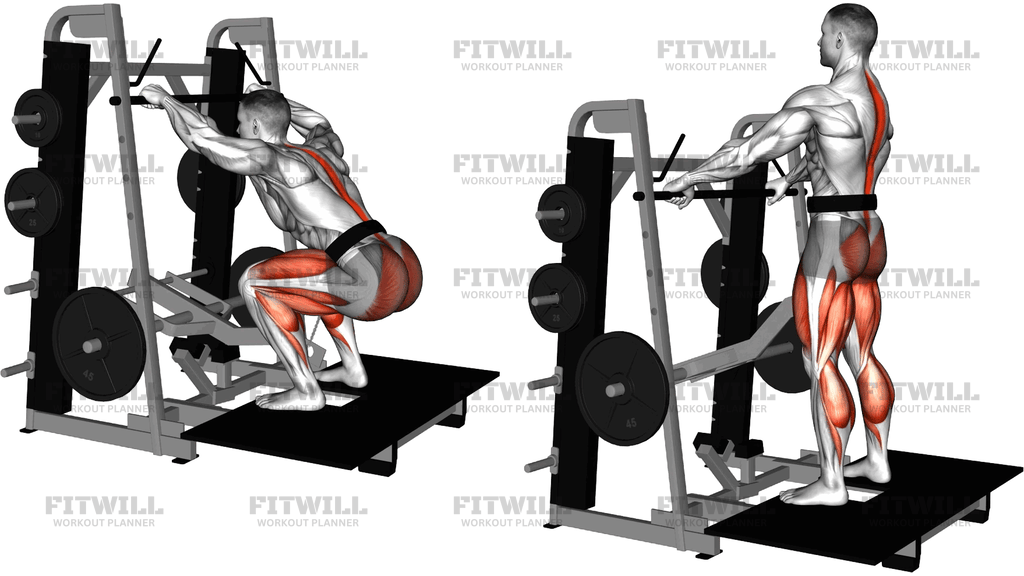
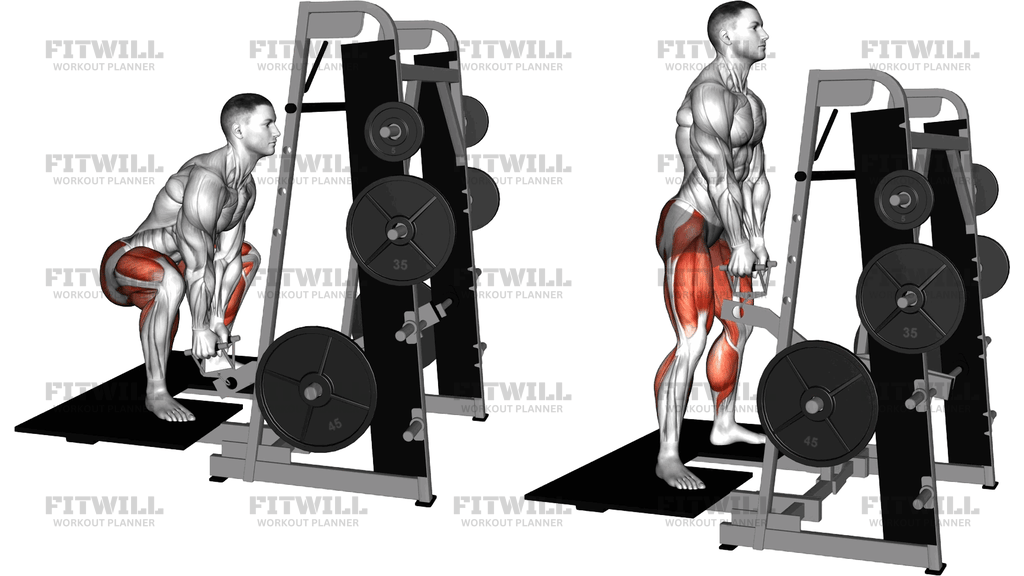
Lever Air Walk
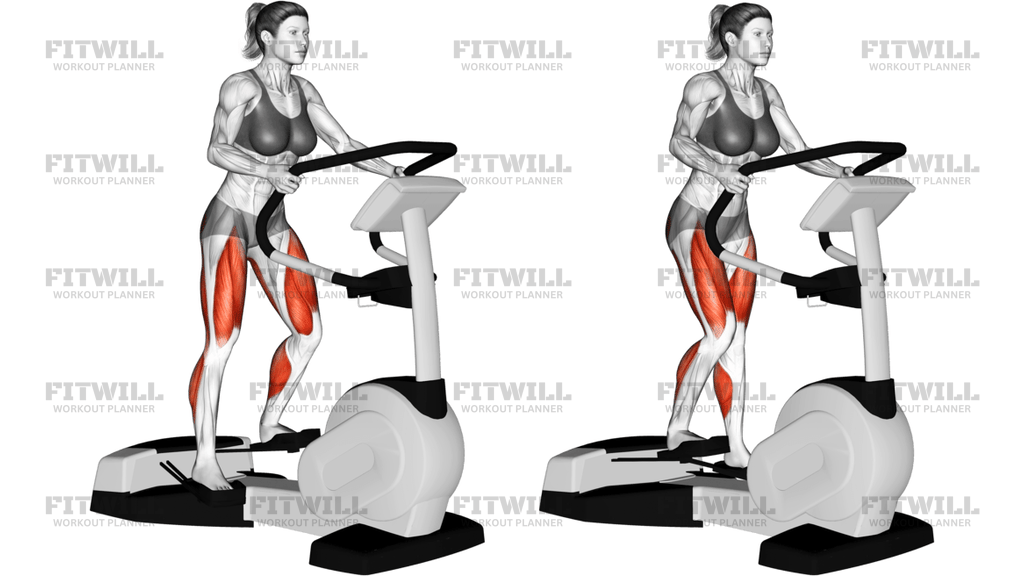
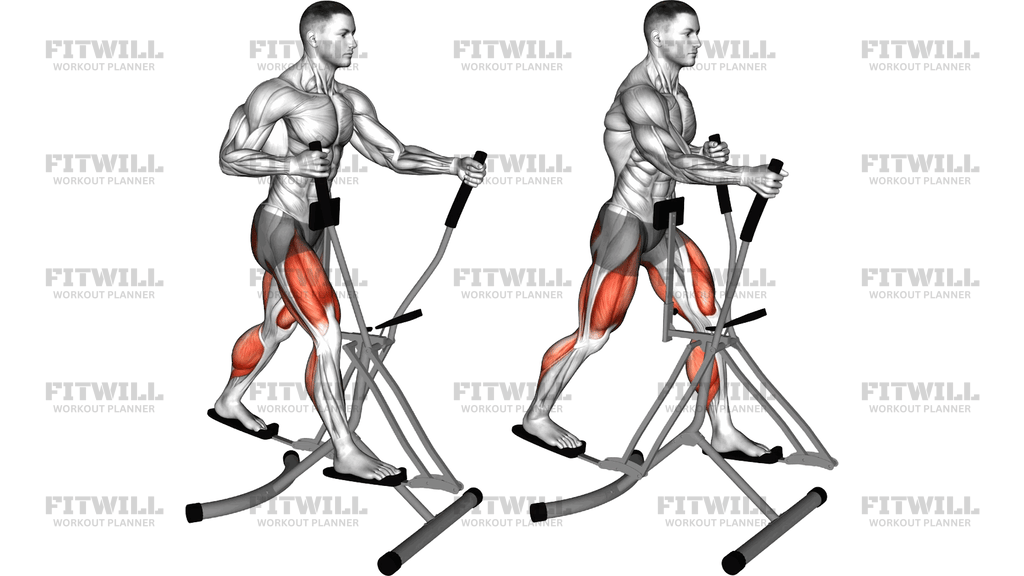
The Lever Air Walk is performed on a standing glider-style machine with two independent foot pedals and a pair of swinging levers or handles. Your feet never leave the pedals, but each leg swings forward and back in a long, striding arc while the opposite handle travels with it, mimicking a natural walking or cross-country skiing pattern. Because the machine pivots on a lever linkage rather than rolling on a belt, the stride is suspended and low impact, making it one of the gentler ways to keep the legs moving under load.
This movement suits a wide range of people. Beginners use it to build aerobic base without pounding their knees, and lifters or runners use it on recovery days to keep blood moving through the quads, glutes, hamstrings, and calves. It is also a practical option for anyone managing sore joints who still wants sustained leg work, since the pedals support the feet throughout the entire stride.
The main work comes from the legs. The front leg drives through the quadriceps and glutes as it sweeps forward and presses down, while the rear leg extends behind you and stretches the hip flexors before returning. The calves stabilize the ankle on each pedal, and the swinging handles add a natural arm drive that raises the heart rate. Holding an upright torso against the shifting pedals also quietly challenges your balance and trunk control.
Setup matters more than most people expect. Stand with one foot fully planted on each pedal, grip the handles at roughly chest height, and start with a short, shallow stride until the machine's rhythm feels predictable. The linkage swings freely, so an overly aggressive first stride can throw you off balance. Once you settle into the tempo, lengthen the stride gradually and let the arms swing in opposition to the legs.
To execute it well, keep your weight distributed across the whole foot on each pedal rather than hanging back on the rear pedal, and keep a slight bend in the knee of the trailing leg instead of locking it out at the back of the arc. Your posture should stay tall with the shoulders relaxed and the core braced; leaning heavily on the handles turns the movement into an arm-supported shuffle and takes work away from the legs. Breathe steadily and aim for a pace you could hold while still speaking in short sentences.
A typical session runs five to twenty minutes as a warm-up, a finisher, or a standalone low-impact cardio block. Adjust the duration and pace to the goal: shorter and quicker to raise the heart rate before lifting, longer and steadier for recovery work. If the machine has resistance or tension settings, increasing them makes the stride heavier and shifts more of the effort onto the glutes and quads.
[ Workout Log & Planner ]
Put your next workout in Fitwill
Keep your plan and training log ready when you are.


Instructions
- Step onto the machine with one foot centered on each pedal and grip the handles firmly at chest height before shifting your weight onto the pedals.
- Stand tall with your feet hip-width apart on the pedals, shoulders back, and a soft bend in both knees.
- Brace your core lightly and shift your weight onto the balls of your feet so you feel balanced on both pedals.
- Begin a short stride by pushing one pedal forward and down while letting the opposite pedal swing back, keeping the handles moving in opposition to the legs.
- Once the rhythm feels stable, lengthen the stride so the front knee bends over the pedal and the rear leg extends behind you with the heel lifting naturally.
- Keep the knee of the trailing leg slightly bent at the back of the arc rather than snapping it straight, and press through the whole foot as each pedal comes forward.
- Drive the stride mainly through the front leg's quad and glute rather than pulling yourself forward with the arms.
- Exhale on the driving phase of each stride and inhale as the legs switch, keeping a steady rhythm you can maintain.
- To finish, shorten the stride gradually over several cycles until the pedals slow, then step off one foot at a time once the machine is nearly still.
Tips & Tricks
- A common mistake is leaning your body weight onto the handles; keep your grip light and let your legs carry the load, or the stride loses most of its training effect.
- If the machine feels jerky at the start, your stride is too long too soon; shorten it for the first minute and lengthen only when the linkage moves smoothly.
- Watch for the rear knee locking straight at the back of each swing; keep a small bend so the hamstrings and glutes stay engaged instead of hanging on the joint.
- Keep your whole foot in contact with the pedal as it passes under you; riding on the toes with the heels lifted off the back of every stride fatigues the calves prematurely and shortens the glute drive.
- Avoid twisting your hips to lengthen the stride; if your hips are rotating, the arc is beyond your current mobility and you should dial the length back.
- Keep your gaze forward and your chest up; staring down at your feet tends to round the upper back and makes balance on the swinging pedals harder.
- Place the machine on a flat, non-slip surface and check that both pedals swing freely before stepping on, since an uneven floor exaggerates the sway.
- If your quads burn quickly while your breathing stays easy, you are pushing too hard with the front leg; smooth out the stride so both legs share the work evenly.
Frequently Asked Questions
Which muscles does the Lever Air Walk work the most?
The primary work comes from the quads and glutes, with the hamstrings assisting on each stride and the calves stabilizing the ankles on the pedals. The swinging arm action also keeps the shoulders and upper back lightly involved.
Is the Lever Air Walk suitable for beginners?
Yes. The pedals support the feet throughout the stride and the motion is low impact, so most people can start with a short five-minute session at a shallow stride and build from there.
How is the Lever Air Walk different from running on a treadmill?
Your feet stay planted on the swinging pedals the entire time, so there is no repeated foot strike or impact through the knees and ankles. The stride is suspended by the machine's lever linkage instead of driven by pushing off the ground.
Should I hold the handles tightly during the Lever Air Walk?
No. Grip them firmly enough to stay balanced, but keep your weight in your legs. Leaning on the handles offloads the quads and glutes and reduces both the muscle work and the cardio demand.
How long should a session on the Lever Air Walk last?
Five to ten minutes works well as a warm-up before lifting, while fifteen to twenty minutes at a steady pace makes a solid standalone low-impact cardio block.
Why does my lower back feel tired during the Lever Air Walk?
This usually means your torso is leaning forward or swaying with the stride. Stand taller, brace your core lightly, and shorten the stride slightly so your hips stay square and stacked under your shoulders.
What can I use if I do not have access to this machine?
An elliptical trainer gives a similar suspended striding motion, and brisk walking or stationary cycling covers the same low-impact cardio role, though neither replicates the swinging leg-lever pattern exactly.
How do I know if my stride on the Lever Air Walk is too long?
Signs include your hips twisting, your lower back arching at the back of the arc, or your heels lifting off the pedals early. Shorten the stride until all three points of contact and square hips are maintained.
Can the Lever Air Walk help with recovery after leg day?
Yes. The continuous, low-impact striding pumps blood through the quads, hamstrings, and calves without adding impact stress, which many lifters find eases post-training stiffness.