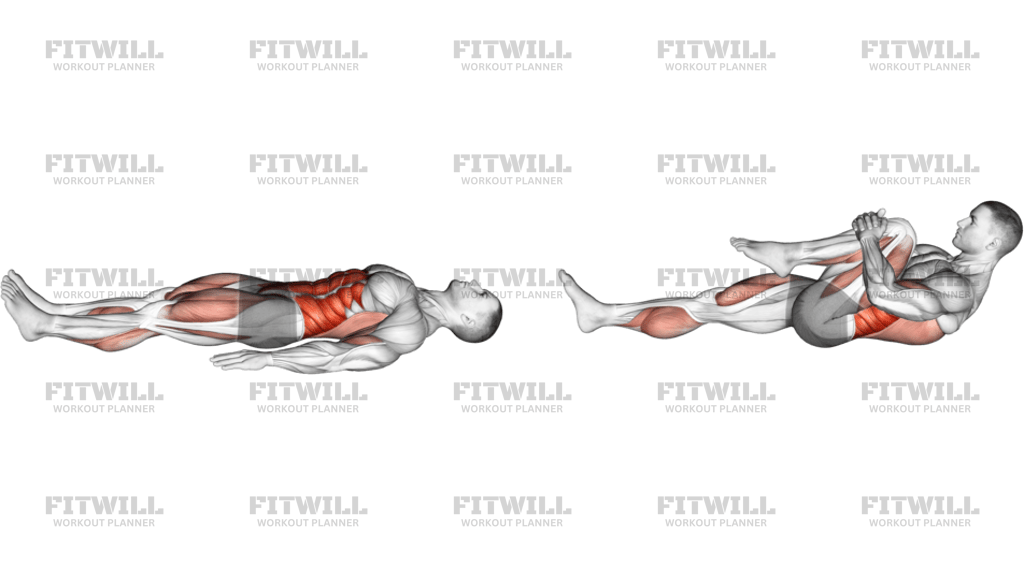
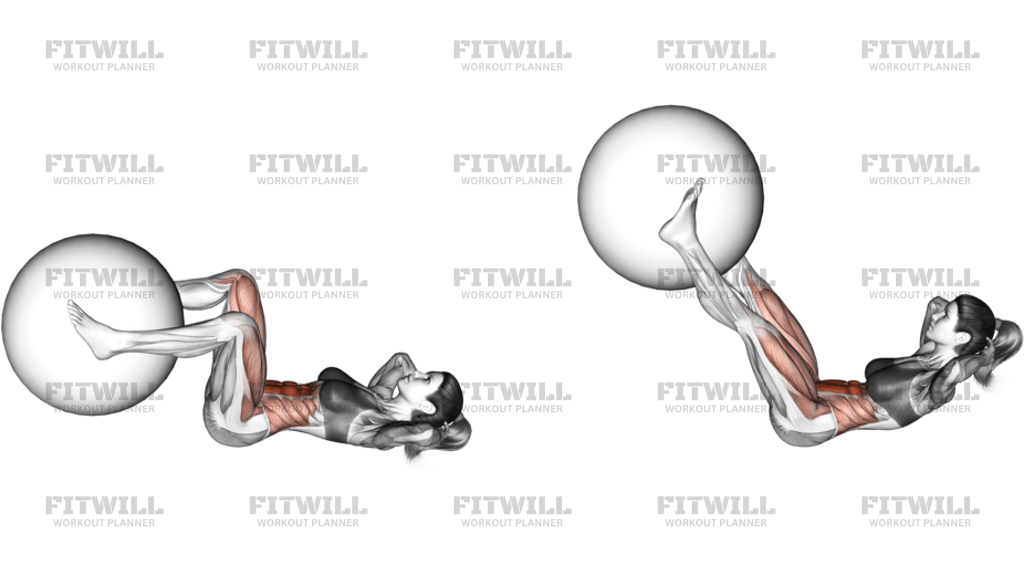
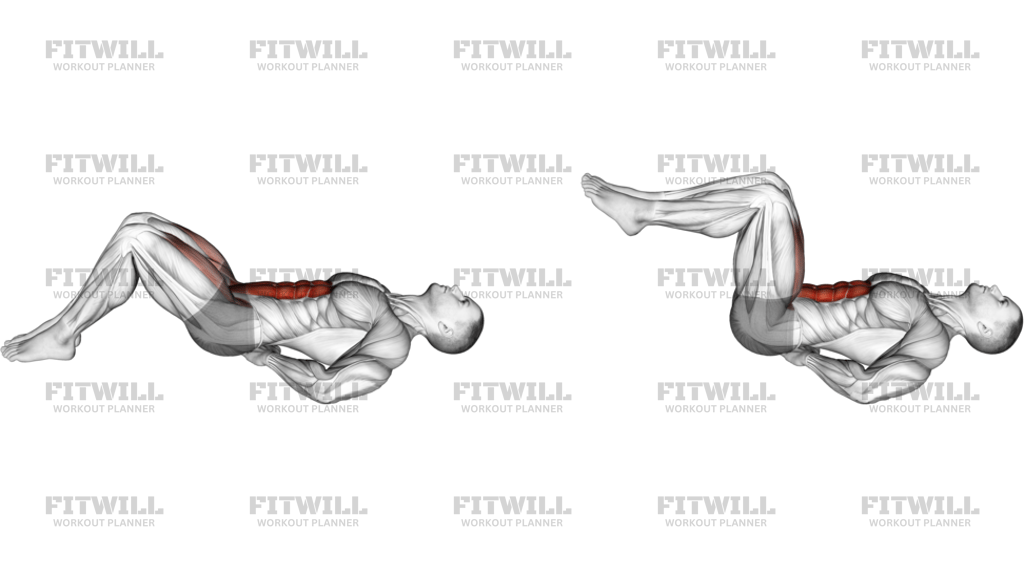
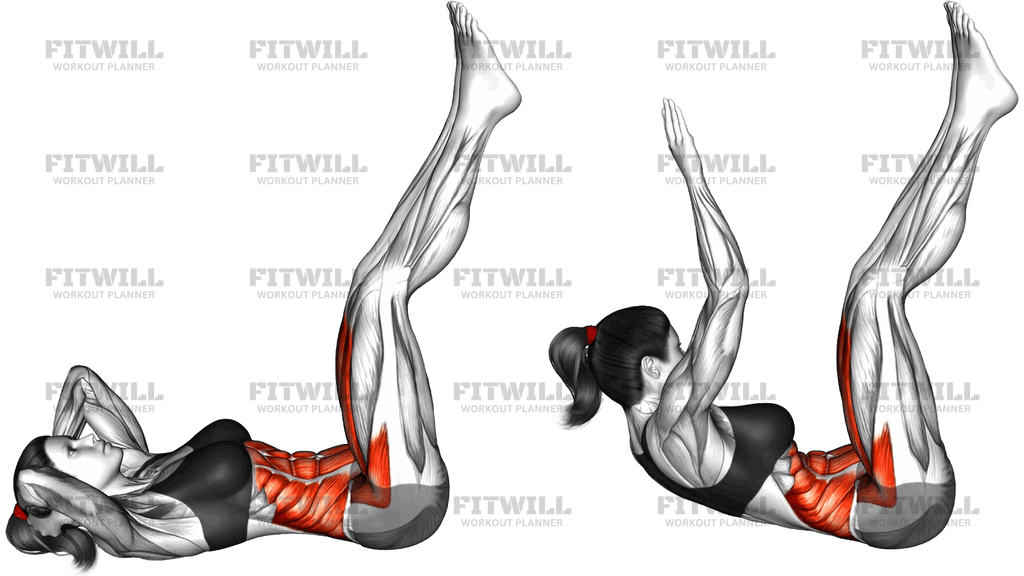
Lying Russian Twist
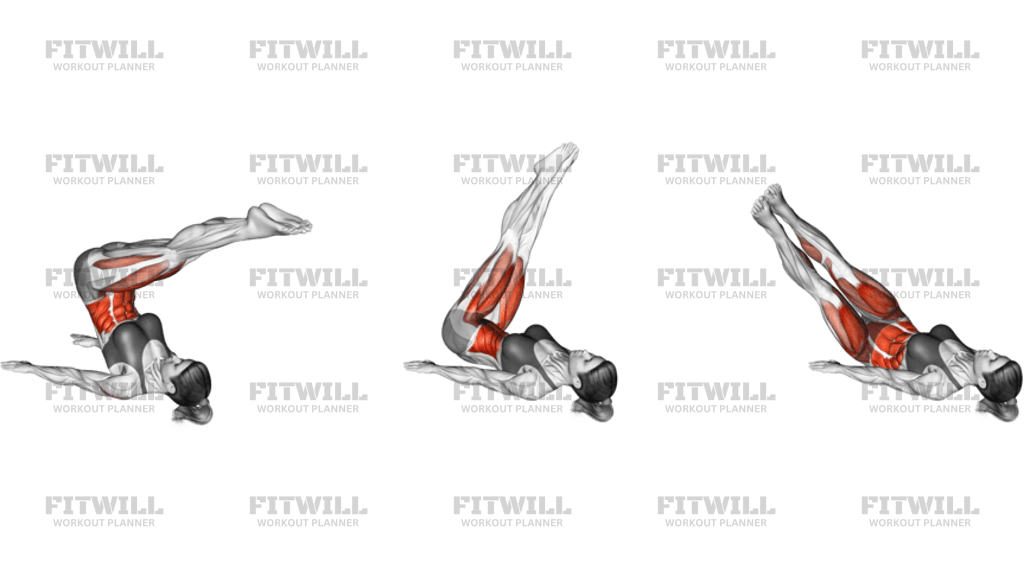
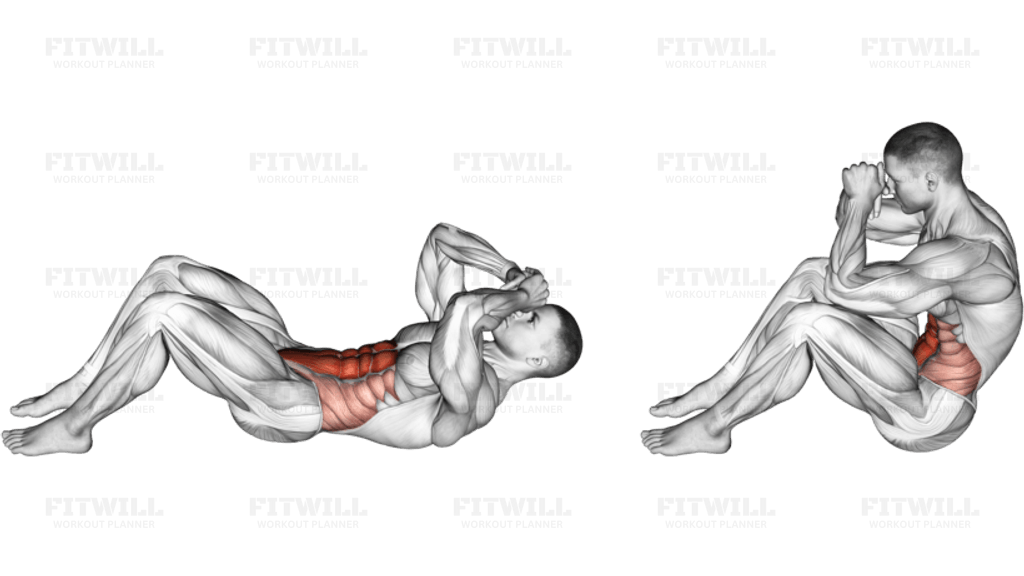
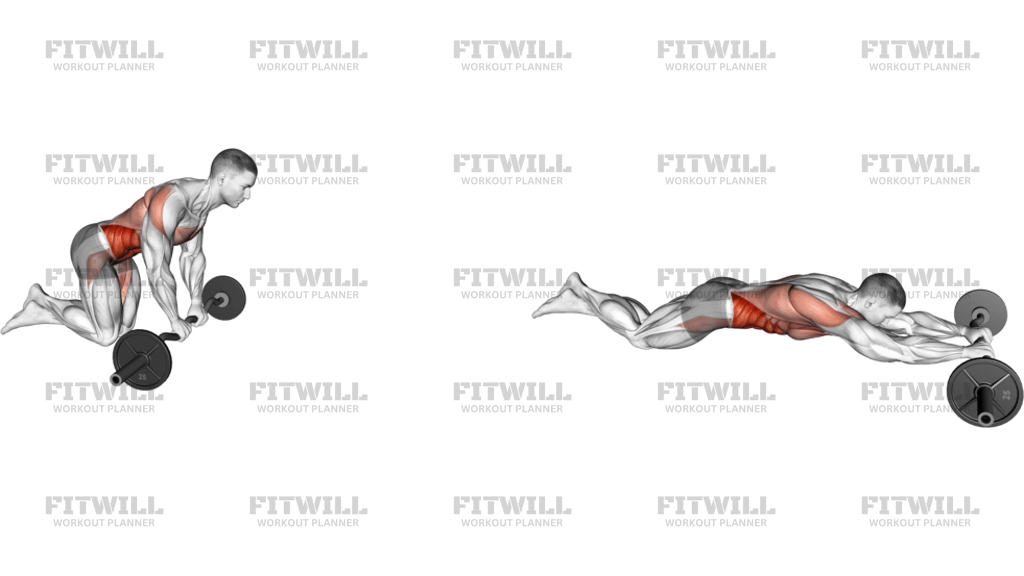
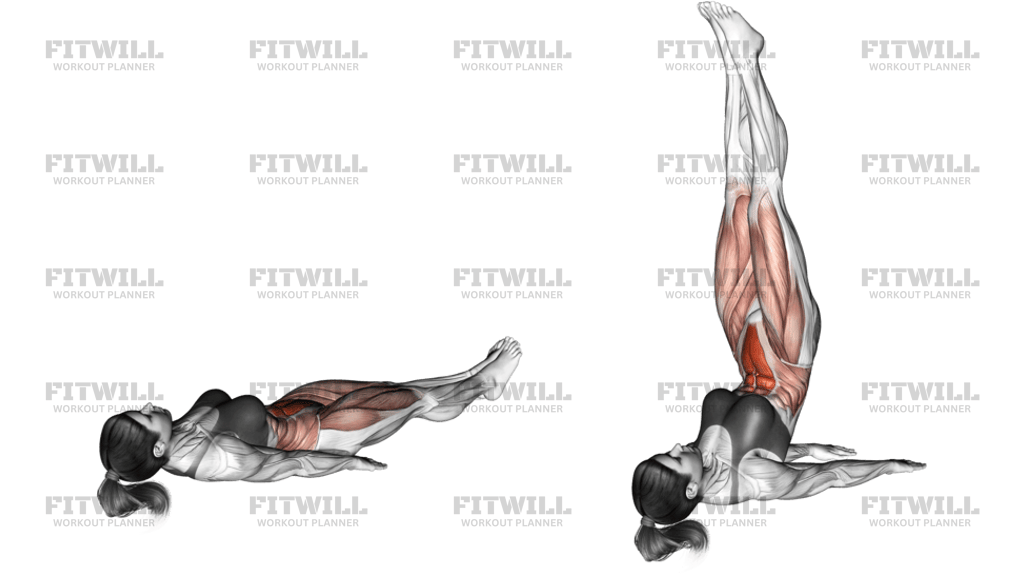
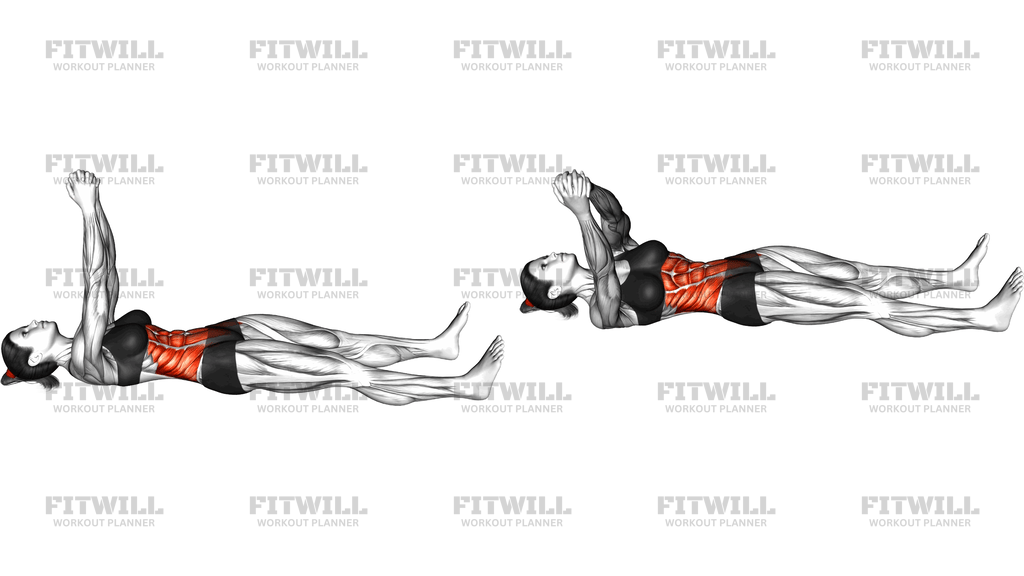
The Lying Russian Twist is a floor-based core exercise performed flat on your back with the knees bent or legs resting on the mat and the arms reaching up or sweeping across the body as the torso rotates. Unlike the more common seated version, lying down takes most of the hip flexor gripping and lower back slouching out of the equation, which makes it easier to feel the abdominals actually doing the twisting. The two frames of the movement show the arms extended toward the ceiling at the start, then rotating the upper body and arms together to one side before coming back through the middle.
This movement primarily trains the rectus abdominis along the front of the stomach, with the internal and external obliques on the sides of the waist working hard to control the rotation. Because the spine stays supported by the floor, it is a friendly option for people who find seated twists uncomfortable or who tend to round their lower back when tired. It also teaches a useful skill: rotating from the ribcage rather than yanking with the arms or swinging with the shoulders.
Setup matters more than most people expect. Lying flat with the lower back in contact with the mat, the ribs pulled gently down, and the arms held in a fixed position relative to the torso turns this from an arm swing into a genuine trunk rotation. If the lower back arches off the floor or the head leads the movement, the twisting load shifts away from the abs and toward the neck and hip flexors.
To execute it well, think of rotating the sternum toward the same-side hip while the arms simply travel along for the ride. The movement should be slow enough that you could pause it at any angle. Alternate sides rep by rep, or complete all reps on one side before switching, depending on your preference.
The Lying Russian Twist fits well into ab finishers, warm-up core activation, or home routines where no equipment is available. Beginners can start with body weight only and a small arc of rotation; more advanced lifters can hold a light plate or medicine ball in the hands to increase the demand, though adding load is best saved until the unweighted version feels smooth and controlled. The main safety point is to keep the rotation coming from the trunk, not from cranking the head or shoulders, and to stay within a range where the lower back stays comfortable on the floor.
[ Workout Log & Planner ]
Put your next workout in Fitwill
Keep your plan and training log ready when you are.


Instructions
- Lie flat on your back on an exercise mat with your legs extended and resting on the floor, or with your knees bent and feet flat if that keeps your lower back more comfortable.
- Extend both arms straight up toward the ceiling and clasp your hands together so the arms form one rigid unit above your chest.
- Draw your ribs down and lightly brace your stomach so your lower back stays in contact with the mat before you begin rotating.
- Exhale as you rotate your upper body to one side, keeping the arms locked out and moving together with the torso, until you feel the muscles along the opposite side of your waist working.
- Pause briefly at the end of the rotation with your chest facing sideways rather than letting the arm flop past the torso.
- Inhale as you slowly rotate back through the starting position with the arms vertical, keeping tension in the midsection instead of dropping into the floor.
- Continue rotating through to the opposite side to complete one full alternating rep, or finish all reps on one side before switching.
- Keep your head neutral throughout, eyes tracking your hands so the neck does not lead or lag behind the rotation.
- Between sets, lower the arms, shake out the shoulders, and reset your brace before starting the next set.
Tips & Tricks
- If your lower back lifts or aches during the twist, bend the knees and plant the feet on the mat — this shortens the lever and lets the pelvis stay quiet while the ribcage rotates.
- A common mistake is turning the exercise into an arm swing. Press the palms together and imagine the arms are glued to the chest so the ribs, not the shoulders, do the turning.
- Rotate only as far as you can while keeping the opposite shoulder blade from slamming into the floor; stopping at about a 45-degree arc usually keeps the obliques under tension.
- Keep the movement slow at the turnaround points — pausing mid-rotation is where most people lose control and start swinging.
- If you feel it mostly in the front of the hips, shorten the arc and focus harder on pulling the ribs down; the hip flexors should assist, not dominate.
- Avoid cranking the chin toward the twisting side. Keep the head in line with the sternum and let the eyes simply follow the hands.
- Once the body-weight version feels easy for 15-plus controlled reps, hold a small plate or medicine ball at the chest rather than lengthening the arms, which is harder on the shoulders.
- Breathe steadily rather than holding your breath — exhale into the twist and inhale on the way back to center.
- Place the mat on a non-slip surface so your body does not slide sideways with each rotation, especially on smooth floors.
Frequently Asked Questions
Which muscles does the Lying Russian Twist work?
The rectus abdominis across the front of the stomach is the primary mover, with the internal and external obliques rotating and controlling the trunk. The hip flexors and shoulders assist in holding the position.
Is the Lying Russian Twist better than the seated version for beginners?
For many beginners, yes, because the floor supports the spine and reduces the temptation to slump or let the lower back do the work. Once you can control the rotation lying down, the seated version becomes a natural progression.
Should my legs be straight or bent during the Lying Russian Twist?
Straight legs make the exercise slightly harder on the core and hip flexors, while bent knees with feet flat make it easier to keep the lower back settled. Start with whichever lets your lower back stay comfortable on the mat.
Why do I feel the Lying Russian Twist in my arms instead of my abs?
The arms are probably moving independently of the torso. Clasp the hands, keep the arms at a fixed angle to your chest, and think about rotating the ribcage — the arm sweep is just the visible result of the trunk turning.
How far should I rotate on each rep?
Rotate until the muscles on the opposite side of your waist are clearly engaged, roughly a 45-degree arc for most people. Going further usually comes from shoulder swing or hip roll rather than extra oblique work.
Can I add weight to the Lying Russian Twist?
Yes — a light plate, dumbbell, or medicine ball held with both hands at the chest works well once the unweighted version is smooth. Hold it close to the torso so the load does not pull on the shoulders.
What can I substitute if lying on the floor is uncomfortable?
A standing band or cable rotation, or a seated Russian twist with feet supported, trains a similar twisting pattern. Choose whichever lets you rotate from the ribs without lower back discomfort.
How many reps and sets should I do?
Two to three sets of 10 to 15 slow rotations per side is a solid starting point. Prioritize control over speed — fast, sloppy twists reduce the work on the obliques and increase strain on the lower back.
Is it safe to do the Lying Russian Twist with lower back issues?
If you have a history of back problems, keep the range of motion small, keep the knees bent, and stop if symptoms appear. It is sensible to check with a healthcare professional before adding loaded or rotational core work.