Prone Hip Cars
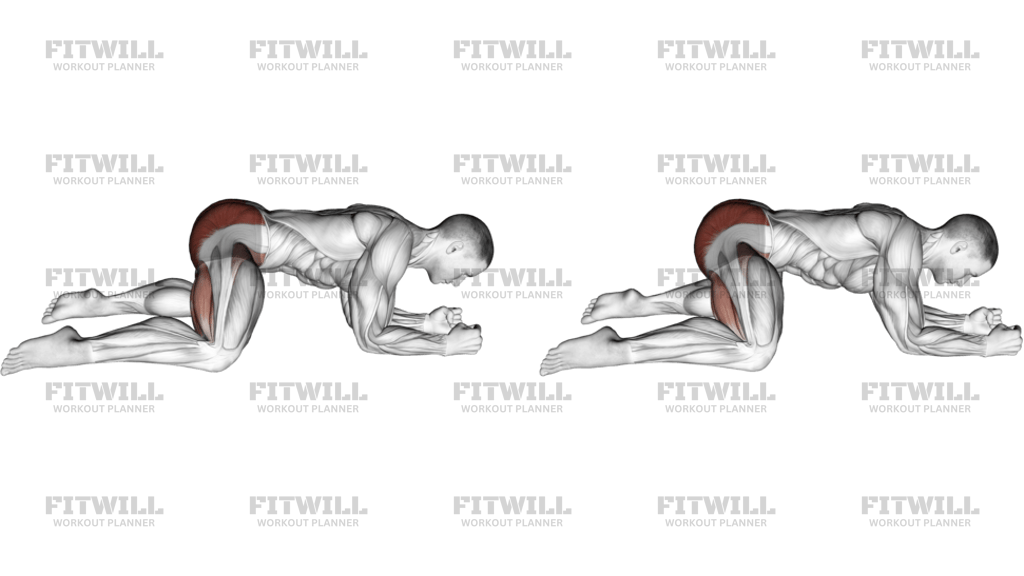
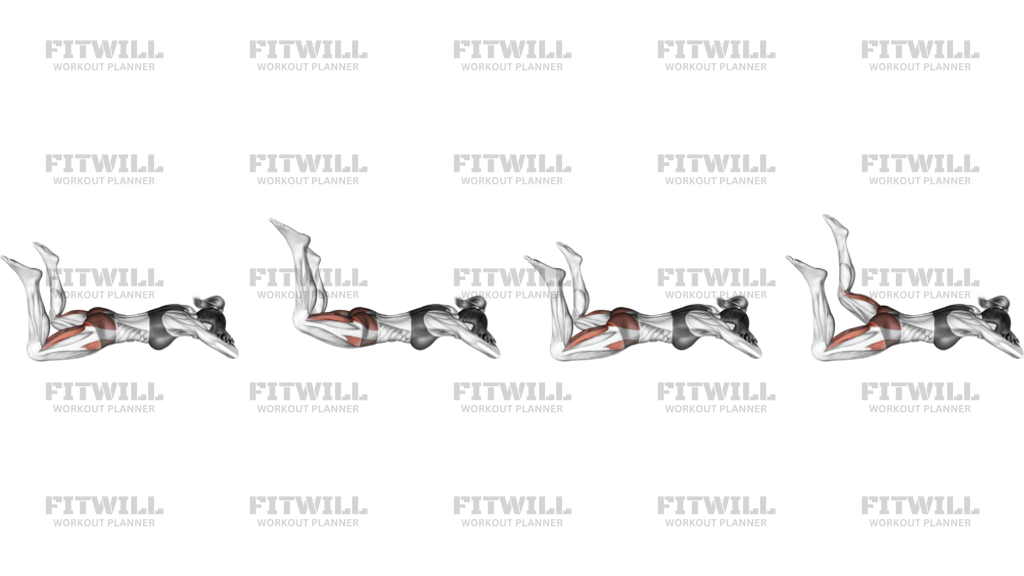
Prone Hip Cars are a controlled articular rotation drill performed lying face down, usually on a mat, with your head resting on your folded hands or forearms. From this position you bend one knee to roughly ninety degrees and slowly rotate the leg in a large, deliberate circle, sweeping the thigh outward, up, and back across the midline before reversing direction. The torso stays planted and quiet throughout, which forces the hip itself to do all of the moving.
This drill belongs to the controlled articular rotations family, a mobility method built around actively taking a joint through its fullest usable range rather than passively stretching it. Because every centimeter of the circle is driven by your own muscles, the hip rotators, glutes, and deep core all have to work together. The highlighted area in the movement is the glute region, particularly the deep rotators and gluteus medius, which control the outward and inward sweep of the thigh.
Prone Hip Cars are especially useful for anyone whose hips feel stiff after long sitting, for lifters who want better hip range before squats or deadlifts, and for runners or cyclists looking to keep rotation smooth on both sides. The prone position also makes it easy to compare left and right: if one side can draw a bigger, smoother circle than the other, you have found a clear, measurable target to work on.
Setup matters more than it looks. Lying flat with the pelvis heavy on the floor removes the lumbar compensation that usually sneaks into standing hip circles, where the lower back arches and twists to fake extra range. With the front of the hips pressed down, any motion you create has to come from the actual hip joint, and the folded arms give your neck and shoulders a comfortable place to rest so you can focus entirely on what the hip is doing.
Execution is slow and deliberate. Bend the knee, lift the thigh slightly off the floor, and trace the widest circle your hip allows without the pelvis rocking. Most people do two to five circles in each direction per side, treating it as a warm-up or as daily hip maintenance. If your hip pinches at a certain point in the circle, make the circle smaller rather than forcing through the restriction.
From a safety standpoint, the drill is gentle on the joints, but the pelvis is the thing to watch. Twisting the torso to chase a bigger circle defeats the purpose and can aggravate the lower back. Keep the range honest, breathe steadily, and stop if a pinching sensation inside the hip persists rather than easing up as you repeat.
[ Workout Log & Planner ]
Put your next workout in Fitwill
Keep your plan and training log ready when you are.


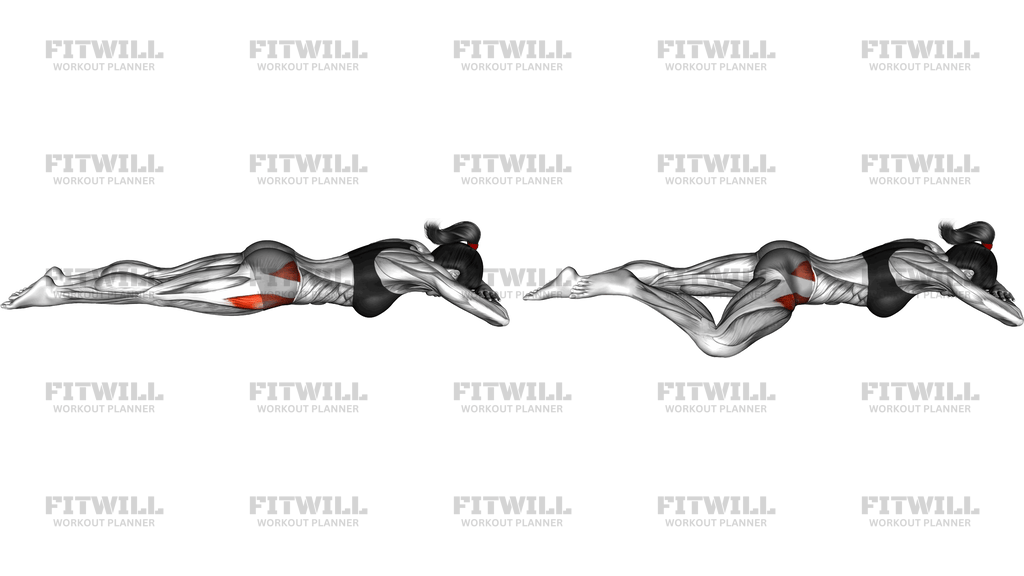
Instructions
- Lie face down on an exercise mat with both legs extended straight behind you and your head resting on your folded hands or stacked forearms.
- Press the front of your pelvis gently into the floor and brace the abdominals slightly so your lower back stays still.
- Bend one knee to about ninety degrees so the lower leg points toward the ceiling, keeping the other leg relaxed and flat on the mat.
- Lift the thigh of the bent leg a few centimeters off the floor while keeping the pelvis in contact with the mat.
- Slowly rotate the leg outward, drawing the widest circle your hip allows: sweep the knee out to the side, arc it up and toward the opposite leg, then bring it back down to the start.
- Complete two to five smooth circles in one direction, then reverse and repeat in the other direction without letting the pelvis rock.
- Breathe steadily throughout, inhaling as the leg sweeps outward and exhaling as it returns across the midline.
- Lower the leg back to the mat, recheck that your torso has not twisted, and switch to the other side.
- Reset your pelvic position on the mat before each new set so both sides start from the same baseline.
Tips & Tricks
- If your torso rolls side to side during the sweep, imagine a coin under each hip bone and keep both pressed against the mat for the whole circle.
- A common mistake is chasing a bigger circle by arching the lower back; shrink the circle instead and let the range grow over weeks, not minutes.
- Keep the bent knee at roughly ninety degrees throughout — letting the knee drift in or out turns the drill into a knee movement instead of a hip rotation.
- Move slow enough that one full circle takes five to eight seconds; if you finish in two, the surrounding muscles are not being challenged.
- If the front of the hip pinches when the thigh lifts or sweeps inward, reduce the height of the lift and stay within a pain-free arc.
- Compare your two sides directly: match the size and smoothness of the smaller circle to the bigger one rather than only training the easy side.
- Point the toes of the bent leg loosely rather than gripping the floor with them, since foot tension often reflects unnecessary thigh gripping.
- Use this drill before lower-body training as an active warm-up, or on rest days as low-effort hip maintenance; it does not need to feel exhausting to work.
- Rest your forehead on your hands rather than craning the neck up, so the shoulders and neck stay relaxed for the duration of the set.
Frequently Asked Questions
What muscles do Prone Hip Cars work?
They primarily train the glutes and deep hip rotators that steer the thigh through the circle, with the hip flexors, hamstrings, and deep core contributing to hold the pelvis and torso still.
Are Prone Hip Cars a stretch or a strength exercise?
They are best described as active mobility work: you use muscular effort to move the hip through its full rotation range, so you get a bit of both control and range without holding a passive stretch.
Why is this drill done lying face down instead of standing?
Lying prone pins the pelvis against the floor, which stops the lower back from twisting or arching to fake extra hip range, so the rotation has to come from the hip joint itself.
How big should the circle be in Prone Hip Cars?
As wide as you can draw while keeping both hip bones on the mat and feeling no pinching; for most people the circle is smaller than they expect at first and grows with practice.
I feel a pinch at the front of my hip during the rotation. What should I do?
Lift the thigh less high and shrink the circle so the sweep stays comfortable, and make sure the knee stays bent at about ninety degrees; if the pinch keeps repeating at the same spot, ease off and consult a professional.
How many reps and sets of Prone Hip Cars should I do?
Two to five slow circles in each direction per side is a solid dose, either as a pre-workout warm-up or as daily hip mobility maintenance.
Can beginners do Prone Hip Cars?
Yes, the setup is simple and load-free, and the main learning point for beginners is keeping the pelvis still rather than generating a big circle.
What can I use instead of a mat for this exercise?
Any firm, comfortable surface works — a carpeted floor or folded towel is fine — as long as the front of the pelvis can rest comfortably and your hands can support your head.
My pelvis rocks every time my leg sweeps out. How do I fix it?
Brace the abdominals lightly, press both hip bones into the floor, and deliberately make the circle smaller; control at a smaller range builds the stability needed for a larger one.
Should Prone Hip Cars be done before or after training?
They work well before lower-body sessions to wake up hip rotation and control, and they are also gentle enough to use on rest days; doing them after training as a cool-down is fine too.