Kneeling Glute Press
Kneeling Glute Press is a bodyweight floor exercise for the hips and glutes, with the core working hard to keep the pelvis steady. It is most useful when you want to train one side at a time without loading the spine, and it fits well as an accessory movement, activation drill, or lower-body finisher. The bent-knee setup makes it easier to isolate hip extension than a straight-leg kick, so the quality of each rep matters more than the size of the lift.
The main work should come from the glute on the working side, while the hamstrings and deep core muscles help keep the motion clean. When the pelvis stays square and the ribs stay stacked, the movement feels like a controlled press of the heel toward the ceiling rather than a swing of the low back. That control is what makes Kneeling Glute Press useful for both beginners learning glute engagement and experienced lifters who want precise tension.
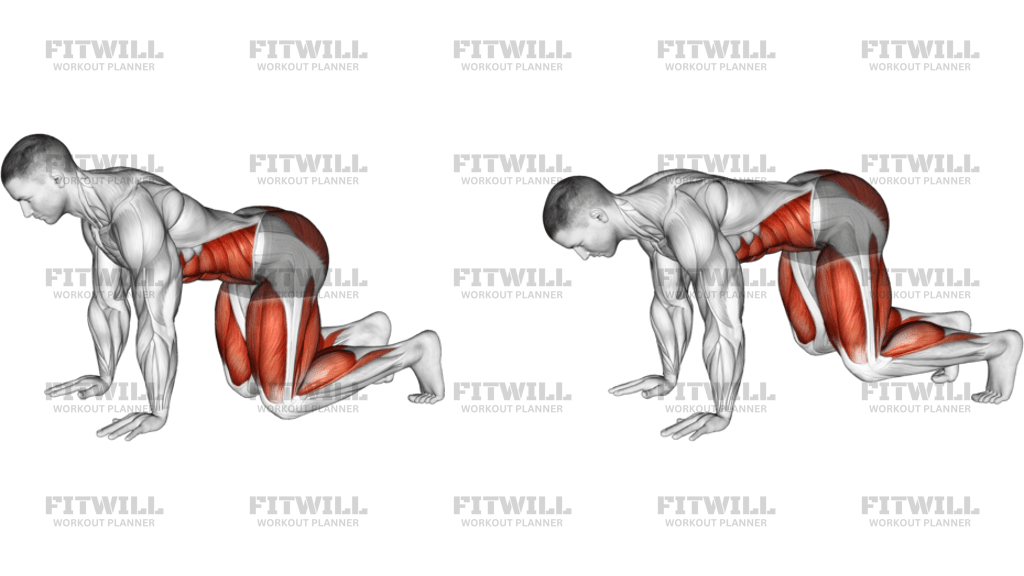
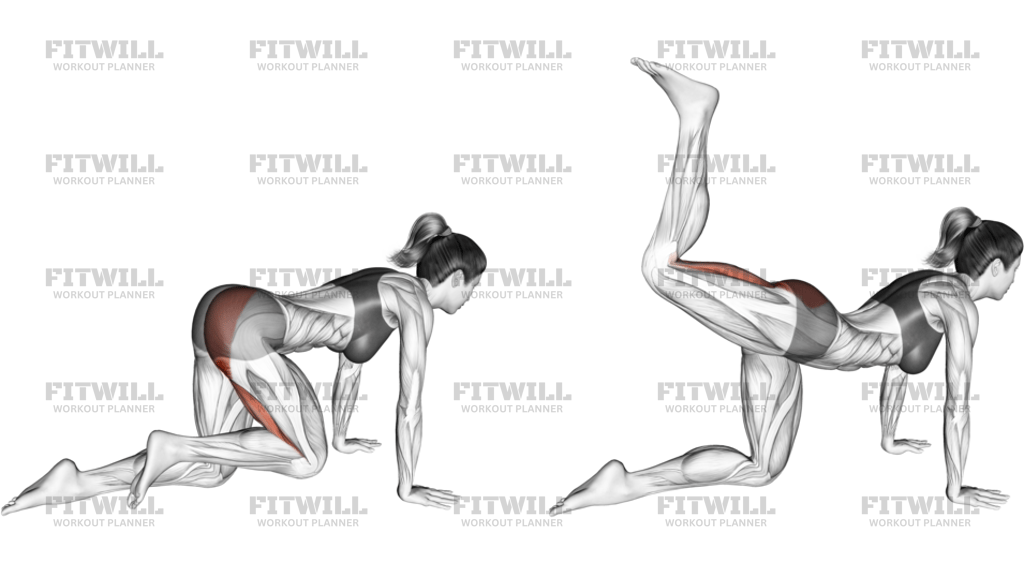
Set up on a mat in a hands-and-knees position with your hands under your shoulders and one knee supporting your body. The working leg stays bent, with the knee close to a right angle and the foot flexed so the sole points upward. Keep your shoulders level, your gaze down, and your abdomen braced before the first rep so the pelvis does not tip or rotate as the leg begins to move.
Each repetition should start with a small, deliberate press of the bent leg upward from the glute. Lift only as high as you can without arching the low back or opening the hip, then lower under control until you feel the target side stay loaded. A brief pause at the top helps the glute do the work, and steady breathing keeps the torso from tightening up or collapsing between reps.
Use Kneeling Glute Press when you want a simple glute-focused movement that is easy to scale by tempo, pause, range, or external resistance. It is a good option in warm-ups, home workouts, and accessory blocks because it does not require much equipment, but it still rewards exact positioning. If your knee, wrists, or low back complain, shorten the range, pad the floor, and keep the lift small enough that the pelvis stays in control from start to finish.
[ Workout Log & Planner ]
Put your next workout in Fitwill
Keep your plan and training log ready when you are.


Instructions
- Set up on a mat in a hands-and-knees position with your hands under your shoulders and one knee supporting your body.
- Bend the working leg to about 90 degrees so the foot is flexed and the sole points toward the ceiling.
- Keep your shoulders level, palms spread, and your gaze down so your torso stays steady.
- Brace your abdomen and lightly tuck your pelvis so your low back does not arch before the first rep.
- Press the bent leg upward by squeezing the glute, lifting only as high as you can without rotating the hips.
- Pause briefly at the top when the heel is driving upward and the pelvis is still square.
- Lower the knee back down slowly, keeping tension on the glute instead of dropping into the floor.
- Reset your brace, repeat for the planned reps, and switch sides when the set calls for it.
Tips & Tricks
- Put a folded mat or towel under the support knee so pressure on the kneecap does not limit the set.
- Think about driving the heel upward, not kicking the foot back, so the bent knee stays fixed.
- If your low back tightens first, shorten the range and stop the lift before the pelvis starts to tip.
- Keep both hip bones facing the floor; opening the working hip turns the rep into a rotation drill.
- A one-second pause at the top usually gives better glute tension than a bigger but sloppy lift.
- If the hamstring cramps, bend the knee a little more and make the press smaller and slower.
- Keep your shoulders stacked over your hands so your body does not rock forward as the leg rises.
- Use a slower lowering phase to keep tension on the working side instead of just bouncing out of the bottom.
Frequently Asked Questions
What does Kneeling Glute Press work most?
It mainly targets the glutes on the working side, with the hamstrings and core helping keep the pelvis stable.
Is Kneeling Glute Press the same as a donkey kick?
They are very similar. Kneeling Glute Press uses the same bent-knee hip extension pattern, just with a controlled quadruped setup.
Where should I feel Kneeling Glute Press?
You should feel it mostly in the upper glute of the working side. If your low back or hamstring takes over, reduce the lift and keep the ribs down.
Do I need to straighten my leg at the top?
No. Keep the knee bent so the rep stays focused on hip extension instead of turning into a straight-leg kick.
Can beginners do this exercise?
Yes. The bodyweight setup makes it easy to learn, and beginners can keep the range small until they can hold the pelvis still.
Why does my lower back feel Kneeling Glute Press more than my glute?
You are probably lifting too high or arching through the spine. Stop the rep sooner, keep the core braced, and think about pressing the heel upward rather than swinging the leg.
How can I make Kneeling Glute Press harder?
Add a longer pause at the top, slow the lowering phase, or add ankle resistance while keeping the hips square and the knee bent.
What if my wrists hurt in the hands-and-knees position?
Use a thicker mat, place your hands on push-up handles or dumbbells, or switch to a forearm-supported glute kickback variation.